
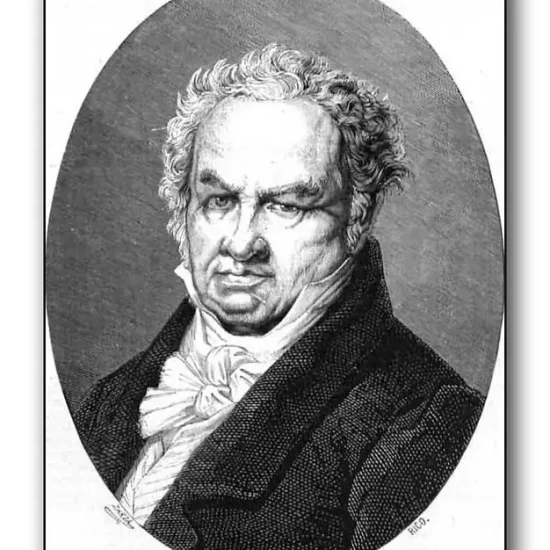
Early Life of Francisco Goya
Francisco Goya, born in 1746 in Fuendetodos, Spain, is often seen as a pivotal figure in art history, marking the end of the Old Masters and the beginning of modern art. His early career began somewhat traditionally. He honed his skills in Spain, eventually landing a position as the court painter to the Spanish Crown, which allowed him to create portraits for royalty and the elite. These early works are more traditional, showing his strong grasp of realism and attention to detail, particularly how he captured his subjects’ personalities.
But Goya’s work was never confined to what was expected. Even in his early years, there was an edge of the unusual—a slightly unsettling quality to his pieces, hinting at the bold directions his later work would take.
A Turn Toward Darkness
In the late 1790s, Goya’s life took a dark turn, personally and artistically. An illness left him deaf, isolating him from the world and perhaps fueling the shift in his work. It was around this time that Goya began producing a series of etchings known as Los Caprichos. These prints critiqued Spanish society and human folly, using a mix of the grotesque and the fantastical. Goya’s sharp commentary on superstition, corruption, and hypocrisy through these works stood in stark contrast to his earlier court paintings.
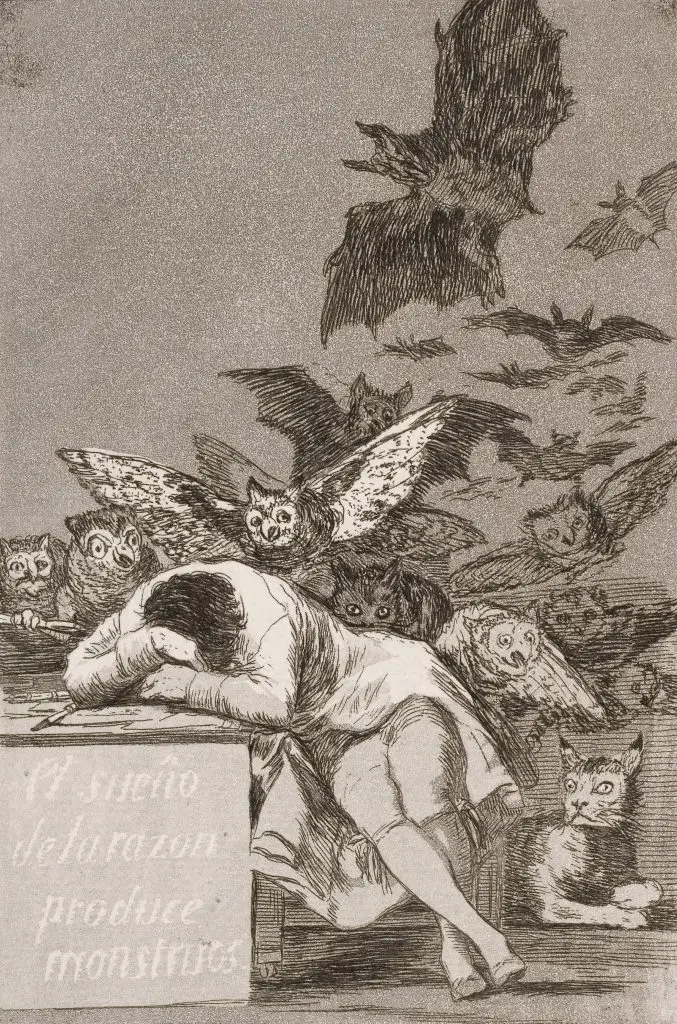
One of his most famous works from this period, The Sleep of Reason Produces Monsters, from Los Caprichos, shows a sleeping figure surrounded by menacing creatures, symbolizing the dangers of ignorance. These pieces became significant not only for their technical mastery but also for their influence on later movements like Surrealism, inspiring artists like Salvador Dalí.
War and Turmoil
Goya’s personal experiences during the Napoleonic Wars deeply impacted his art. As Spain faced occupation by French forces, Goya was witness to the devastation and violence that engulfed his homeland. His response was a harrowing series of prints titled The Disasters of War. These works don’t glorify heroism but instead highlight the horrors of conflict—the suffering of civilians, the brutality of soldiers, and the senselessness of violence.
In these prints, you see Goya’s ability to evoke raw emotion. The images are not idealized; they’re often gruesome and difficult to look at, showing mutilated bodies, despair, and the deep scars left by war. One of the most famous works from this time is The Third of May 1808, a painting that shows a moment of execution, with a group of Spanish rebels facing a French firing squad. The way Goya captures the tension, fear, and inevitable death is haunting and is seen as one of the first true depictions of modern warfare in art.
The “Black Paintings”
In his later years, Goya’s work grew increasingly bleak. The Black Paintings, created on the walls of his home between 1819 and 1823, are a testament to his troubled mind. These were personal works, never meant for public display, and they reveal a man grappling with his inner demons, fear of death, and disillusionment with humanity.
The Black Paintings are filled with dark imagery—witches, demons, and scenes of madness. Perhaps the most famous of these is Saturn Devouring His Son, which shows the mythological god Saturn consuming one of his children. The horror in Saturn’s wide-eyed, animalistic face and the grotesque way he holds the half-eaten body reflect Goya’s growing obsession with the darker sides of human nature
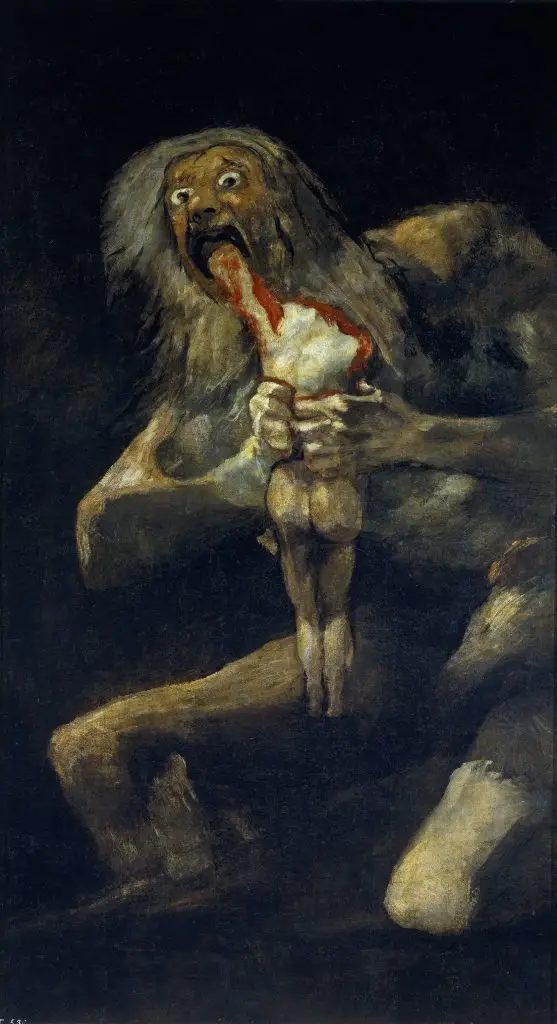
It’s hard to overstate how groundbreaking these paintings were. They’re raw, unfiltered, and unlike anything that had come before. They’re not just dark in subject matter but also in technique—Goya used a limited, almost murky color palette, and the brushstrokes are rough, giving the scenes a sense of immediacy and chaos.
The Legacy Left by Francisco Goya
Goya’s impact on the art world can’t be understated. His work didn’t just reflect the world around him—it challenged it, critiqued it, and delved into the psychology of both society and the individual. His unflinching look at human nature—both its beauty and its terror—paved the way for modern art movements.
Artists like Manet, Picasso, and Dalí have all cited Goya as an influence. Manet’s Execution of Emperor Maximilian echoes The Third of May, while Picasso’s Guernica, a response to the Spanish Civil War, channels Goya’s depictions of war’s brutal reality.
More broadly, Goya’s work laid the foundation for movements like Realism, Impressionism, and even Surrealism. His ability to blend the real with the fantastical, the beautiful with the grotesque, made his work timeless. He pushed the boundaries of what art could do—how it could confront the viewer and evoke emotion.
Conclusion
Francisco Goya wasn’t just a painter; he was a pioneer, a bridge between the old and the new. His work is a mix of light and dark, hope and despair, reflecting the tumultuous times in which he lived. He wasn’t afraid to show the ugly side of life, and that honesty is what makes his work so powerful, even today. Goya remains a crucial figure in art history, not just for what he painted, but for the way he painted it—fearlessly.