
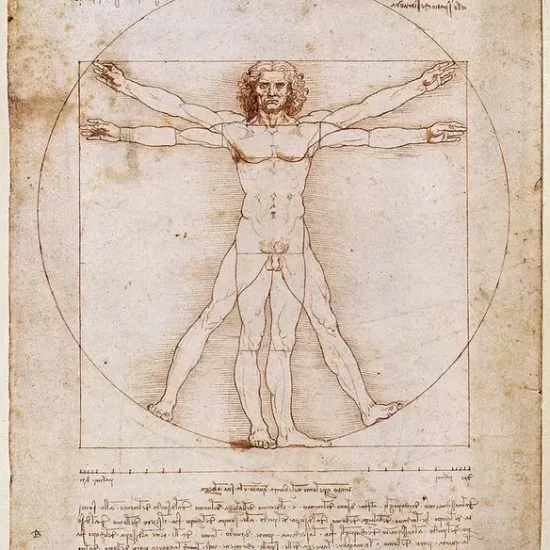
The Vitruvian Man is one of the world’s most famous and instantly recognizable drawings, created by Leonardo da Vinci during the Renaissance. It’s not just a sketch but a symbolic bridge between art and science. Even if you’re not deep into history or art, chances are you’ve come across this iconic image—a man perfectly inscribed in a circle and a square. But what’s the story behind it? Let’s break it down in a way that makes sense without getting too technical.
The Renaissance Era and Leonardo’s Vision
Leonardo da Vinci was a genius, plain and simple. Known for his paintings, inventions, and scientific curiosity, he was always looking to understand the world in new ways. During the Renaissance, people rediscovered many ideas from ancient Greece and Rome. They became fascinated by balance, proportions, and the relationship between humans and the universe. That’s where Vitruvius comes into play.
Vitruvius was a Roman architect who lived around the first century BCE. He wrote a book called “De Architectura” that discussed building design, proportions, and even the human body. He believed that the human form was a model of proportion and symmetry that could be used to design buildings. This idea stuck with Leonardo, who then took it further by drawing the Vitruvian Man as a visual representation of those perfect proportions.
What Does the Vitruvian Man Show?
On the surface, the Vitruvian Man is just a man standing with his arms and legs stretched out. But there’s more going on here. The man fits inside both a circle and a square, which symbolize different things. The circle represents the divine and the heavens, while the square represents earthly things and the material world. The drawing captures the balance between these two realms, with the human body as the connection point.
Leonardo used Vitruvius’ ideas to map out the proportions of the body. For example, the span of the man’s arms is equal to his height, and the length of his hand is a certain fraction of that height. It’s all about balance and proportions. Leonardo was fascinated by how these proportions could be found not just in architecture, but in nature and people as well.
Why It’s More Than Just Art
Leonardo da Vinci wasn’t just an artist—he was also a scientist and an engineer. The Vitruvian Man shows his ability to blend art with science. He wasn’t just trying to make a pretty picture; he wanted to understand the mechanics of the human body. This drawing is part of Leonardo’s larger efforts to study anatomy, which included dissecting human bodies to get a better sense of how everything worked. For Leonardo, understanding the human form was key to understanding the universe itself.
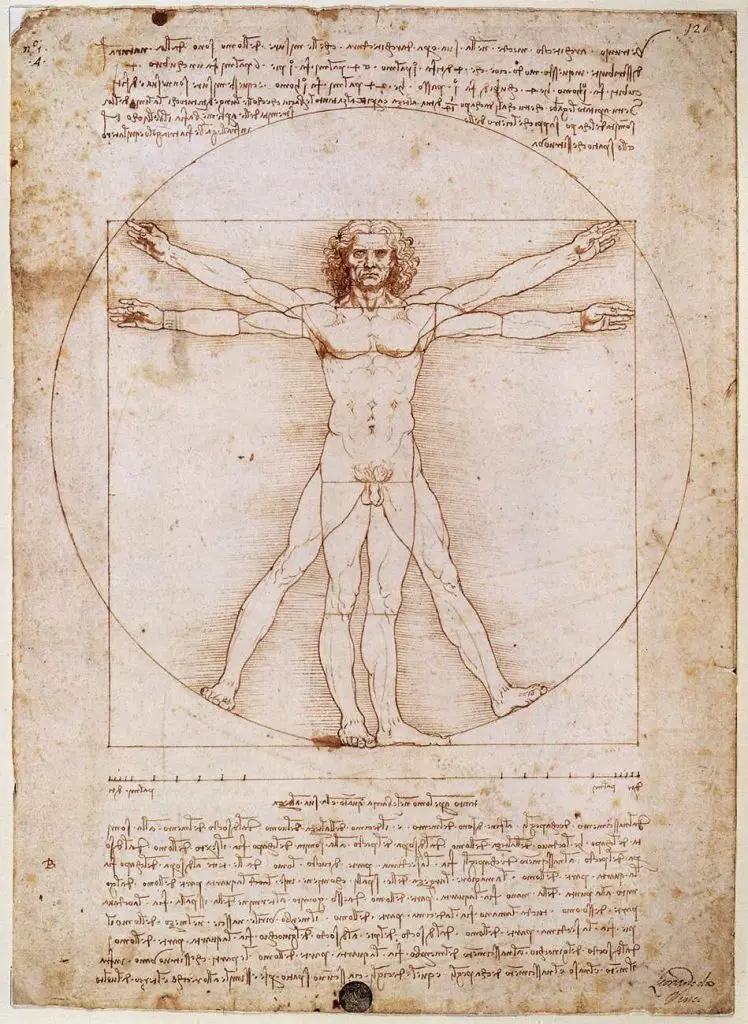
By placing a human figure at the center of the circle and square, Leonardo was saying that humans are at the center of both earthly and divine realms. It was a powerful statement, especially during the Renaissance, when there was a growing belief in human potential and the importance of individual achievement.
The Math Behind the Vitruvian Man
While it might seem like Leonardo was just drawing a man in a couple of shapes, the Vitruvian Man involves some pretty intricate math. The drawing is all about ratios and proportions. For instance, Vitruvius had stated that a well-proportioned human body should be eight heads tall. Leonardo expanded on this idea by applying it to other body parts, like the length of the arms and legs. He was using geometry to understand how the human body fits into both natural and man-made designs.
The circle and square weren’t chosen randomly, either. Both shapes have symbolic meanings in math and philosophy. The square, with its straight lines and right angles, represents order and structure. The circle, with no beginning or end, represents infinity and the divine. By fitting the man into both shapes, Leonardo showed that humans are both structured and limitless, a concept revolutionary at the time.
Why Does It Matter Today?
The Vitruvian Man isn’t just a historical artifact—it’s still relevant today. For one thing, it’s an example of how art and science can work together. In a world where we sometimes think of those two fields as separate, the Vitruvian Man reminds us that creativity and logical thinking aren’t mutually exclusive. In fact, they often go hand in hand.
The drawing also speaks to the idea of balance. Whether it’s in art, science, or life in general, finding the right balance can make all the difference. Leonardo’s Vitruvian Man emphasizes the importance of harmony between the physical, spiritual, finite, and infinite.
Finally, the Vitruvian Man is a reminder of the Renaissance spirit, which valued curiosity, exploration, and a deep respect for knowledge. Leonardo da Vinci embodied these qualities, and his drawing continues to inspire people to think outside the box (or in this case, the square and the circle).
Wrapping It Up
So, next time you see the Vitruvian Man, take a moment to appreciate what it represents. It’s more than just a pretty drawing from a few hundred years ago. It’s a symbol of the human quest for knowledge, the search for balance, and the belief that we’re all connected to something bigger—whether that’s through art, science, or both. Leonardo da Vinci captured this beautifully, blending math, philosophy, and anatomy into a single, powerful image.