
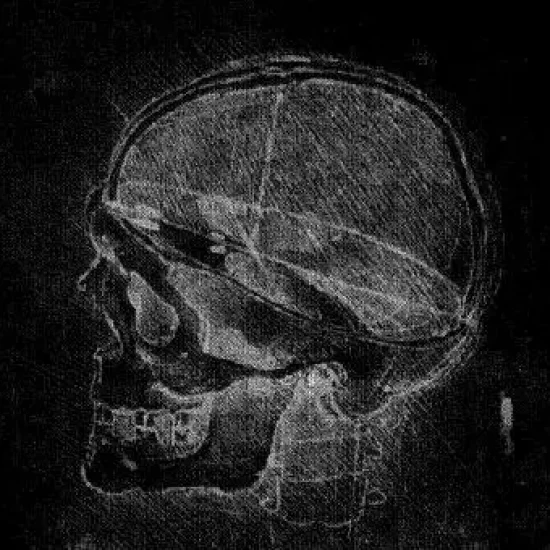
Skull drawing is one of those art forms that seems to stick around across different styles and cultures. Whether you’re into realism or enjoy experimenting with abstract designs, skulls offer endless possibilities. They’re not just creepy imagery but symbols packed with meaning that have evolved throughout history. Here’s a dive into why skulls are such a popular subject and a few tips to get you started with your own skull drawing.
The Skull as a Symbol in Art
Skulls have been used in art for centuries. In many ancient cultures, they represented the connection between life and death. For example, in Aztec art, skulls often symbolized the cycle of life, appearing in ceremonies to honor death as a natural phase. Fast forward to the Renaissance, and artists like Albrecht Dürer used skulls to reflect human mortality, reminding people of the fleeting nature of life.
In Japanese art, skulls pop up in everything from ukiyo-e prints to modern anime. They aren’t always just about death. Sometimes, they’re linked to themes of transformation or hidden emotions. Then there’s Mexico’s Day of the Dead, where “calaveras” (ornate, playful skulls) celebrate life rather than mourn death, showing that skull imagery isn’t always as dark as it seems.
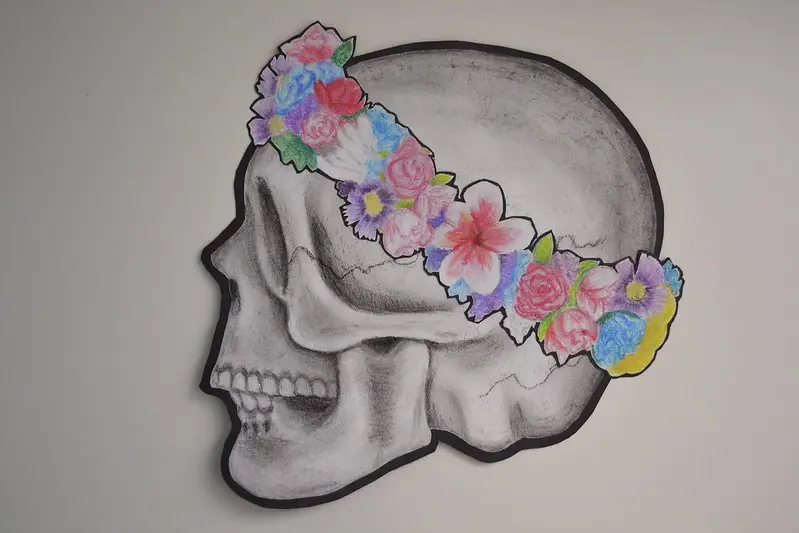
ElizabethHudy, Dia De Los Muertos, Attribution-NoDerivs (CC BY-ND 2.0), https://flic.kr/p/aZkVpe
Today, contemporary artists like Damien Hirst push the boundaries of skull art even further. They might use skulls to explore themes of legacy or rebellion. Whether in street art or high-end galleries, skulls remain a powerful tool for making a statement, and they’ve also found their way into pop culture and fashion.
Why Artists Are Drawn to Skull Drawings
One of the reasons skulls make such compelling subjects is their versatility. Some artists go for detailed realism, trying to recreate every crack and ridge of a skull. Others take a more symbolic route, sketching stylized or abstract forms that convey a certain mood or message. The symbolism is broad—mortality, power, transformation, or even beauty—giving artists room to explore all kinds of themes.
You’ll also see a lot of mixed media in skull art. Some drawings stick to traditional black-and-white techniques, while others use vibrant colors or experiment with collage elements. Artists working digitally might create hyper-detailed skulls or manipulate textures to give a surreal vibe. These variations allow each artist to leave their personal mark.
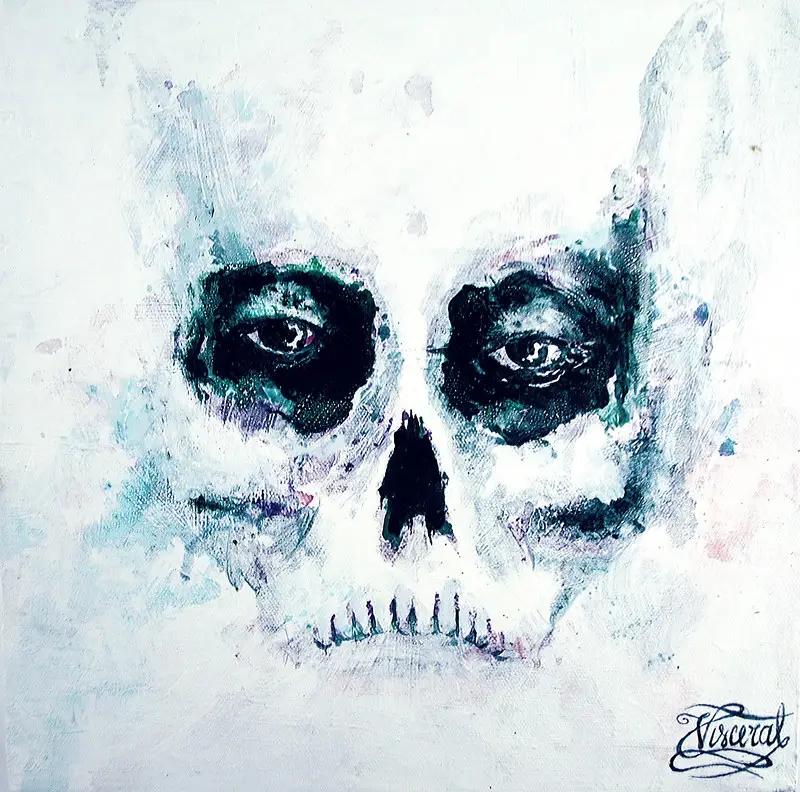
*Visceral Insoluble*, skull portrait, Attribution (CC BY 2.0), https://flic.kr/p/f3siQw
How to Start Drawing a Skull
Getting into skull drawing can feel intimidating, but you don’t need to start with an intricate design. The key is to break it down into simple shapes. Start with a rough circle for the cranium and a boxy shape below for the jaw. From there, add in the eye sockets, nose cavity, and teeth.
Reference photos are a big help if you want accuracy. A medical skull model can also give you a good idea of how light and shadow fall on a three-dimensional form. Once you’ve got the basic structure down, experiment with shading. Adding shadows and highlights will give your drawing depth, making it look more realistic.
If realism isn’t your style, feel free to take a more artistic approach. Try exaggerating certain features or using bold lines for a graphic look. You could also go the Day of the Dead route, incorporating patterns, flowers, and bright colors to give your skull a unique twist.
Tips for Making Your Skull Drawing Stand Out
- Play with textures and shading. Using different pencil techniques—like cross-hatching or stippling—can give your drawing a dynamic feel. Experiment with soft blending for smooth shadows or sharper lines for a more dramatic effect.
- Change perspectives. Draw the skull from different angles, like a three-quarter view or even from below, to make your piece more engaging.
- Mix in other elements. Skulls pair well with floral patterns, geometric shapes, or animals. Combining elements adds depth to the meaning behind your drawing.
Wrapping It Up
Skull drawings offer a mix of challenge and freedom. Whether you focus on realistic anatomy or dive into symbolic and abstract styles, skulls offer endless room to explore. Plus, they’re loaded with meaning, which makes them endlessly fascinating to draw. It’s no wonder artists keep coming back to them.
So grab a pencil, pick a style that feels right for you, and start sketching. There’s no wrong way to approach it, and every skull you draw is another chance to explore a new side of this timeless subject.
Featured image: brent simpson, skull, Attribution-ShareAlike (CC BY-SA 2.0), https://flic.kr/p/6e8qzM