
Surrealist photographers have a knack for turning the everyday into something magical, eerie, or outright bizarre. It’s not about capturing reality as it is but transforming it into something that challenges how we see the world. Emerging alongside the broader Surrealist art movement in the early 20th century, these photographers brought a dreamlike quality to their work, using innovative techniques and boundless imagination. Let’s dive into what makes surrealist photography so captivating and explore some of the artists who defined the genre.
What Makes Photography Surreal?
At its heart, surrealist photography is about looking beyond the obvious. It often involves bending the rules of reality, whether through creative staging, darkroom experiments, or post-production tricks. The goal isn’t to document a moment but to create a feeling—something unexpected and thought-provoking.
Surrealist photographers frequently used double exposure, photomontage, and distorted perspectives to create their otherworldly images. Shadows, reflections, and unlikely juxtapositions were their tools to transport viewers into alternate realities. By doing so, they blurred the lines between reality, art, and the subconscious mind.
Surrealist Photographers: Man Ray
When discussing surrealist photographers, Man Ray is often the first name that comes to mind. This American artist, deeply involved in the Surrealist movement, was known for pushing photographic boundaries. His famous “rayographs” were created without a camera, placing objects directly onto photosensitive paper and exposing them to light. The results were ghostly, abstract images that seemed to come from another world.
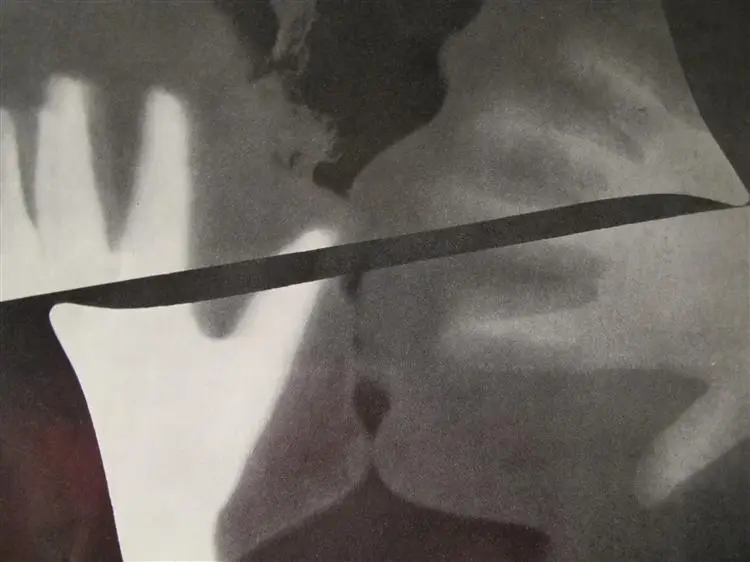
Source: Man Ray – The kiss, https://www.wikiart.org/en/man-ray/rayograph-the-kiss-1922
Man Ray’s work was never limited to one style or technique. His images often played with light and shadow, turning simple objects into surreal compositions. By exploring the medium’s possibilities, he paved the way for generations of photographers looking to do more than just capture moments.
Surrealist Photographers: Dora Maar
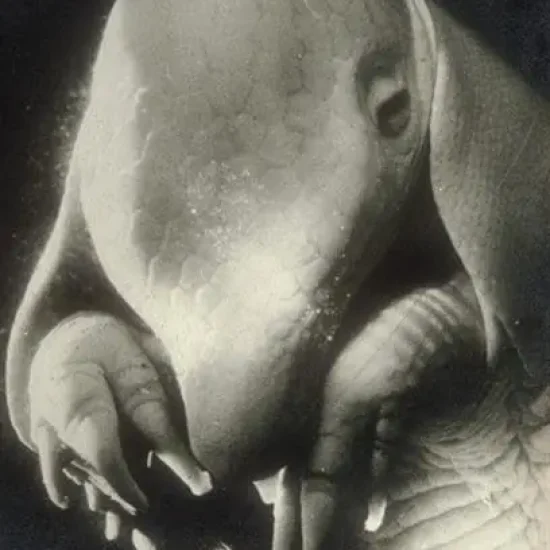
Dora Maar, a French surrealist photographer, brought a unique blend of elegance and unease to her work. Known for her collaborations with other surrealists, such as Pablo Picasso, and her distinctive artistic voice, Maar created haunting images that often mixed beauty with darkness. Her photograph Père Ubu, which features a distorted creature—later identified as an armadillo fetus—is a striking example of her ability to turn reality into something deeply unsettling.
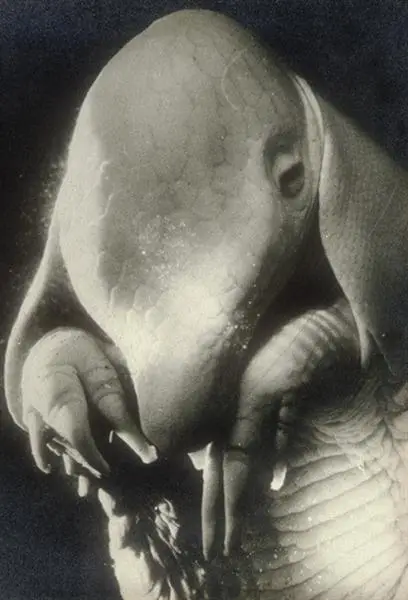
Source: Père Ubu – Dora Maar, Fair use, https://www.wikiart.org/en/dora-maar/pere-ubu-1936
Maar’s work extended beyond eerie creations. She was also a skilled portrait and fashion photographer, often layering elements of surrealism into her commercial work. Her ability to bridge the worlds of high fashion and artistic experimentation added depth to the surrealist movement and demonstrated its broad applicability.
Surrealist Photographers: Brassaï
Brassaï, a Hungarian-born photographer who spent much of his career in Paris, found surrealism in the city’s shadows. His nighttime photographs captured foggy streets, dimly lit alleys, and intriguing figures, transforming the familiar into something mysterious. Unlike many surrealist photographers, Brassaï relied less on manipulation and more on his keen eye for composition and lighting.
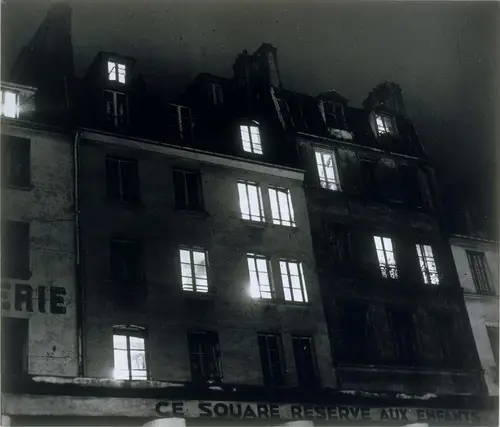
Source: Brassaï – Façades rue de l’Hôtel de Ville, Fair Use, https://www.wikiart.org/en/brassai/fa-ades-rue-de-l-h-tel-de-ville-1932
Through his lens, Paris became a dreamscape. His work showed that surrealism wasn’t confined to staged images or darkroom tricks—it could also be found in the world around us. His poetic approach to photography set him apart as a master of finding the surreal in the real.
Surrealist Photographers: Duane Michals
Duane Michals, an American photographer, added a narrative element to surrealist photography. His images often come in sequences, telling short, dreamlike stories. Sometimes he includes handwritten captions, merging text and visuals to create a personal, almost diary-like feel.
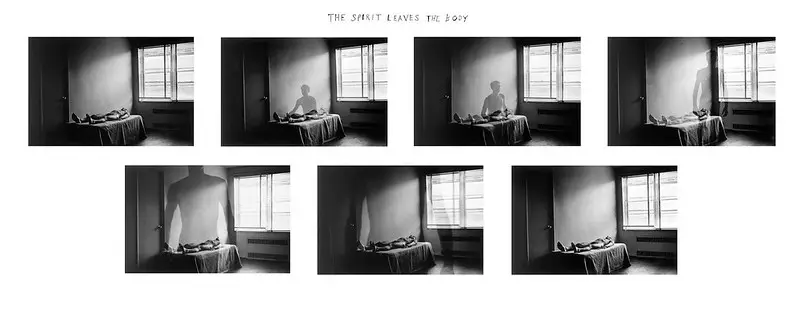
Source: Julia Thon, Duane Michals – The Spirit Leaves the Body, Attribution (CC BY 2.0), https://flic.kr/p/SJDaSF
Michals’ work explores universal themes like love, memory, and mortality, but with a surreal twist. Ghostly figures, impossible reflections, and whimsical scenarios make his photography both deeply human and otherworldly. His approach has influenced countless contemporary photographers looking to tell stories through their work.
Techniques That Define Surrealist Photography
Surrealist photographers experimented heavily with their craft, using both in-camera and darkroom techniques to achieve their signature styles. Double exposure was a favorite method, layering multiple images to create unexpected compositions. Others, like Man Ray, used objects and light creatively to produce entirely abstract pieces. Collages and photomontages allowed for the creation of fantastical worlds by combining different photographic elements.
Dora Maar, for instance, employed overlaying techniques in some of her fashion photography, crafting haunting yet beautiful images. These tools weren’t just technical tricks—they were extensions of the artist’s vision, helping to bring their surreal ideas to life.
Why Surrealist Photography Still Resonates
Surrealist photographers have left a lasting impact on art, inspiring countless creators in fields ranging from fine art to advertising. Their focus on imagination and experimentation reminds us that photography isn’t just about documenting reality—it’s about reimagining it.
With artists like Man Ray, Dora Maar, Brassaï, and Duane Michals paving the way, surrealist photography continues to challenge and inspire. Whether through classic techniques or modern digital manipulation, the movement proves that there’s always more than meets the eye.