
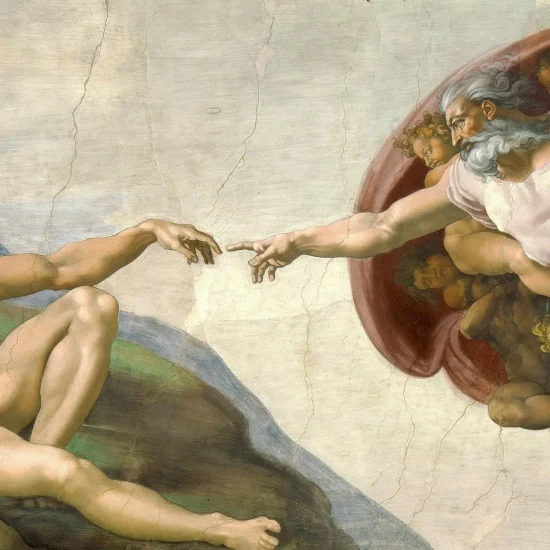
Introduction: The Timeless Appeal of The Creation of Adam
Nestled within the Sistine Chapel’s ceiling, Michelangelo’s The Creation of Adam stands as a monumental achievement in art history. Painted between 1508 and 1512, this fresco captures the awe-inspiring moment when God imparts life to Adam. More than a simple depiction of a biblical scene, the painting embodies profound themes of divinity, humanity, and the universal desire for connection. Its enduring appeal lies in its ability to evoke both intellectual and emotional responses from viewers worldwide.
One cannot overstate the importance of this masterpiece in art history. Even today, standing beneath the Sistine Chapel’s vaulted ceiling, one feels a sense of wonder and reverence that transcends time.
Pro Tip: When viewing the fresco, focus on the near-touch of God and Adam’s fingertips. That gap isn’t just artistic; it’s a powerful metaphor for the energy of creation and the divine spark within us all.
The Context: Michelangelo and the Sistine Chapel
Commissioned by Pope Julius II, Michelangelo initially resisted taking on the project, seeing himself as a sculptor, not a painter. However, the pope’s insistence and Michelangelo’s undeniable talent eventually led to one of the most remarkable works in Western art. The Sistine Chapel ceiling, which includes The Creation of Adam among nine central panels depicting scenes from Genesis, presented immense challenges. Michelangelo had to master the complexities of fresco painting, an arduous technique involving the application of pigment onto wet plaster.
The physical strain of working on scaffolding, painting above his head for years, added to the monumental difficulty of the task. Yet, Michelangelo poured his genius into this work, creating something that still leaves us spellbound.
Interestingly, the Sistine Chapel itself was a hub of Renaissance innovation. Artists like Botticelli and Perugino had already contributed to its decoration, but Michelangelo’s ceiling brought a dynamic and transformative vision that reshaped the space.
Pro Tip: Want to appreciate Michelangelo’s genius even more? Study sketches and preparatory drawings. They reveal how he developed his ideas and refined his figures, making the finished work even more impressive.
The Composition: Analyzing the Masterpiece
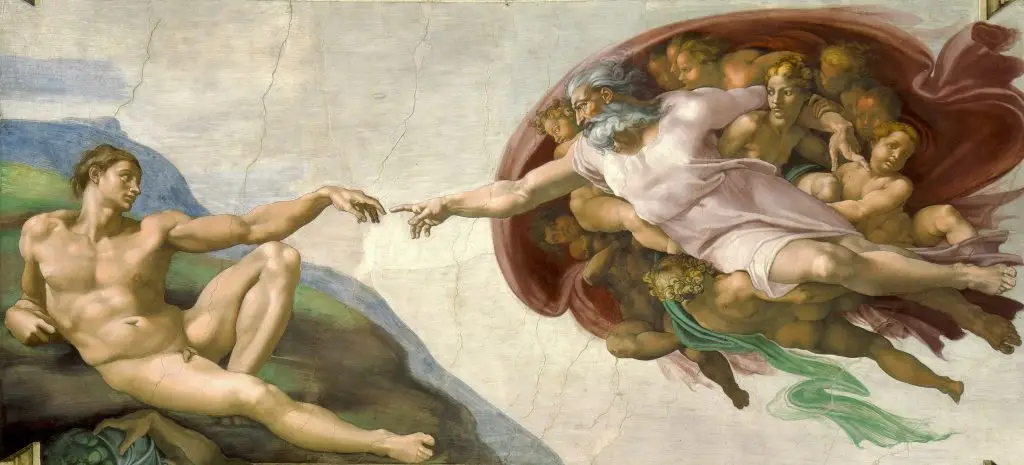
At the heart of The Creation of Adam lies a simple yet profound interaction. God, surrounded by angels, stretches his hand toward Adam, whose pose mirrors the classical ideals of human form and beauty. The almost-touching fingers create a sense of tension, as if the spark of life is about to leap across the void.
God is depicted in motion, his form dynamic and powerful, while Adam reclines, serene and awaiting his divine gift. The background is minimal, focusing our attention entirely on the figures. Every detail, from the folds of God’s cloak to the contours of Adam’s body, showcases Michelangelo’s unparalleled understanding of anatomy.
One of the fresco’s most debated aspects is the shape of God’s cloak. Some argue it resembles a human brain, suggesting Michelangelo’s subtle nod to the gift of intellect as part of divine creation. Whether intentional or not, it adds a layer of intrigue that keeps viewers and scholars fascinated.
Pro Tip: Look at the contrast between the physical energy of God and the relaxed posture of Adam. Michelangelo uses these opposing qualities to emphasize the act of creation as both divine and deeply human.
Interpretations and Symbolism
What makes The Creation of Adam so compelling is its rich symbolism. At its core, it’s a story of life and connection. Religiously, it portrays the intimate bond between God and humanity. But during the Renaissance, this was also seen through the lens of humanism, celebrating mankind’s potential and divine nature.
The near-touching hands have inspired countless interpretations. Some see it as a moment of divine intervention, while others view it as a metaphor for humanity’s capacity to reach toward greatness. The ambiguous space between their fingers invites us to reflect on the delicate balance between faith and reason, dependence and independence.
Pro Tip: Don’t stop at the fresco—explore the intellectual context of the Renaissance. Understanding how art, science, and philosophy intersected during Michelangelo’s time can enrich your appreciation of this masterpiece.
The Legacy of The Creation of Adam
Over the centuries, The Creation of Adam has become an emblem of creativity itself. Its iconic image of the near-touching hands has been reproduced, parodied, and referenced across countless platforms—from high art to pop culture. But beyond its fame, it remains a masterclass in technique and storytelling.
Restoration efforts in the 20th century revealed the vibrancy of Michelangelo’s colors, bringing new life to the fresco and ensuring its preservation for future generations. While debates about its interpretations continue, one thing is certain: The Creation of Adam transcends its time, resonating with viewers in deeply personal ways.
Pro Tip: If you’re planning a visit, try to see the fresco at different times of day. The changing light in the chapel can subtly alter its appearance, adding to the experience.
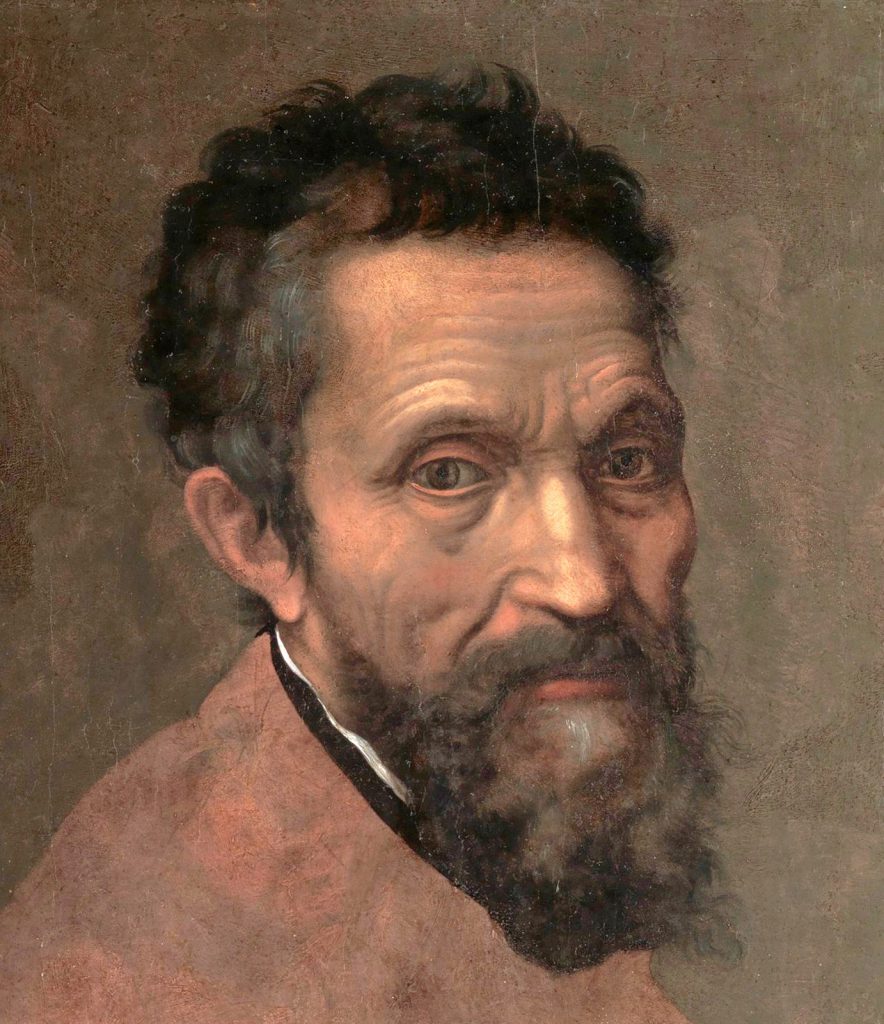
Source: A portrait of Michelangelo, https://commons.wikimedia.org/wiki/File:Michelangelo_Daniele_da_Volterra_(dettaglio).jpg
Conclusion: The Enduring Power of Michelangelo’s Vision
Standing beneath The Creation of Adam, you can’t help but feel a profound sense of connection—not just to the divine, but to the shared humanity that Michelangelo so masterfully depicted. It’s a reminder of our origins, our potential, and the enduring power of art to move and inspire.
Michelangelo’s masterpiece doesn’t merely depict a story; it invites us into a dialogue about what it means to be human. Whether you’re a seasoned art enthusiast or a curious traveler, this fresco has something to offer everyone.
Pro Tip: Take a moment to reflect on your personal response to the fresco. Sometimes, the most valuable insights come from what the art evokes in you.
Featured image: https://upload.wikimedia.org/wikipedia/commons/5/5b/Michelangelo_-_Creation_of_Adam_%28cropped%29.jpg
