
Franz West was born in 1947 in Vienna, and he didn’t just make art—he reimagined what it could be. Unlike most artists who want their work admired from a respectful distance, he encouraged people to touch, hold, and even wear his pieces. His art was physical, messy, and humorous. He didn’t shy away from the absurd, and that’s exactly what makes his work unforgettable.
From his early days sketching in Vienna to his large-scale public installations, Franz West’s career bridged the worlds of high art and everyday life. His sculptures, installations, and furniture reshaped how people interacted with art, and his influence can still be felt in galleries and museums worldwide.
How Franz West Started His Career
Vienna in the post-war years was a mix of the old and the new, a city caught between its imperial past and the rise of modernity. He grew up in this environment, absorbing the city’s contradictions. He wasn’t a prodigy who picked up a brush at age five. In fact, West only started creating art in his twenties, eventually studying at the Academy of Fine Arts Vienna under the sculptor Bruno Gironcoli.
His formative years in the 1970s were heavily influenced by Viennese Actionism, a radical art movement known for its provocative performances. But unlike Actionists who sought shock value, Franz West took a more playful, less confrontational approach. He was fascinated by how art could interact with the human body—not as a static object but as something people could physically engage with.
Source: Matt Brown, Attribution (CC BY 2.0), https://flic.kr/p/2f1P2b9
The Birth of “Adaptives”
By the early 1980s, he had developed one of his most iconic concepts: the “Adaptives,” or Passstücke. These were small, often plaster-based sculptures meant to be held, worn, or moved around. Imagine picking up a piece of art at a gallery and feeling its weight, its texture.
The Adaptives blurred the line between artwork and toy, encouraging viewers to abandon their passive role and instead become co-creators. This idea of art as a shared experience was revolutionary at the time. It wasn’t about the object itself; it was about the interaction, the performance that occurred when someone engaged with it.
Pro Tip: Next time you’re in a gallery, don’t just look at the art—think about how it would feel to touch or use it. Franz West believed that interaction was a key part of understanding art.
Sculptures That Break the Mold
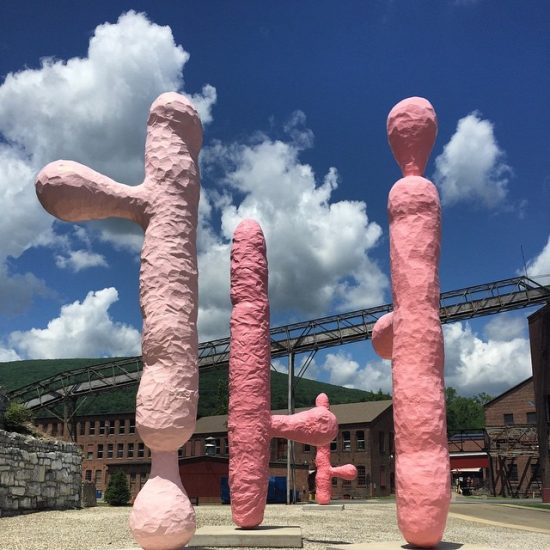
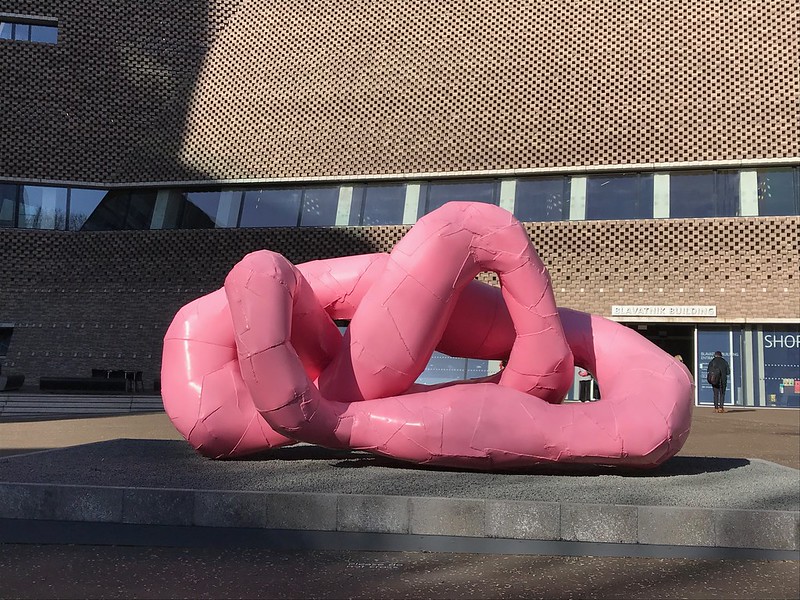
West didn’t stop with handheld objects. His larger works are just as unconventional. By the 1990s, he was creating massive sculptures out of papier-mâché, plaster, and later, aluminum. These pieces often looked like they had been plucked straight out of a surreal dream—bulky, colorful, and oddly shaped, like something organic yet not alive.
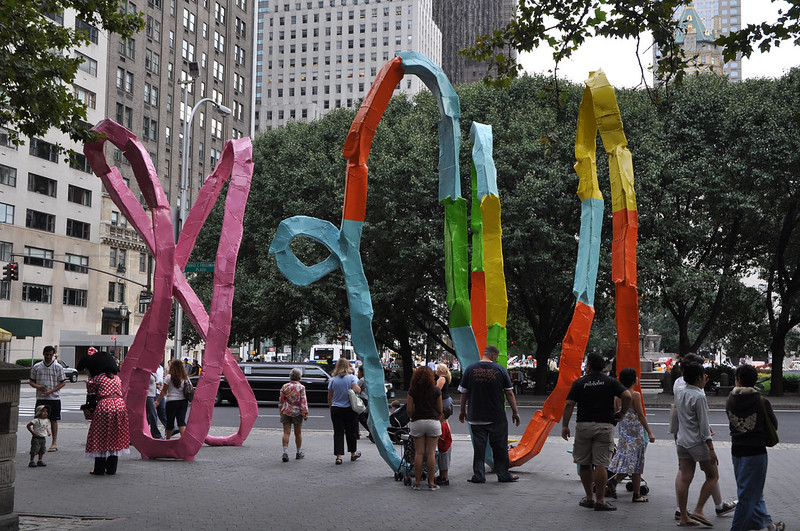
Take The Ego and the Id, for example. This towering work, with its looping, chaotic forms, was installed at the Baltimore Museum of Art. The title, a nod to Freud’s psychoanalytic theory, reflects West’s interest in the mind’s complexities. But it’s not an intellectual puzzle you solve; it’s something you feel in your gut, something that sparks a visceral reaction.
Source: Hrag Vartanian, Attribution-NoDerivs (CC BY-ND 2.0), https://flic.kr/p/6WrWyM
Blending Art and Design
West’s creativity didn’t stop at sculptures. He also dabbled in furniture design, creating chairs and couches that were as quirky as his other works. These weren’t the sleek, minimalist designs of a typical furniture store. They were lumpy, colorful, and unapologetically weird—true works of art that you could actually sit on.
His furniture pieces often appeared in his exhibitions, blurring the line between functional design and fine art. He believed that art shouldn’t just be looked at; it should be lived with.
Collaborations between Franz West and other artists
Another hallmark of West’s career was his collaborative spirit. He worked with artists, musicians, and designers, often incorporating their ideas into his projects. For example, his partnership with fellow artists like Douglas Gordon and Anselm Reyle resulted in multi-disciplinary works that pushed the boundaries of what art could be.
West’s art wasn’t about ego or authorship. He saw his work as part of a broader conversation, a communal act of creation. This openness made his art feel approachable and grounded, even when it was abstract or unconventional.
Making Public Art Accessible
Franz West believed art didn’t belong solely in pristine galleries or museums. Many of his later works were large-scale public installations, like the Safety Curtain he designed for the Vienna State Opera in 2009. This 176-square-meter piece brought his unique aesthetic to one of Austria’s most iconic institutions, proving that his playful, experimental style could hold its own in even the grandest settings.
Pro Tip: Public art isn’t just decoration. Next time you see a sculpture in a park or plaza, take a moment to think about why it’s there and how it interacts with its surroundings.
The Legacy Franz West Left
Franz West passed away in 2012, but his work continues to resonate. Whether it’s through his interactive Adaptives, his sprawling sculptures, or his whimsical furniture, Franz West’s art invites people to rethink their relationship with creativity.
His approach was never about perfection or tradition. It was messy, tactile, and deeply human. Franz West believed art was something to be experienced, not just admired—a philosophy that feels as relevant today as it did decades ago.
Featured image: Heidi De Vries, Attribution (CC BY 2.0), https://flic.kr/p/tWAK3i