The Curious Case of Bouba and Kiki
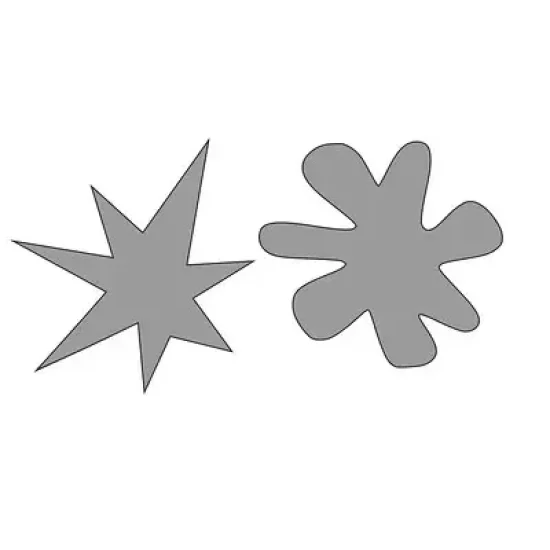
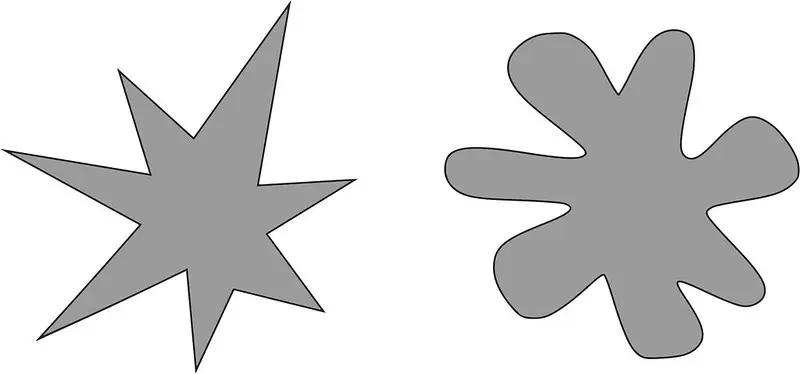
Ever wondered why some words feel “sharp” while others feel “soft”? The bouba-kiki effect explores this odd connection between shapes and sounds, showing how we seem naturally inclined to associate certain sounds with specific visuals. It all began with an experiment: if you see a spiky shape and a curvy one, which would you call “bouba” and which would you call “kiki”? Most people tend to label the spiky shape as “kiki” and the curvy one as “bouba” without any real reason beyond how the words feel.
This phenomenon taps into something deep in how humans link sound with sight. When we hear “bouba,” the roundness of the sound somehow just fits the roundness of the shape. “Kiki,” on the other hand, sounds sharp and quick, fitting the edges and points of the spiky shape. While it seems like a simple quirk, the bouba-kiki effect has sparked curiosity in fields ranging from psychology to design, shedding light on how we perceive and create.
Why Sound and Shape Pairings Feel So Intuitive
The bouba-kiki effect belongs to the world of sound symbolism, where certain sounds evoke sensory impressions beyond literal meaning. For example, high-pitched sounds (like the “k” in kiki) are often associated with small, sharp objects, while rounder sounds (like the “b” in bouba) feel larger or softer. This link between sound and size even shows up in unrelated languages and cultures, suggesting that humans share an intuitive sense of how shapes should “sound.”
So, what makes this effect so widespread? Research suggests it could be a mix of brain wiring and sensory overlap, where hearing and sight pathways might influence each other. This type of sound-shape association has popped up in studies worldwide, even in children and people who’ve never been exposed to these words before. In the arts, this connection gives creators a fascinating tool for communicating with audiences in non-literal ways.
Bouba, Kiki, and Artistic Expression
The bouba-kiki effect is especially interesting in design, branding, and abstract art, where creators use subtle sound-shape associations to evoke specific feelings. Take logo design: a company looking to feel “smooth” and approachable might go for a rounded logo and a soft name. A tech startup emphasizing sharpness or speed might lean toward angular shapes and punchy names.
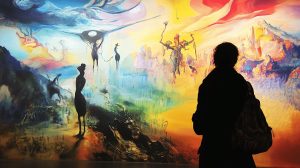
The effect is also inspiring in abstract artwork, where the goal isn’t to show anything concrete but to convey a feeling. Artists might create rounded forms that feel soft or comforting, almost like a visual “bouba.” Others might use jagged edges to evoke tension or excitement, giving viewers a sense of “kiki.” This style doesn’t tell viewers how to feel but instead gives them cues through shape and form, creating an emotional response based on something as simple as a curve or an angle.
Why This Matters for How We See Art and Language
The bouba-kiki effect isn’t just a quirky experiment; it shows us a lot about how we experience the world through an almost “synesthetic” lens, where senses overlap. It hints at a natural tendency to make connections, even between things as unrelated as sounds and shapes. In art, these connections add another layer of meaning, helping us sense moods or themes without needing words.
Some artists and designers even embrace this effect on a deeper level, creating work that encourages viewers to explore how they perceive sound, shape, and meaning. By incorporating “bouba” and “kiki” qualities, they play with our expectations, creating pieces that feel intuitively right in a way that words can’t always explain. This type of art feels almost primal, tapping into something in our brains that’s beyond logic and closer to sensation.
Bouba and Kiki as a Gateway to Artistic Exploration
For anyone looking to create, the bouba-kiki effect can be a playful tool to spark ideas. Think about how shapes make you feel and how certain sounds seem to fit with those feelings. If you’re designing something meant to feel “smooth” or “friendly,” explore round shapes and soft sounds. For something meant to feel bold or intense, try out angular lines and sharp sounds.
Ultimately, bouba and kiki remind us that even the simplest associations can open doors to creativity. By tapping into how we naturally connect sounds and shapes, artists can create experiences that feel as visceral as they are visual, leaving a lasting impression based on an intuitive understanding we might not even be aware we have. Whether it’s art, design, or even just the way we interpret a word, bouba and kiki give us a peek into how sound and shape come together in unexpected ways.