
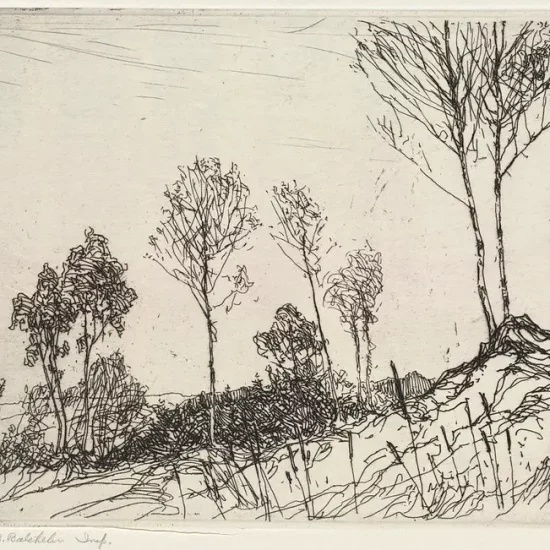
Drawing a tree might seem like a simple task, but there’s actually a lot to explore in this process. Trees are great subjects for both beginner and experienced artists because they allow room for creativity, practice with different techniques, and the ability to capture the natural world. Whether you’re sketching a bare winter oak or a dense, leafy maple, the possibilities are endless. Let’s dive into how to approach drawing trees and why it’s such a rewarding experience.
Why Trees Make Great Drawing Subjects
First of all, trees are everywhere, which makes them an accessible subject for almost anyone. Whether you’re looking out your window or taking a walk in the park, there’s no shortage of inspiration. Each tree is unique in its structure, making it an interesting challenge for artists. You can focus on different elements, like the rough texture of bark, the delicate spread of branches, or the way light filters through leaves.
Another benefit is that you don’t need perfect proportions or technical precision to capture the essence of a tree. Drawing trees can be as detailed or as abstract as you like. This makes them an ideal subject for artists experimenting with different styles. Plus, if you’re just learning to draw, practicing with trees can help you improve your observation skills and build confidence.
Breaking Down the Structure
The first step in drawing a tree is understanding its basic structure. Trees might look complex at first glance but they can be broken down into simpler shapes. Start with the trunk, which is often the thickest part, and work your way out to the branches. The trunk usually tapers as it moves upward, and the branches spread out in various directions. These branches also get thinner the further they are from the trunk.
One tip that can help is to visualize the tree as a series of lines and shapes. For example, the trunk might resemble a cylinder, while the branches are more like smaller, irregular lines that sprout outwards. This method helps simplify the process and gives you a clear structure to build on.
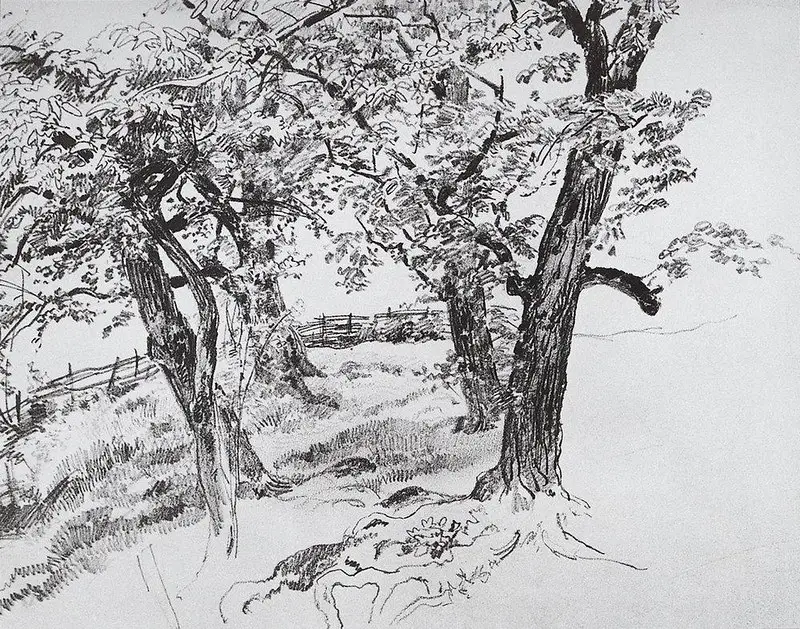
Source: Art Gallery ErgsArt – by ErgSap, https://flic.kr/p/zNx9WA
Adding Detail: Bark, Leaves, and Roots
Once you have the basic outline, you can start adding details that bring the tree to life. The bark, for example, is full of texture. By using small, irregular strokes, you can create the appearance of rough, uneven surfaces. Some trees have smooth bark, while others are knotted or cracked. Pay attention to these differences as they add realism to your drawing.
Next, come the leaves. Drawing every single leaf isn’t necessary unless you’re going for an ultra-detailed style. Instead, you can suggest clusters of leaves by shading and creating different tones. Group leaves together in bunches rather than trying to capture them individually. The direction of your strokes can suggest the shape of the canopy, whether it’s wide and spreading or narrow and tall.
Roots are another feature you should include, especially if you’re drawing the base of the tree. Roots can twist and wind, adding to the sense of natural movement in your drawing. They can be drawn as thick, curling shapes that dig into the ground or just hinted at by sketching a few lines that extend from the base of the trunk.
Playing with Perspective and Light
Drawing trees also gives you the opportunity to experiment with perspective and lighting. If you’re drawing from life, notice how the tree looks from different angles. Looking up at a tree from the base will give you a completely different view compared to looking at it from far away. These changes in perspective can help you challenge your drawing skills and create more dynamic compositions.
Light is another factor that can greatly influence how your tree looks on paper. Pay attention to where the light is coming from and how it affects the shadows on the tree. For instance, the side of the tree that faces the sun will be lighter, while the opposite side will have more shadow. These light and shadow patterns can add depth and make your drawing more realistic.
The Joy of Experimenting with Style
Trees offer a lot of freedom when it comes to artistic style. You can approach them with a hyper-realistic technique or go for a more abstract representation. Some artists like to exaggerate the twisting shapes of branches or the spread of leaves, while others might focus on the stark, simple lines of a bare winter tree. You can also experiment with different mediums like pencils, charcoal, or ink to see how each material captures the texture and form of the tree in unique ways.
If you’re into abstract drawing, trees can be even more fun. You can break down the form of the tree into basic geometric shapes or play with color, even if it’s not realistic. The goal isn’t always to create a perfect copy of what you see but to express the energy and movement of the tree in your own style.
Drawing Trees Improve Your Overall Drawing Skills
Drawing trees might seem simple, but it’s a great way to practice essential drawing techniques. For example, sketching out a tree’s complex network of branches helps improve your ability to observe and replicate intricate forms. It also teaches you about balance, since the weight of a tree is often unevenly distributed. This can help you develop a sense of composition, making your drawings more engaging and well-balanced.
Working with shading and texture while drawing trees also helps improve your skills in these areas. By practicing how to render rough bark or soft leaves, you become better at capturing different textures, which can then be applied to other subjects. Over time, you’ll find that your tree drawings become more detailed and lifelike, or perhaps more expressive, depending on your style.
Closing Thoughts on Drawing Trees: Enjoy the Process
The beauty of drawing trees lies in its versatility. It’s a subject that can be as simple or as complex as you want it to be. Whether you’re just starting or have been drawing for years, there’s always something new to discover. So, next time you’re looking for a subject to draw, why not look outside and take inspiration from the trees around you? Grab a pencil, find a quiet spot, and let your creativity flow.
Featured image: Boston Public Library – Woodbury, Charles H, Trees, – Attribution (CC BY 2.0) – https://flic.kr/p/cZDwqu