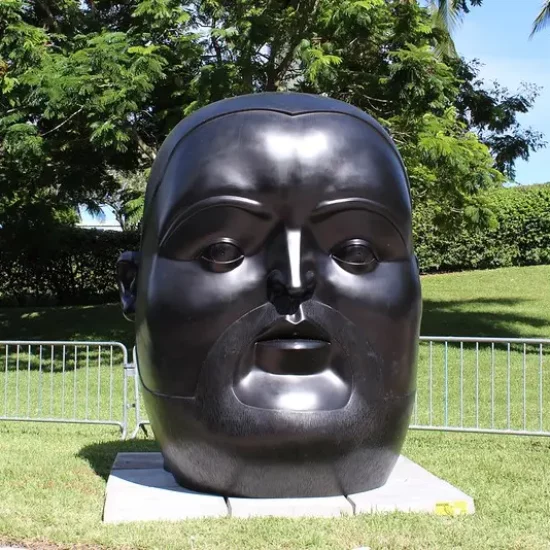
Fernando Botero is one of the most recognizable names in contemporary art, known for his distinctive style characterized by inflated, voluminous forms. His figures, whether in paintings or sculptures, often appear larger than life, with rounded shapes that invite both curiosity and deeper thought. Yet, Botero’s work is not just about physical size. It’s rich with layers of social commentary, humor, and political critique, all while showcasing his unique aesthetic. This article explores his early life, the development of his signature style, the political undertones in his art, and his impact on the art world.
Early Life of Fernando Botero
Fernando Botero was born on April 19, 1932, in Medellín, Colombia. His upbringing in this vibrant city had a significant impact on his later work. Botero’s father, a traveling salesman, passed away when Fernando was just four years old, leaving his mother, a seamstress, to support the family. Despite this, Botero’s childhood was filled with the lively culture of Medellín, particularly its strong Catholic influence. Religious art and architecture played a key role in his early exposure to visual aesthetics.
Interestingly, Botero’s first passion wasn’t art. At the age of 12, he attended a bullfighting school—a sport deeply embedded in Latin American culture. Though his time as an aspiring matador was short-lived, it would later inspire some of his most iconic early paintings. By his teenage years, Botero had shifted his focus entirely to painting, and his illustrations were published in local newspapers.
Developing the Botero Style
In the early 1950s, Fernando Botero moved to Bogotá, Colombia’s capital, where he began to make a name for himself in the local art scene. His first big break came in 1952, when he won a national prize for his work. This recognition allowed him to travel to Europe, where he studied the works of the old masters. He spent time in Madrid, Florence, and Paris, absorbing techniques from the Renaissance painters he admired, such as Piero della Francesca and Diego Velázquez.
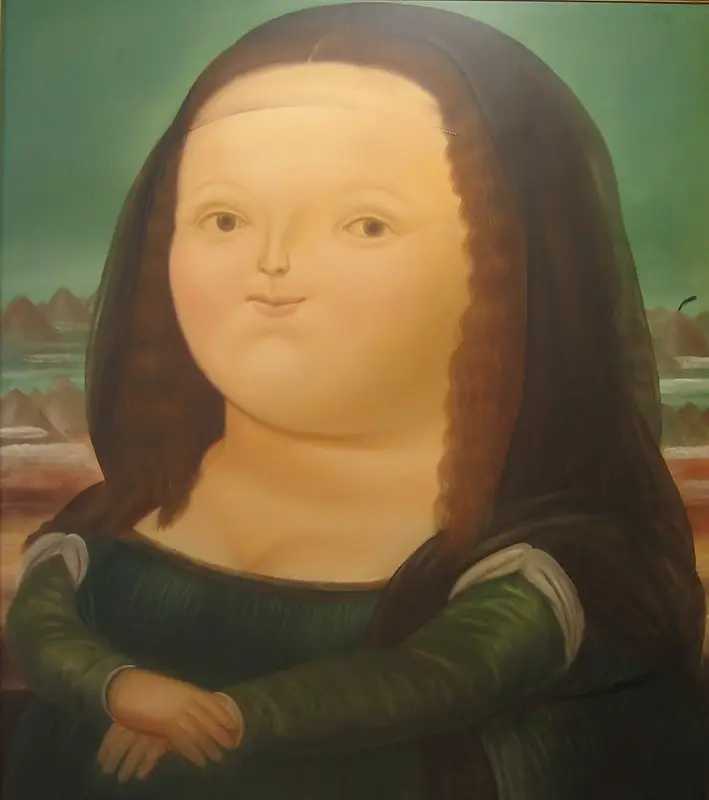
During his time in Europe, Botero developed a fascination with classical art, but he didn’t fully adopt the strict forms he was studying. Instead, he started experimenting with proportion and volume. In 1956, he created “Still Life with Mandolin,” a pivotal work in which the mandolin appears unnaturally bloated, marking the beginning of his signature style. This approach, often referred to as “Boterismo,” emerged as his way of exploring volume, shape, and space in a manner that was unique in the art world.
Botero himself has often clarified that his figures are not “fat” in the way that many assume. Instead, he describes them as an exploration of form and volume. The exaggerated shapes are not intended to mock but to create a sense of monumentality and presence. For Botero, expanding the figures creates a new dialogue between the viewer and the subject.
Political and Social Commentary
While Botero’s style is instantly recognizable for its playful proportions, his art also carries significant political weight. Growing up in Colombia, a country long plagued by violence, corruption, and social inequality, Botero witnessed firsthand the challenges faced by ordinary citizens. This background inevitably found its way into his work, where he often addressed issues of power, injustice, and suffering.
One of the most striking examples of Botero’s political engagement is his 2005 series on the Abu Ghraib prison scandal. Responding to the abuse of Iraqi prisoners by U.S. soldiers, Botero created a series of paintings that depict scenes of torture and humiliation. Using his characteristic voluminous figures, the works contrast the absurdity of exaggerated forms with the gravity of the subject matter. The series was highly controversial, particularly in the United States, but Botero defended it as an important moral statement against human rights abuses.
Earlier in his career, Botero also tackled the issue of drug violence in Colombia. His painting “The Death of Pablo Escobar” (1999) depicts the notorious drug lord riddled with bullets, an almost surreal portrayal of Colombia’s brutal drug war. This piece is part of a larger body of work that critiques the violence and corruption rampant in his home country. By using his exaggerated style, Botero is able to present these grim realities in a way that is both thought-provoking and accessible.
Sculpture: Monumental Forms in Public Spaces
Though Botero is best known for his paintings, his sculptures have gained international acclaim. He began working in sculpture in the late 1970s and quickly translated his love for volume into bronze. Botero’s sculptures are often displayed in public spaces, from the streets of Medellín to Park Avenue in New York City, and they reflect the same sense of inflated form found in his paintings.
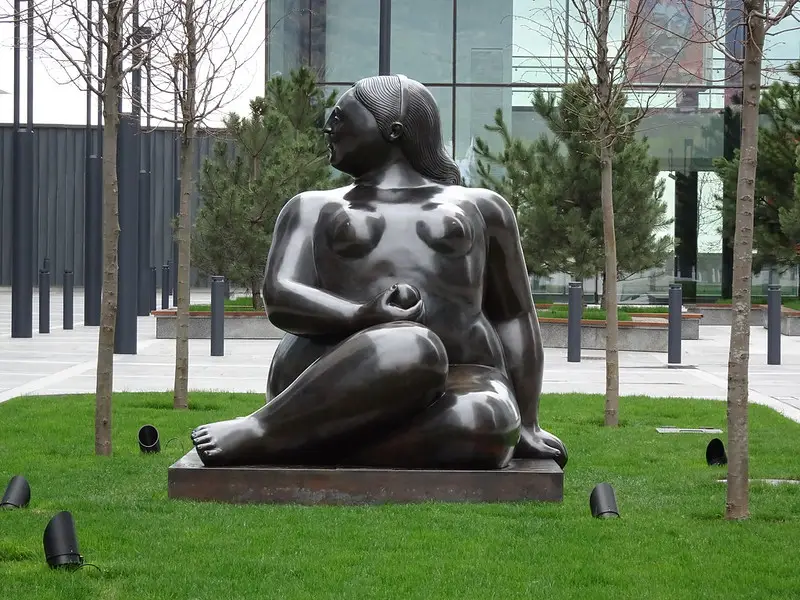
Botero has always been committed to making art accessible to the public. His sculptures, such as “The Cat” and “The Bird,” are placed in prominent locations around the world, where they invite people to interact with them. In Medellín, his donated sculptures are housed in the Plaza Botero, a public square that has become a cultural landmark in the city.
Botero’s works encourage engagement, allowing viewers to touch and even climb on the large bronze figures, which adds an interactive element to the art.
Humor, Satire, and Cultural Identity
Despite his engagement with serious political issues, Botero’s art is often infused with a sense of humor and irony. His exaggerated figures sometimes serve as a playful critique of societal norms, power structures, or human vanity. For example, his depictions of politicians, clergy, and soldiers often seem to poke fun at the absurdity of authority. Yet, despite their inflated forms, the figures maintain a sense of humanity, and their emotions are palpable.
Botero also draws heavily on Latin American culture. Bullfighters, dancers, and musicians often appear in his works, offering a vivid portrayal of life in Colombia. Even as his art touches on universal themes, it remains rooted in Latin America’s cultural vibrancy and contradictions.
The Legacy of Fernando Botero
Fernando Botero’s contributions to the art world are immense. His ability to blend aesthetic innovation with social commentary has made his work both popular and critically respected. Botero’s paintings and sculptures can be found in major museums, including the Museum of Modern Art in New York and the Musée d’Art Moderne in Paris, as well as in numerous public spaces worldwide.
In Colombia, Botero’s legacy is cemented through his generous donations to cultural institutions. The Botero Museum in Bogotá, which houses many of his works alongside those of other famous artists, is a testament to his commitment to making art accessible to the public.
As Botero continues to create well into his 90s, his influence on both contemporary art and popular culture remains undeniable. His unique ability to engage with complex issues through a playful, volumetric style has ensured his place as one of the most celebrated artists of his time.
Attribution:
Featured Image: Attribution (CC BY 2.0) – Phillip Pessar – Fernando Botero Sculpture Bayfront Park – https://flic.kr/p/zemphJ
Image 1: Attribution-ShareAlike (CC BY-SA 2.0) – Micah MacAllen – Monalisa by Fernando Botero – https://flic.kr/p/6jjPm
Image 2: Attribution (CC BY 2.0) – Alexandru Panoiu – Seated Woman by Fernando Botero (AP4P0212) – https://flic.kr/p/KukdKu