
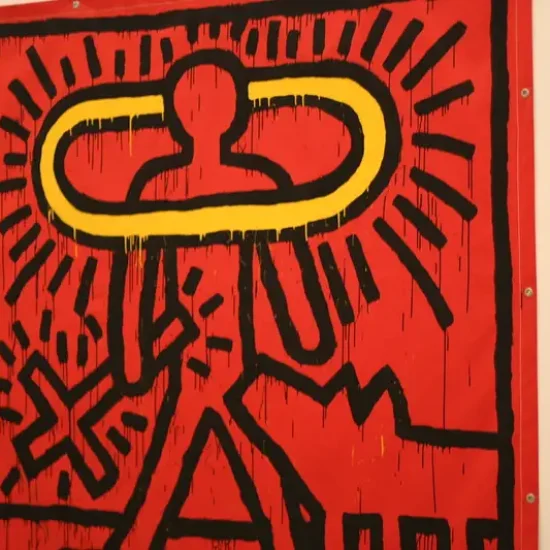
Keith Haring burst onto the streets of New York City with his bold and unmistakable art in the 1980s, creating a lasting legacy that bridges the worlds of street culture, high art, and social activism. His works, with their thick black lines, vibrant primary colors, and dynamic figures, weren’t just visually striking—they were a voice for change in a world in flux. To truly appreciate Haring’s genius, we must delve into his life, inspirations, and the broader cultural significance of his art.
From Pennsylvania to the Big Apple: Keith Haring’s Early Years
Haring was born in Reading, Pennsylvania, in 1958 and raised in nearby Kutztown. His early exposure to art came through his father, an amateur cartoonist, and popular culture influences like Dr. Seuss and Walt Disney. These early inspirations would later inform the playful yet poignant tone of his work.
In 1978, Haring moved to New York City to study at the School of Visual Arts. It was here, in the city’s electric and gritty environment, that he truly found his voice. Haring became enraptured by the underground art scene, which thrived in abandoned subway stations, on crumbling walls, and within experimental spaces. His initial works—chalk drawings on blank advertising panels in subway stations—served as his first gallery. These ephemeral pieces earned him attention from commuters and fellow artists alike, setting the stage for his rise.
Pro Tip: If you’re interested in seeing these works, search for archival photographs of Haring’s subway art. Many are now documented and can be viewed online through collections like the Keith Haring Foundation.
The Language of Keith Haring: Decoding His Visual Symbols
Haring’s art is instantly recognizable. It’s a language in itself, composed of recurring symbols like radiant babies, barking dogs, and dancing figures. Each element carried a deeper meaning. The radiant baby, often outlined in glowing lines, symbolized innocence and hope for the future. Barking dogs and flying saucers reflected social paranoia and surveillance, while interconnected figures represented unity and togetherness.
Haring believed in the universal accessibility of art, deliberately crafting imagery that transcended linguistic and cultural barriers. This philosophy echoes the street art ethos—art for the people, in the places where they live their lives.
Pro Tip: Try interpreting Haring’s symbols in different contexts. His art is deceptively simple but layered with meaning. Viewing them in their original settings, such as murals or subway photographs, adds another dimension to understanding his intent.

Source: Pom’, Keith Haring, All World, Attribution-ShareAlike (CC BY 2.0), https://flic.kr/p/2oRSD6G
Street to Studio: Bridging the Gap
While his street art gained popularity, Haring also made waves in the gallery world. In 1982, he held his first major solo exhibition at Tony Shafrazi Gallery, where his murals and paintings captured the energy of his street work. However, he never abandoned his roots. Haring’s public art projects became some of his most celebrated achievements, including murals in hospitals, schools, and even the Berlin Wall.
One of his most famous murals, “Crack is Wack,” painted on a handball court in Harlem, addressed the crack cocaine epidemic gripping the city in the 1980s. Despite initial pushback from authorities, it became a lasting symbol of the artist’s commitment to social causes.
Pro Tip: Visit the original “Crack is Wack” mural, which has been restored and remains on view in East Harlem. It’s a powerful reminder of Haring’s activism and his ability to amplify urgent social issues through art.
Art as Activism: The Political Pulse of Haring’s Work
Haring was more than an artist; he was a cultural commentator. As an openly gay man during the height of the AIDS crisis, he used his platform to fight stigma and raise awareness. His work “Silence = Death,” created in collaboration with the activist group ACT UP, remains one of the most iconic images of the AIDS movement. Its message was simple yet powerful: the cost of silence was lives lost.
In 1989, just a year before his death, Haring established the Keith Haring Foundation to ensure his legacy continued. The foundation supports HIV/AIDS organizations, children’s programs, and other charitable causes, reflecting the values he championed throughout his life.
Pro Tip: For those interested in exploring Haring’s activism further, many of his works and related materials are available for public viewing on the Keith Haring Foundation website.
Commercial Collaborations: Breaking Barriers
Unlike many contemporary artists, Haring was unafraid to collaborate with commercial brands. He believed in democratizing art, making it accessible to all rather than confining it to galleries or private collections. In 1986, he opened the Pop Shop, a store that sold affordable merchandise featuring his designs, from T-shirts to posters.
Some critics accused Haring of “selling out,” but he saw things differently. For him, art wasn’t about exclusivity—it was about communication. Through the Pop Shop, he reached audiences who might never have set foot in a gallery.

Source: Rob Corder, Keith Haring, Attribution-NonCommercial (CC BY-NC 2.0), https://flic.kr/p/2iuWvXg
Pro Tip: Original merchandise from the Pop Shop is highly collectible today. If you’re looking to purchase items featuring Haring’s work, ensure they’re licensed by the Keith Haring Foundation to support his mission.
The Legacy of Keith Haring
Though Haring passed away in 1990 at the age of 31 due to AIDS-related complications, his legacy continues to thrive. His murals remain beloved landmarks, his symbols resonate across generations, and his advocacy work persists through the foundation he created. His influence can be seen in contemporary street art, fashion, and even pop culture.
Haring’s work is a testament to the enduring power of art as a tool for social change. It reminds us that creativity, when harnessed with purpose, has the ability to connect people, spark dialogue, and inspire action.Pro Tip: If you want to experience Haring’s art firsthand, seek out exhibitions of his work. Many museums and galleries worldwide continue to showcase his pieces, offering fresh perspectives on his career and impact.
Featured image: craigles75, Keith Haring, Attribution (CC BY 2.0), https://flic.kr/p/2i7KxGT