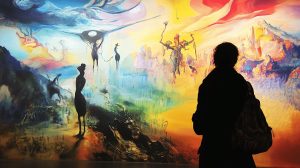

Maximalism is one of those art movements that’s pretty hard to miss. Where minimalism goes for clean lines and simplicity, maximalism dives headfirst into chaos, aiming for impact and detail in every square inch. It’s like stepping into a world where “more is more” becomes a rule rather than a rebellion. Maximalism packs the kind of punch that can make viewers feel either awestruck or overwhelmed—and sometimes both.
What Is Maximalism, Really?
In the art world, maximalism is basically about taking every limit, throwing it out the window, and focusing on making something intensely vibrant and packed with content. Artists create works with intense patterns, bold colors, and layers upon layers of elements. Imagine vivid colors splashing across a canvas, not following any particular order, but still somehow forming a captivating composition.
Unlike other movements, maximalism isn’t really about a specific technique or style. Instead, it’s a philosophy. If minimalism asks you to consider “less,” maximalism dares you to consider “everything.” An artwork isn’t stripped down to essentials. It’s filled, almost to the point of bursting. This approach has a particular appeal to artists who want their work to be anything but silent. Maximalist works tend to be noisy with texture, pattern, and tone, a deliberate assault on simplicity and constraint.
The Origins of Maximalism
Maximalism’s roots can be traced through several historical art periods, but it’s often seen as a response to the popularity of minimalism in the 20th century. Where minimalism was clean, orderly, and subdued, maximalism appeared as an unapologetic reaction—filled with opulent shapes, intense contrasts, and a certain sense of organized chaos. Movements like Baroque and Rococo could be considered some early influences on maximalist ideals. These styles were famous for their ornamental nature and intricate detailing, layering patterns, golds, and shapes to craft incredibly dynamic works.
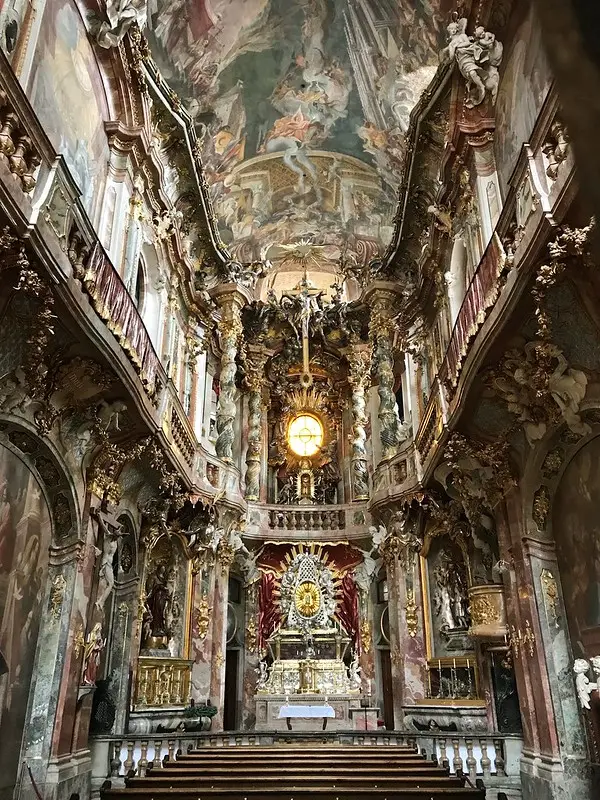
Source: Mark Pegrum, Asamkirche, Munich, Germany (December 2017), Attribution-ShareAlike (CC BY-SA 2.0), https://flic.kr/p/21i3b2s
By the late 20th century, maximalism really started to take shape, especially in contrast to the minimalist principles that were so celebrated at the time. Artists felt that limiting themselves to basics could only say so much. They began using maximalist techniques to push boundaries, often reflecting consumer culture, the media’s constant overload, and the richness (and chaos) of modern life. In a sense, maximalism was a cultural reaction, almost like it was shouting in a room where minimalism whispered.
Key Characteristics of Maximalist Art
Maximalism has a few defining features that make it instantly recognizable. First off, it embraces a mix of colors—especially bold, saturated hues that seem to vibrate. You’ll rarely see a blank background in maximalist work. Every space is an opportunity to add detail or texture. It’s common for maximalist pieces to feel as though there’s a story unfolding within them, not in a linear sense, but as an explosion of sensory elements that all want to be seen and felt.
Patterns are another big element. Maximalist artists often overlay patterns within patterns, creating works that you could look at for hours and still find new details. The effect is immersive and, at times, hypnotic. Then there’s the texture. Maximalist artists experiment with a wide range of media—paint, textiles, digital effects, collage elements—to create something deeply tactile, even if it’s only on a flat surface. With maximalism, it’s all about packing in as much as possible without losing the impact of each part.
Famous Maximalist Artists
Maximalism may not be tied to any particular technique, but some artists are known for using this “more is more” approach with amazing results. American painter Kehinde Wiley, for instance, is known for his vibrant, hyper-detailed portraits, where he often places figures against lavishly ornate backgrounds. There’s a lot to take in, from the intensity of colors to the intricate patterns, and it all contributes to a sense of grandeur and presence.
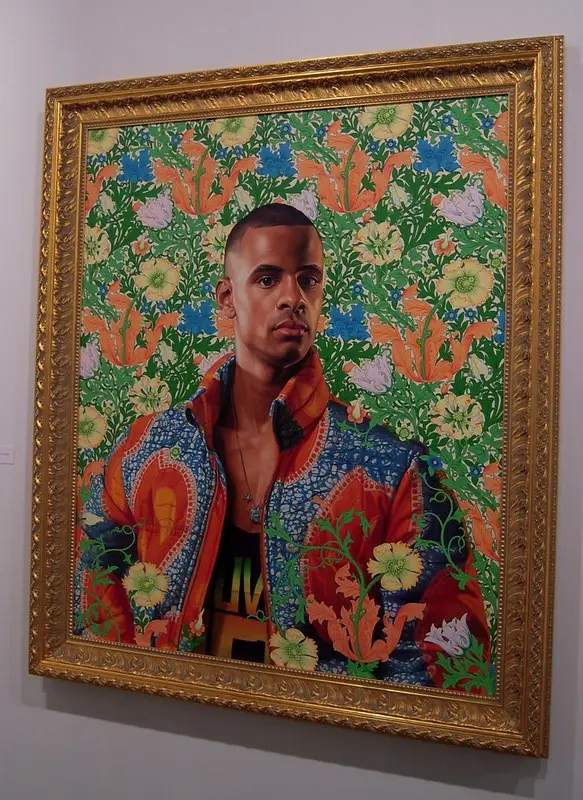
Source: Rob Larsen, Kehinde Wiley painting, Attribution (CC BY 2.0), https://flic.kr/p/b7yoTc
Another well-known artist is Yayoi Kusama, who has made her mark with her “Infinity Rooms” installations. Covered in polka dots and mirrors, her work creates surreal, seemingly endless reflections that immerse visitors in a maximalist experience that plays with space and perception. Kusama’s pieces embody maximalism in that they fill the viewer’s field of vision with endless detail and color, leaving almost no blank space to distract from the impact.
Why Maximalism Is So Appealing (Or Intimidating)
Maximalism has a special kind of appeal because it feels alive and uncontained. It’s not a style for those who want quiet contemplation; instead, it grabs you and demands a response. For some, this kind of visual overload can feel overwhelming. But for others, maximalism is like a breath of fresh air in a world that’s often controlled and pared down. It taps into an urge to embrace complexity and excess, letting art express things that can’t fit neatly into a box. There’s something about its boldness that feels liberating.
Another reason maximalism resonates with people is its honesty. Maximalist art doesn’t hide behind subtleties or polite understatement. It’s loud and proud, fully embracing its contradictions and chaos. In many ways, it reflects the fast-paced, overstimulated nature of modern life. Our world is often intense, and maximalism just mirrors that intensity, giving it a place to live in the art world.
Maximalism Today
Today, maximalism shows up in various art forms, from painting and sculpture to fashion and interior design. You’ll see it in bright, eclectic home decor, or even in pop culture, where maximalist aesthetics are used to convey drama and richness. In fashion, for example, it’s become a trend to mix patterns, colors, and styles in ways that would once have been considered “too much.” Maximalism isn’t confined to any one medium. Its core idea—abundance and layering—finds its way into any art form that wants to make a statement.
In a world where simplicity is often seen as sophisticated, maximalism stands out by defying that notion entirely. It’s a reminder that sometimes, being excessive can feel just as genuine and impactful as being minimal. When you look at a maximalist piece, you see more than just color and texture; you see an artist’s decision to break rules, to overflow, and to celebrate every part of the canvas.
Featured image: https://flic.kr/p/2jbqd4L