

Minimalist art is more than just a movement; it’s a philosophy. Its clean lines, open spaces, and stripped-down forms invite us to pause and reconsider what we truly need to feel connected to the world around us. Let’s dive deep into this fascinating art form, exploring its origins, philosophies, and enduring influence.
Introduction to Minimalist Art
Minimalist art emerged in the 1960s, primarily in the United States, as a response to the chaotic complexity of earlier art movements like abstract expressionism. While abstract expressionists reveled in emotion and spontaneity, minimalists sought clarity through reduction.
This movement is about stripping away the unnecessary to focus on the essentials: form, color, and space. Think of Donald Judd’s geometric sculptures or Agnes Martin’s delicate grids—pieces that encourage you to engage without distraction. Minimalist art’s simplicity resonates far beyond galleries, influencing design, architecture, and even the way we think about life.
Pro Tip: When viewing minimalist art, resist the urge to “figure it out.” Instead, observe its shapes, materials, and use of space. Let the simplicity speak for itself.
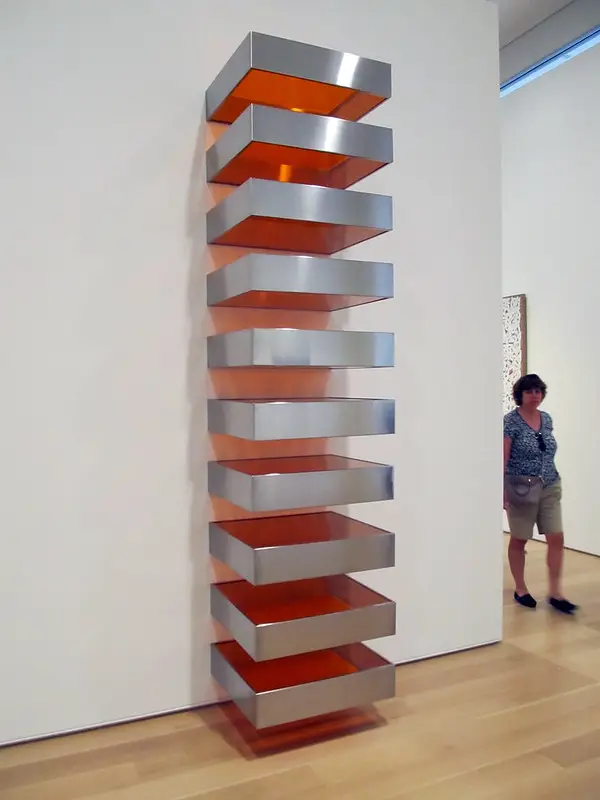
Source: daryl_mitchell, Untitled Donald Judd, A sculpture of Donald Judd – Attribution-ShareAlike (CC BY-SA 2.0), https://flic.kr/p/RntbSq
The Philosophy Behind Minimalism
Minimalism isn’t just about art; it’s about perception. The principle of “less is more” is at its core. By reducing forms to their basics, minimalist artists encourage viewers to see the world differently, focusing on what’s present rather than what’s missing.
Interestingly, minimalism often aligns with Zen Buddhism, which emphasizes mindfulness and presence. This spiritual undertone encourages a meditative interaction with the art, asking the viewer to engage deeply with the work’s essence.
Purity plays a central role too. The materials are often left unaltered, highlighting their inherent qualities. For instance, a steel sculpture doesn’t mask its industrial origin but embraces it, turning the ordinary into something profound.
Pro Tip: Minimalist art is best appreciated in quiet, open spaces. The absence of distraction mirrors the art’s focus on essentialism.
Key Figures in Minimalist Art
The minimalist movement produced some of the most influential artists of the 20th century:
- Donald Judd: Known for his precise, industrial-style sculptures, Judd’s work often used metal and Plexiglas, emphasizing form and material over narrative.
- Agnes Martin: Her serene, grid-based paintings radiate calm and focus, inviting viewers into a meditative state.
- Dan Flavin: Flavin redefined art by using fluorescent light, transforming ordinary spaces into ethereal, glowing experiences.
Each of these artists contributed uniquely to the minimalist ethos. Their work challenges us to see beauty in simplicity and craftsmanship in restraint.
Pro Tip: Research an artist’s inspiration when studying their work. For instance, understanding Agnes Martin’s connection to nature can deepen your appreciation for her subtle compositions.
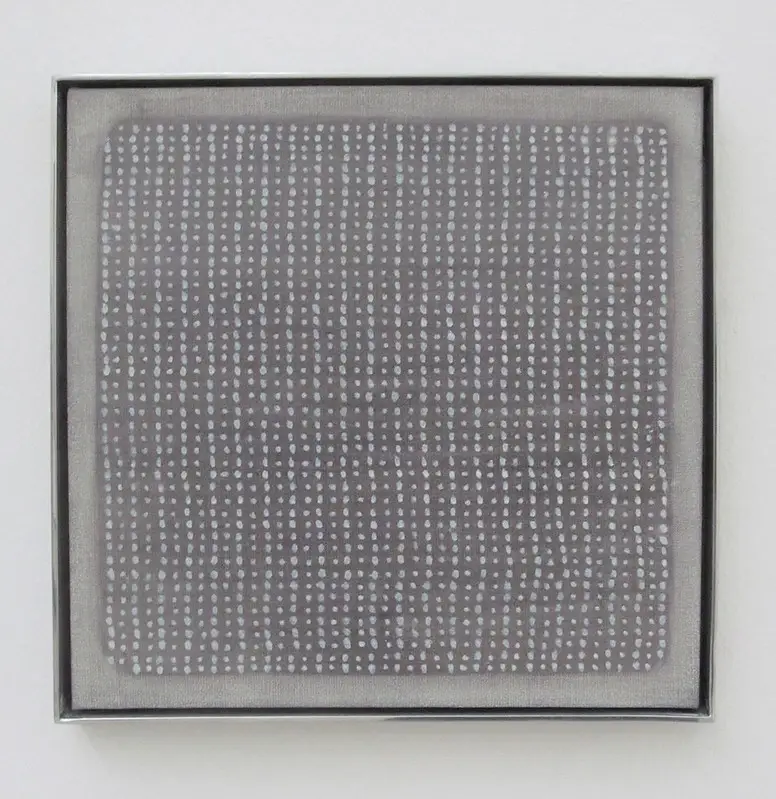
Source: Rob Corder, Agnes Martin, Attribution-NonCommercial (CC BY-NC 2.0), https://flic.kr/p/L2R5RG
Minimalist Techniques and Materials
Minimalist artists are masters of precision and economy. Their work often features clean lines, geometric forms, and neutral palettes. Materials like concrete, metal, and wood are left raw, celebrated for their authenticity.
Negative space is another hallmark. By carefully balancing what’s there with what’s not, minimalist pieces achieve a harmonious, contemplative effect.
Minimalist techniques have also inspired other disciplines, from architecture to furniture design. The principles remain the same: clarity, balance, and focus.
Pro Tip: Look for contrasts between textures and spaces in minimalist art. These subtleties are intentional and offer insight into the artist’s vision.
The Impact of Minimalist Art on Contemporary Culture
Minimalist art has had a profound influence on today’s world. From the sleek lines of modern architecture to the uncluttered interfaces of digital design, its principles are everywhere. Even the minimalist lifestyle movement, which emphasizes owning less, owes a debt to this art form.
Critics of minimalism sometimes argue that it’s too austere or inaccessible. Yet, its endurance suggests otherwise. In a noisy, fast-paced world, minimalism offers a refuge—an opportunity to focus and breathe.
Pro Tip: Explore how minimalism translates into everyday life. A minimalist wardrobe, for instance, mirrors the same values as minimalist art: quality over quantity.
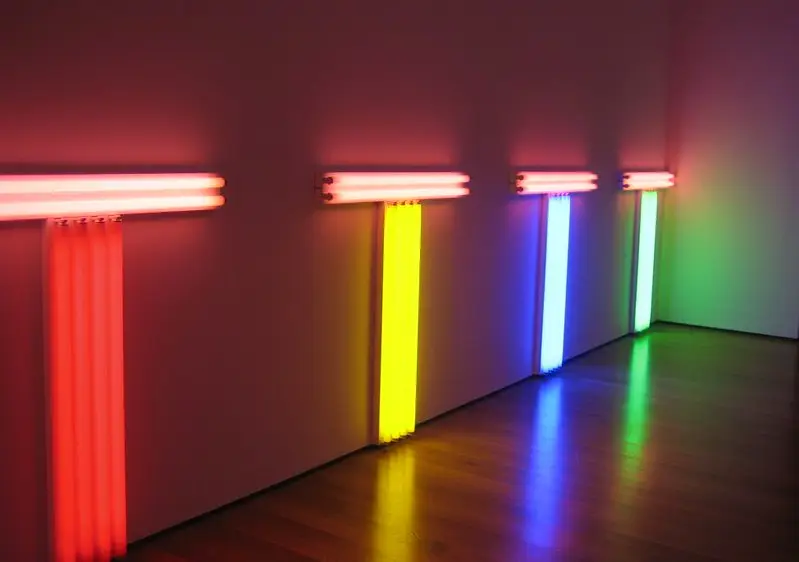
Source: Carl Mikoy, Dan Flavin at the MOMA, Color Chart Exhibit, Attribution (CC BY 2.0), https://flic.kr/p/4ykCEy
Conclusion: The Enduring Legacy of Minimalist Art
Minimalist art is a timeless reminder that less can indeed be more. It distills the chaos of life into its simplest, purest elements, encouraging us to slow down and appreciate the beauty of restraint.
As both an artistic and cultural movement, minimalism continues to challenge and inspire. It asks us to reconsider what’s truly important and invites us to embrace the clarity of simplicity in both art and life.
Pro Tip: Next time you encounter minimalist art, give it time. What seems simple at first glance often reveals unexpected depth.
Minimalist art doesn’t just strip things away; it adds meaning to the essentials. By engaging with it thoughtfully, you’ll discover that simplicity isn’t about lacking—it’s about discovering what matters most.
Featured image: https://unsplash.com/photos/brown-ceramic-teacup-XtUd5SiX464