
Neoclassicism was more than just a style; it was a movement that reshaped art, architecture, and culture. Originating in the mid-18th century, it came as a response to the exuberance of Baroque and Rococo styles, focusing on simplicity, symmetry, and a return to classical ideals. Whether in a painting, a building, or a sculpture, Neoclassicism carried a sense of refinement and discipline that resonated deeply during the Enlightenment.
The Birth of Neoclassicism
Neoclassicism didn’t emerge in isolation. It was born out of the Enlightenment, an intellectual movement that prized reason, morality, and knowledge. The rediscovery of ancient ruins, particularly in places like Pompeii and Herculaneum, played a huge role. These archaeological digs revealed the splendor of Greek and Roman art, sparking widespread fascination with their aesthetics and ideals.
Artists and architects found a fresh sense of purpose in these discoveries. They weren’t just copying what they saw but were reinterpreting it to align with contemporary ideas about order, civic responsibility, and human potential. It wasn’t just about aesthetics; it was about embodying the values of an age that sought clarity and reason.
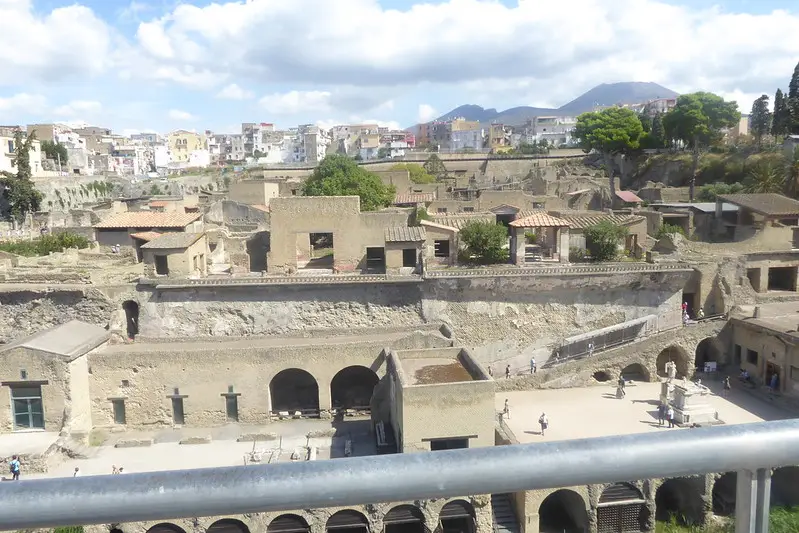
Source: Hyspaosines, Herculaneum – Attribution-ShareAlike (CC-SA BY 2.0), https://flic.kr/p/XKAo3V
Defining Features of Neoclassicism
Neoclassical art set itself apart with its restraint and focus on the essentials. Gone were the intricate flourishes and dramatic contrasts of earlier styles. Instead, this art was characterized by clean lines, muted tones, and balanced compositions.
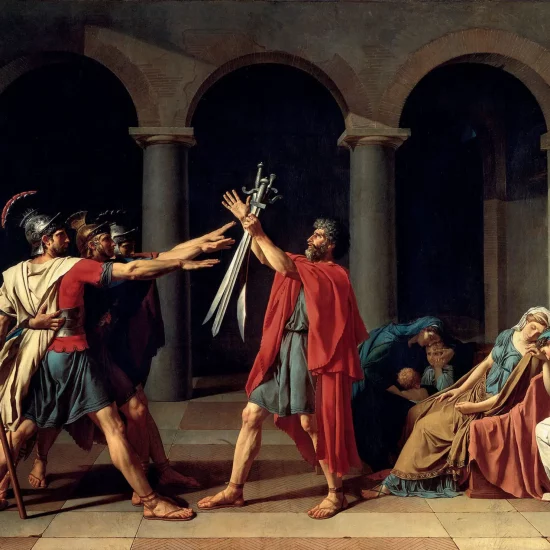
Take, for example, The Oath of the Horatii by Jacques-Louis David. The painting isn’t just visually striking; it tells a story of loyalty, sacrifice, and duty. Every element in the frame feels deliberate, from the rigid postures of the figures to the sparse, columned backdrop that harks back to ancient Roman architecture. This kind of storytelling was central to Neoclassical art—it wasn’t just about beauty but about conveying timeless moral lessons.
Architecture: A Nod to Antiquity
Neoclassical architecture stands as one of the movement’s most enduring legacies. It embraced the grandeur of ancient Greece and Rome, with columns, domes, and pediments taking center stage. However, unlike the decorative excess of the Baroque period, Neoclassical buildings aimed for a sense of order and stability.
A prime example is the Pantheon in Paris. Modeled after its ancient Roman namesake, it exudes strength and simplicity. Its symmetrical design, paired with clean geometric forms, captures the essence of the Neoclassical ethos. Similarly, the U.S. Capitol in Washington, D.C., demonstrates how the movement found its way across the Atlantic, symbolizing ideals of democracy and civic pride.
The style wasn’t just limited to monumental buildings. Neoclassical principles also influenced urban planning, furniture design, and even interior decor. This adaptability helped the movement take root in diverse cultural contexts worldwide.
Sculpting Perfection
In sculpture, Neoclassicism brought a revival of classical techniques and ideals. Artists like Antonio Canova led the charge, creating works that felt timeless yet profoundly human. His masterpiece Psyche Revived by Cupid’s Kiss exemplifies the movement’s approach. The sculpture is more than just a representation of myth; it captures emotion and narrative with a precision that feels almost alive.
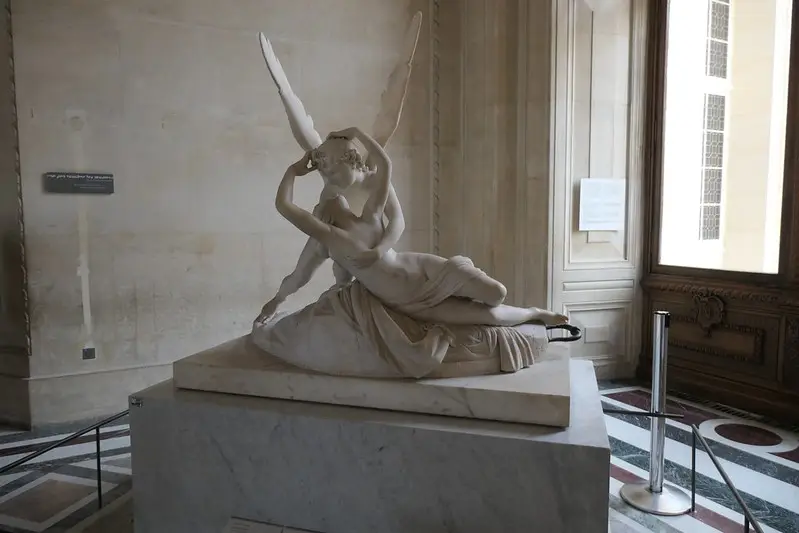
Source: Sjaak Kempe, 20220428 09 Paris – Louvre – Antonio Canova – Psyche Revived by Cupid’s Kiss – Attribution, (CC BY 2.0) – https://flic.kr/p/2nm28Yw
Neoclassical sculptors often idealized the human form, drawing inspiration from ancient statues. But they weren’t just copying what came before. They infused their works with a sense of modernity, using classical techniques to explore contemporary themes like love, heroism, and morality.
Literature and Philosophy in the Neoclassical Age
Though primarily known for its impact on visual arts, Neoclassicism also left its mark on literature and philosophy. Writers and thinkers of the time often looked to classical texts for guidance, blending ancient wisdom with modern ideals. Epic poetry, historical dramas, and essays flourished, often exploring themes of civic duty, morality, and human potential.
Philosophically, the movement was intertwined with Enlightenment ideals. Thinkers like Johann Joachim Winckelmann, often called the father of art history, argued that the art of antiquity represented the pinnacle of human achievement. His writings helped to shape the way artists and scholars approached classical works, emphasizing their beauty, simplicity, and moral depth.
A Worldwide Influence
While Neoclassicism began in Europe, its influence spread globally. In the United States, it became a symbol of the new nation’s ideals. Buildings like Thomas Jefferson’s Monticello and the Virginia State Capitol reflect this blend of classical inspiration and modern functionality.
In Russia, Catherine the Great embraced the style as a way to align her empire with Western ideals. The architecture of St. Petersburg, with its grand facades and orderly layouts, bears the mark of Neoclassical influence. Meanwhile, in India, British colonial architects adapted the style to local conditions, creating structures that blended classical elements with regional aesthetics.
Why Neoclassicism Still Resonates
Even though its heyday has passed, Neoclassicism continues to inspire. Its emphasis on order, proportion, and timeless beauty appeals to those seeking balance in a chaotic world. Whether in a modern government building or a museum exhibit, the movement’s principles remain relevant.
Neoclassicism reminds us of the power of simplicity and the enduring appeal of classical ideals. It’s a testament to how art and architecture can connect us to the past while still speaking to the present. And in a world that often feels overwhelming its calm, disciplined beauty offers a welcome sense of clarity and focus.
Neoclassicism wasn’t just about looking back; it was about reimagining the past to create something meaningful for the future. Its clean lines, moral messages, and sense of purpose continue to captivate, proving that some ideas truly are timeless.
Featured image: https://commons.wikimedia.org/wiki/File:Jacques-Louis_David,_Le_Serment_des_Horaces.jpg