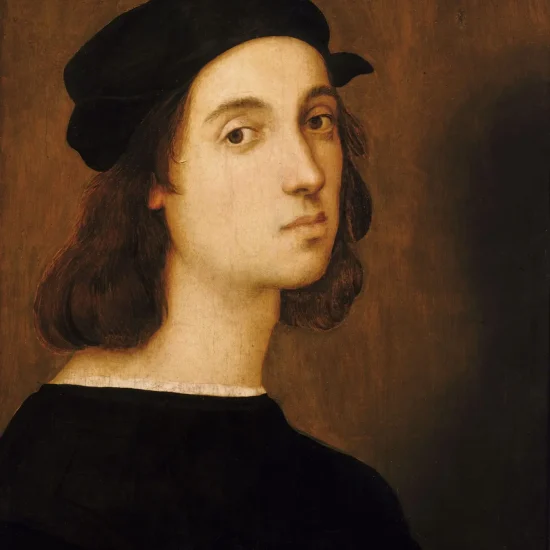
Raphael, born Raffaello Sanzio in 1483, is one of the most influential artists of the Italian Renaissance. His career spanned just over two decades, but in that time, he left an indelible mark on art. Raphael’s works are timeless, and he is known for his balanced compositions, calm and harmonious style, and ability to capture human beauty and emotion. Let’s take a look at his life, his most famous works, and why his art still resonates today.
Early Life and Training
Raphael was born in Urbino, Italy, into a family connected to the arts. His father, Giovanni Santi, was a painter and poet, so Raphael was surrounded by creativity from an early age. Urbino itself was an artistic hub, filled with scholars and artists, which influenced Raphael’s development. After his father’s death when he was just 11, Raphael trained under the painter Perugino, where he learned the basics of perspective, composition, and storytelling in art.
His early works already showed a talent for organizing figures in space and conveying a sense of serenity. He took Perugino’s teachings and built on them, evolving into a master of creating depth and perfect human figures.
Masterpieces That Defined Him
When Raphael arrived in Florence in 1504, he was exposed to the work of Leonardo da Vinci and Michelangelo. These two giants of the Renaissance had a strong impact on his style, but Raphael’s genius was his ability to incorporate their strengths without losing his unique voice.
One of Raphael’s early triumphs is The Marriage of the Virgin (1504), a painting that showcases his ability to place figures harmoniously within a space. His use of perspective and precise architectural elements makes the viewer feel like they are drawn into the scene, a hallmark of his work.
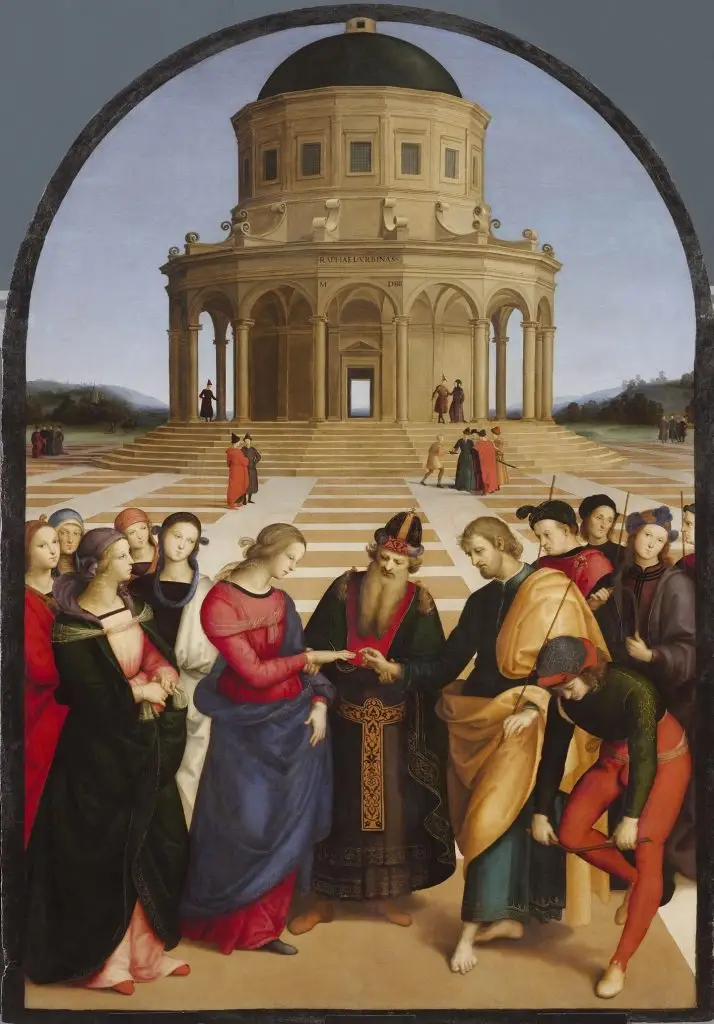
Raphael – The Marriage of the Virgin
Perhaps his most famous work is The School of Athens (1511), a fresco painted in the Vatican’s Stanza della Segnatura. This piece is a testament to Raphael’s skill at combining philosophy, art, and architecture. The painting features great philosophers like Plato and Aristotle, who are surrounded by scholars engaged in debate. Raphael fills the space with dynamic figures, yet everything feels orderly and balanced. The architecture in the painting suggests a grand hall, even though the fresco is flat, displaying Raphael’s mastery over perspective and space.
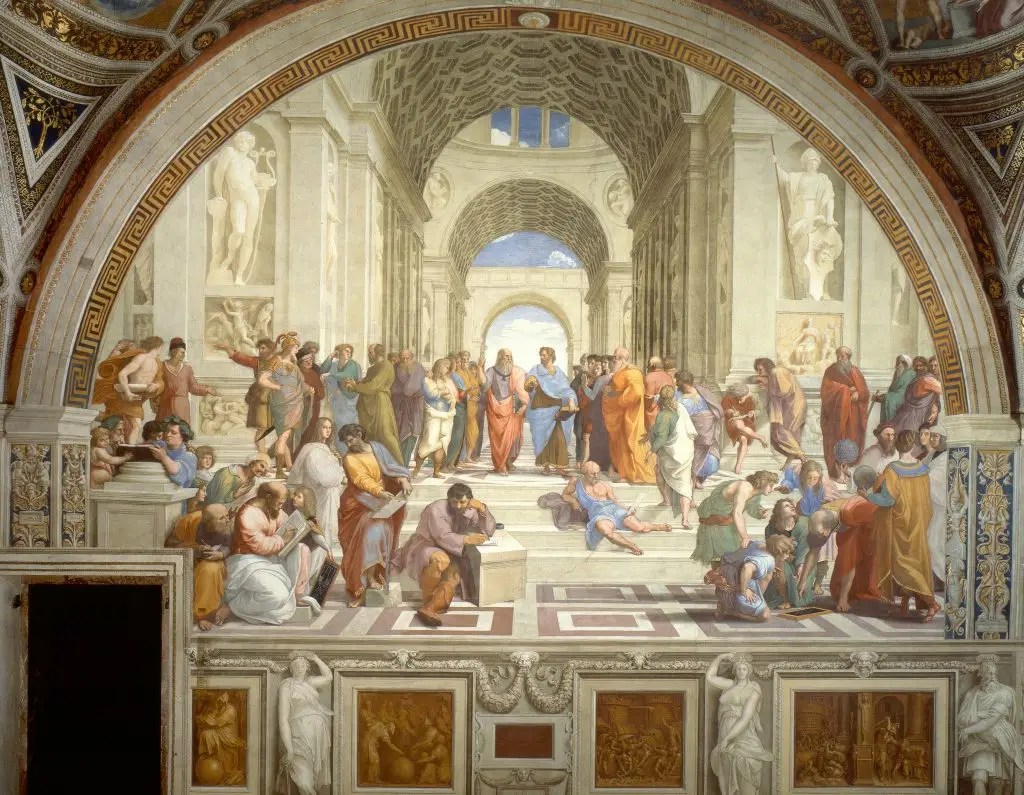
Raphael – The School of Athens
Another notable work is The Sistine Madonna (1512), famous for its serene and idealized portrayal of the Virgin Mary holding the infant Jesus. The figures are soft and lifelike, and the famous cherubs at the bottom of the painting have become iconic in their own right.
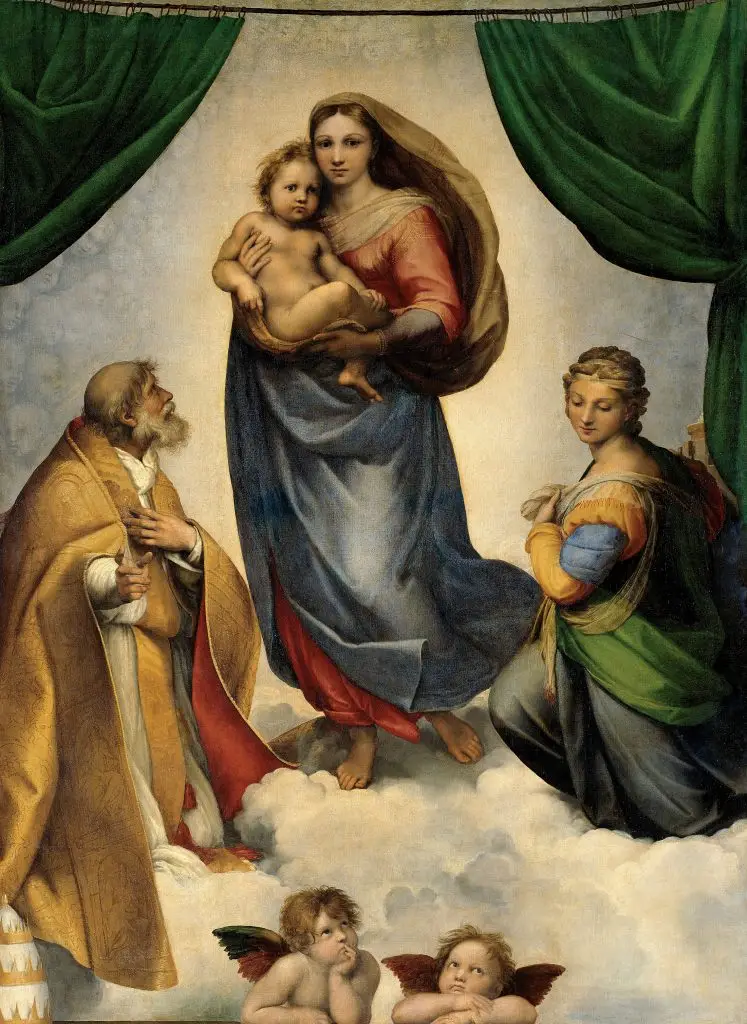
Raphael – The Sistine Madonna
Raphael in Rome: The Vatican Years
Raphael’s talent didn’t go unnoticed. In 1508, Pope Julius II invited him to Rome, where Raphael spent the last 12 years of his life working on some of his greatest achievements. During this time, he painted a series of frescoes in the Vatican, including The School of Athens, and worked on numerous commissions for altarpieces and portraits.
His influence extended beyond painting, as he also became an architect, working on designs for St. Peter’s Basilica after the death of his mentor Donato Bramante. His work on the basilica is a lesser-known part of his career but shows how versatile and trusted he had become in Rome.
The Transfiguration (1516-1520), one of his final works, is another testament to his skill. It showcases his ability to combine divine and human elements in one dramatic composition and is considered one of the pinnacles of Renaissance art.
Raphael’s Style and Influence
What made Raphael stand out from other artists was his ability to blend clarity and beauty. His works are known for their grace, the way figures are arranged in perfect harmony, and how they communicate emotion without being overwhelming. While Michelangelo’s work is often dramatic and intense, Raphael’s feels more approachable and calm.
Even during his lifetime, Raphael’s fame spread far beyond Italy. His works were replicated and studied by artists all over Europe, especially in France and the Netherlands. Engravers made copies of his pieces, spreading his influence even further. The smoothness and balance of his compositions became a model for later generations of artists, including the Baroque masters who followed in the 17th century.
The Legacy Left by Raphael
Raphael’s death in 1520, on his 37th birthday, marked the end of the High Renaissance. His passing was a great loss to the art world, but his influence didn’t stop. Artists continued to study his work, and he was remembered as the “prince of painters” for centuries. His harmonious style set a standard for what “good” art should be—balanced, beautiful, and emotionally resonant.
Though some critics in later periods found his work too sentimental, there’s no denying the impact Raphael had on Western art. His works remain some of the most celebrated and studied pieces in history, and his ability to create beauty through balance and proportion is still admired today.
Conclusion
Raphael’s life might have been short, but his contributions to art were vast. From his early days in Urbino to his masterpieces in Rome, he consistently pushed the boundaries of what painting could achieve. His ability to blend emotion with technical precision has made his work timeless, and his influence can still be seen in art schools and museums around the world today. Whether it’s through his serene Madonnas, his architectural brilliance, or the philosophical depth of The School of Athens, Raphael’s work continues to speak to audiences, offering a vision of human beauty and intellectual harmony that transcends time.