
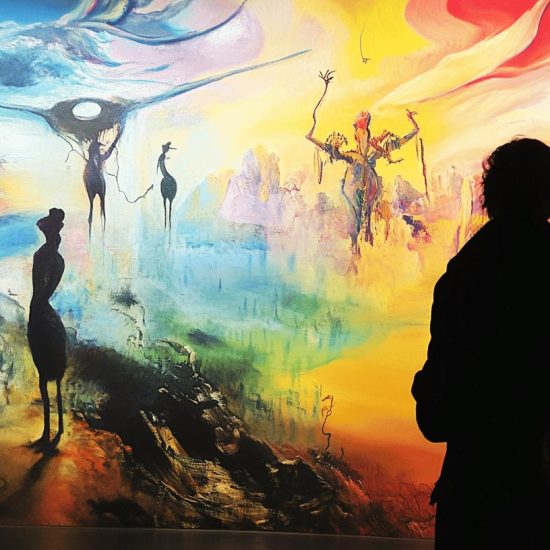
Was Salvador Dali a mad genius or a meticulous mastermind? Salvador Dalí, one of the most iconic figures in surrealist art, embodied both the complexities and contradictions of his time. From his humble beginnings in Figueres, Spain, to his avant-garde education in Madrid, Dalí’s journey was shaped by influential mentors and peers. Salvador Dalí: Surrealist Genius Revealed explores the pivotal moments in his life, his artistic influences, and his revolutionary contributions to the art world.
Early Life and Education
Born in 1904 in Figueres, Spain, Dalí grew up in a prosperous family that nurtured his artistic potential. His father, a notary, and his mother recognized his talent early on, fostering an environment where his creativity could flourish. By the age of ten, Dalí had begun formal art training with local impressionist painter Ramón Pichot, who introduced him to avant-garde concepts. This early exposure, combined with Catalonia’s vibrant cultural scene, laid the foundation for his future artistic explorations in abstract and surreal art.
Dalí continued his studies at the prestigious Real Academia de Bellas Artes de San Fernando in Madrid, where he immersed himself in both classical and contemporary art. It was during this time that he formed pivotal friendships with poet Federico García Lorca and filmmaker Luis Buñuel, both of whom would significantly influence his artistic development. These relationships broadened Dalí’s intellectual horizons and led him toward surrealism. His collaboration with Buñuel on films like Un Chien Andalou marked the beginning of Dalí’s experiments with dream-like narratives and symbolic imagery.
The Surrealist Period: Innovation and Techniques

Dalí’s entry into the surrealist movement marked a major turning point in his career. Fascinated by Sigmund Freud’s theories on the subconscious, Dalí found a conceptual framework that deeply resonated with his artistic vision. Joining the Paris-based Surrealist group, Dalí refined his techniques under the guidance of leading figures like André Breton. His work began challenging traditional art forms, creating dreamscapes and irrational juxtapositions that blurred the line between reality and fantasy.
One of Dalí’s most notable contributions was the development of his Paranoiac Critical Method, a technique he devised to tap into the subconscious. By inducing a state of self-imposed paranoia, Dalí could access irrational thoughts and transform them into vivid artistic expressions. This innovative approach set his work apart and pushed the boundaries of surrealism.
Dalí’s paintings from this period often delved into themes of time, identity, and perception. His masterpiece, The Persistence of Memory (1931), encapsulates these ideas with its melting clocks that symbolize the fluidity of time within the dream world. Through such compositions, Dalí invited viewers to explore the subconscious mind in an immersive way.
Iconic Artworks and Their Impact
The Persistence of Memory remains one of Dalí’s most celebrated paintings and a cornerstone of surrealist art. The melting clocks challenge traditional concepts of time, drawing inspiration from dream psychology and Einstein’s theory of relativity. This work exemplifies Dalí’s ability to merge scientific ideas with surrealist imagination, making it one of modern art’s most recognizable images.
Other notable pieces include:
- Metamorphosis of Narcissus – A double-image interpretation of the Greek myth, exploring transformation and self-reflection.
- Soft Construction with Boiled Beans – A grotesque, surreal depiction of war, foreshadowing the Spanish Civil War.
- Lobster Telephone – A surreal object that combines the ordinary with the bizarre, showcasing Dalí’s wit and absurdity.
- Dream Caused by the Flight of a Bee – A dreamscape filled with Freudian symbolism and intricate details.
Dalí’s innovative techniques and unique artistic vision have left a lasting impact on contemporary artists, influencing new approaches in painting, sculpture, film, and even digital media.
The Eccentric Persona of Salvador Dalí

Beyond his art, Dalí was known for his flamboyant personality and theatrical self-presentation. His eccentric fashion, provocative public stunts, and relentless self-promotion made him as famous as his paintings. He cultivated an image of a surrealist genius, leveraging his behavior to sustain public fascination and commercial success.
However, his antics were not without controversy. Dalí was expelled from the Surrealist group due to political disagreements, and his provocative statements often sparked division. While some saw him as a creative mastermind, others viewed him as a publicity-seeker. Regardless, his ability to capture the public’s attention contributed to his enduring legacy.
Legacy and Influence in Art History
Dalí’s impact on modern art is profound, shaping artistic movements far beyond surrealism. His exploration of dreams and the subconscious challenged traditional artistic norms, paving the way for abstract and conceptual art. His influence extended to literature, film, fashion, and advertising, where his surrealist aesthetics continue to inspire new forms of expression.
Today, Dalí’s masterpieces can be found in prestigious museums worldwide, including:
- Dalí Theatre-Museum: The Persistence of Memory
- Museum of Modern Art: The Persistence of Memory
- Tate Modern: Metamorphosis of Narcissus
- Reina Sofía Museum: Face of Mae West
Dalí’s ability to transcend cultural and artistic boundaries has cemented his status as a global icon. His influence is still evident in the work of contemporary artists who continue to explore surrealist themes and innovative techniques.
Final Words
Examining Salvador Dalí’s early life, education, and artistic influences offers valuable insight into his surrealist genius. His exploration of dream-like imagery and subconscious themes shaped the evolution of modern art. Through masterpieces like The Persistence of Memory, Dalí redefined artistic boundaries and left a lasting mark on cultural history.
Dalí’s eccentric persona added layers to his artistic legacy, blending controversy with allure. Today, his influence extends far beyond traditional art, impacting modern media and creative expression. Salvador Dalí’s life, art, and legacy celebrate a surrealist pioneer whose innovations continue to inspire generations of artists and thinkers.
FAQ
Q: What is Salvador Dalí known for?
A: Dalí is renowned for his surrealist paintings, imaginative artistry, and iconic works like The Persistence of Memory, featuring melting clocks that symbolize the fluidity of time.
Q: Why is Dalí considered a genius?
A: Dalí’s genius lies in his ability to blend dreamlike images with meticulous detail. His Paranoiac Critical Method showcased innovative techniques that expanded the boundaries of surrealism, influencing global art movements.
Q: What are some interesting facts about Salvador Dalí?
A: Salvador Dalí was born in 1904 in Figueres, Spain, to a prosperous family. He cultivated early artistic talents, studied at the Real Academia de Bellas Artes de San Fernando in Madrid, and associated with significant cultural figures.
Q: How rich was Salvador Dalí when he died?
A: Dalí had amassed significant wealth through art sales and commercial collaborations, making him one of the wealthiest artists of his time when he passed away in 1989.
Q: What was Salvador Dalí’s IQ?
A: Dalí reportedly had an IQ score of 125, which is above average, indicating a high level of intelligence that likely contributed to his complex artistic endeavors.
Q: What is Salvador Dalí’s most famous quote?
A: One of Dalí’s most famous quotes is, “The only difference between me and a madman is that I’m not mad,” reflecting his eccentric personality and artistic vision.