
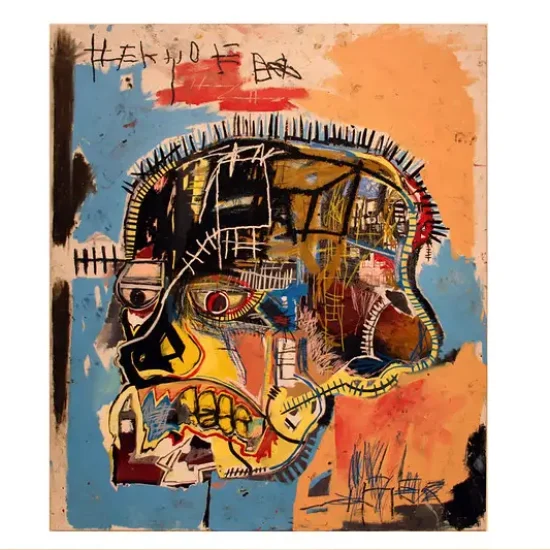
The Unique Style of a Basquiat Painting
A Basquiat painting is an experience—a collision of art, history, and raw emotion. Jean-Michel Basquiat’s works are instantly recognizable for their layered complexity, pulsating energy, and cultural depth. But what exactly makes a Basquiat painting so captivating? Let’s break down the details, explore his artistic techniques, and uncover why his work continues to resonate with art lovers today.
A Basquiat painting is like a conversation—messy, intricate, and full of hidden meanings. His work often combines bold, almost childlike colors with elements of graffiti, anatomy diagrams, and text. You’ll frequently find skeletal figures, crowns, and scrawled words that feel spontaneous but hold profound significance.
His approach to art defied conventions. Instead of adhering to traditional techniques, Basquiat painted with freedom, layering different materials, textures, and symbols in a way that feels chaotic yet intentional.
Pro Tip: When looking at a Basquiat painting, focus on the layers. Start with the dominant image, then let your eyes wander to the surrounding symbols and text. Each detail tells a part of the story.
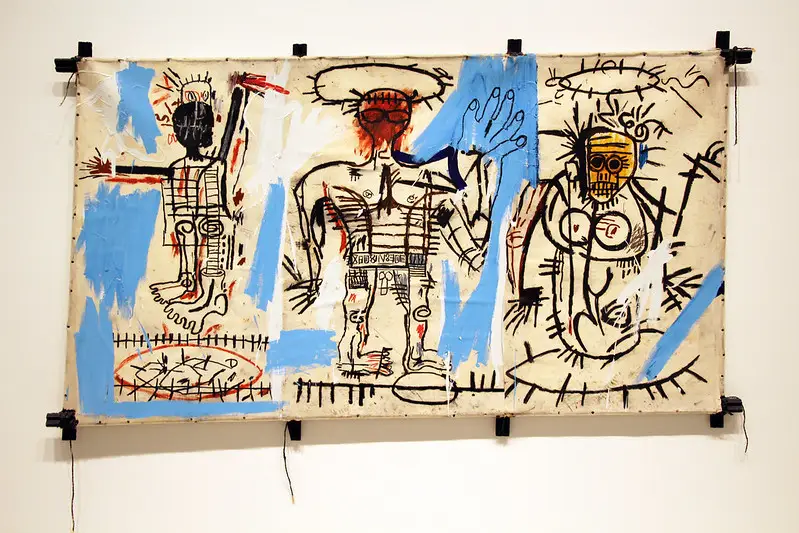
Source: Fred Romero, Jean-Michel Basquiat – Fondation Vuitton, Paris, Attribution, (CC BY 2.0), https://flic.kr/p/2gfC3kd
Exploring Basquiat’s Themes
At the heart of a Basquiat painting is his commentary on race, power, and identity. He often depicted Black figures as regal and heroic, a response to their absence in the art historical canon. The recurring crown motif is particularly significant. Whether perched on a figure or floating in space, the crown serves as a reminder of dignity and excellence.
Text is another hallmark of a Basquiat painting. Words appear scribbled or crossed out, drawing attention to their presence while simultaneously obscuring their meaning. His use of language was influenced by his childhood love for poetry and books.
Pro Tip: Don’t be discouraged if you don’t “get” the meaning of a Basquiat painting right away. Interpretation often requires patience and curiosity. Think of it as a puzzle meant to provoke thought, not provide easy answers.
Iconic Basquiat Paintings and Their Significance
Several Basquiat paintings stand out for their impact and artistic innovation. Let’s explore a few and what makes them significant.
Untitled (1981)
This iconic Basquiat painting features a skeletal figure, rendered in bold lines and a dark palette. It’s often seen as a meditation on vulnerability and mortality. The figure’s rawness mirrors the human condition in a way that’s both haunting and profound.
Hollywood Africans (1983)
Here, Basquiat critiques racial stereotypes in the entertainment industry. The painting is full of text and symbols that reference the limited roles available to Black creatives in Hollywood at the time.
The Irony of the Negro Policeman (1981)
This Basquiat painting delves into identity and systemic oppression. The titular figure, depicted with fragmented lines and muted tones, reflects a paradox—both enforcer and victim of authority.
Pro Tip: If you’re viewing a Basquiat painting in person, take your time. Stand back to see the full composition, then move closer to study individual details like textures and brushstrokes.
Creative Process of a Basquiat Painting
Basquiat’s creative process was as unorthodox as his art. He often painted on unconventional materials, such as doors, refrigerators, and found wood. His studio was a chaotic space where ideas flowed freely.
His process was deeply intuitive. He would combine elements that interested him at the moment—whether it was a snippet from a medical textbook, a fragment of poetry, or a reference to jazz. This spontaneity gave each Basquiat painting its unique vibrancy.
Pro Tip: Aspiring artists can learn from Basquiat’s fearlessness. Experiment with different materials and let your instincts guide you. Sometimes, imperfection can lead to innovation.
The Cultural Impact of Basquiat Paintings
A Basquiat painting is more than just a visual masterpiece—it’s a cultural artifact. His work addresses issues of race, class, and identity that remain deeply relevant today. Beyond that, his ability to fuse street art with high art helped dismantle the barriers between the two, making art more accessible and inclusive.
Moreover, Basquiat paintings have become symbols of rebellion and self-expression. Their chaotic energy and unapologetic authenticity resonate with anyone who feels out of place in a structured world.
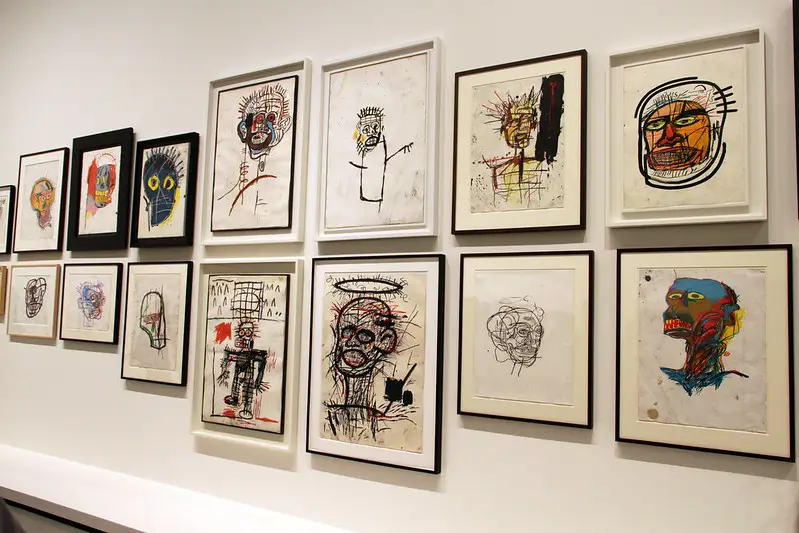
Source: Fred Romero, Jean-Michel Basquiat – Fondation Vuitton, Paris, Attribution, (CC BY 2.0), https://flic.kr/p/2gfBw1V
Pro Tip: To fully appreciate a Basquiat painting, read up on his influences. Understanding his love for jazz, poetry, and African history can provide deeper insights into his work.
Experiencing a Basquiat Painting in the Modern Era
Basquiat paintings continue to draw massive audiences at galleries and auctions. They’ve become a cornerstone of contemporary art, with some selling for over $100 million. But the real value lies in their ability to provoke thought and inspire dialogue.
If you ever get the chance to see a Basquiat painting in person, seize it. There’s something transformative about standing in front of his work, feeling the raw energy radiating from every brushstroke.
Pro Tip: Visit museums like the Broad in Los Angeles or the Whitney in New York, where Basquiat paintings are often on display. It’s an experience that no online image can replicate.
Final Thoughts
A Basquiat painting isn’t just a piece of art; it’s a statement. His works challenge, inspire, and provoke in ways that few others can. Whether you’re drawn to his use of color, his cryptic text, or his cultural commentary, there’s always more to discover. So next time you encounter a Basquiat painting, take a closer look—you might just find yourself in its layers.
Featured image: Fred Romero, Jean-Michel Basquiat – Fondation Vuitton, Paris, Attribution, (CC BY 2.0), https://flic.kr/p/2gfBwkn