
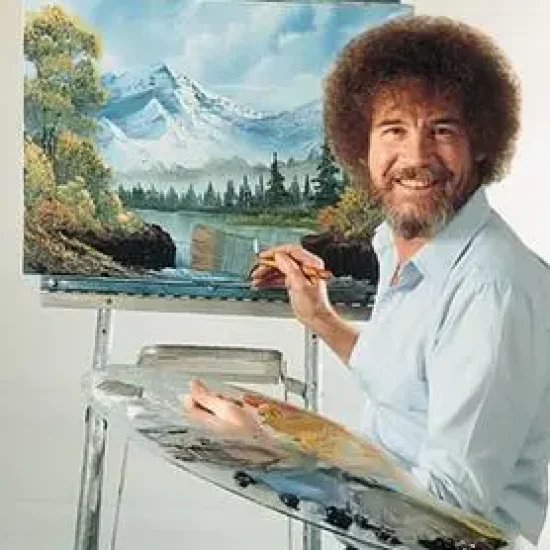
Early Years and Discovery of Art
Born in Daytona Beach, Florida, on October 29, 1942, Bob Ross didn’t start out in the world of art. Instead, his early life revolved around the U.S. Air Force, where he worked as a medical records technician. While stationed in Alaska, Ross picked up painting as a way to unwind, inspired by the breathtaking landscapes around him. The vast mountains, serene forests, and quiet lakes left an impression, laying the groundwork for the themes that would later define his work.
In Alaska, Ross stumbled upon the wet-on-wet painting technique through German artist Bill Alexander’s work. This method allows artists to paint quickly on a still-wet canvas, perfect for creating landscapes in a short time. Ross connected with this approach, as it allowed him to capture entire scenes before the paint dried. Little did he know, this technique would become central to his art and teaching style.
The Joy of Painting
Ross’s big break came when he launched The Joy of Painting in 1983, a half-hour show on PBS that would air for more than a decade. The premise was simple: Ross would complete a new painting in each episode, often featuring mountains, lakes, forests, and his now-iconic “happy little trees.” The show stood out for its relaxed tone and accessible teaching. Ross’s soft-spoken voice and his gentle, encouraging catchphrases like “there are no mistakes, only happy accidents” made art approachable, even for complete beginners.
In each episode, Ross would create a landscape from scratch using simple tools—mainly big brushes and a palette knife—making the process look easy and inviting. Interestingly, he’d paint each piece three times. The first, done before taping, acted as a rough guide; the second, painted live for the show, was what viewers saw him create; and the third, completed after filming, was more polished for use in his instructional books. Ross donated many of these paintings to PBS stations and museums, and some stayed with his company, Bob Ross Inc.
Building a Business Empire
Bob Ross didn’t just stop at painting on TV; he built an art empire. With help from his business partner, Annette Kowalski, he launched Bob Ross Inc., a company that sold painting supplies and offered art classes based on his method. They marketed a line of paints, brushes, and other supplies to make the Bob Ross technique accessible. He even trained certified instructors who could teach his method in classes worldwide, spreading his philosophy and approach to even more people. The Joy of Painting went on to become one of PBS’s most-watched shows, helping countless viewers believe they, too, could create something beautiful on canvas.
Life Beyond the Canvas
In 1994, Ross stopped filming The Joy of Painting due to health issues, and a year later, he passed away from lymphoma. Even after his death, though, Ross’s popularity continued to grow. His episodes became available online, introducing his soothing voice and approachable teaching style to a whole new generation. With platforms like YouTube streaming his episodes and social media sharing clips of his calm, encouraging mantras, Ross found a new wave of fans.
In recent years, the 2021 Netflix documentary Bob Ross: Happy Accidents, Betrayal & Greed offered an even closer look into his life. It revealed some of the challenges Ross faced behind the scenes, particularly around control over his brand and legacy. Despite these controversies, the documentary only seemed to enhance his popularity, bringing attention to both his art and the positivity he inspired.
What Makes Bob Ross Special?
Why does Bob Ross still matter today? Part of his appeal is his personality. He didn’t talk down to viewers, and he didn’t make art feel intimidating. For Ross, art wasn’t about strict rules; it was about enjoying the journey. He famously encouraged viewers to relax, be themselves, and find joy in the process rather than stressing about perfection. In today’s fast-paced, often stressful world, Ross’s easygoing approach offers a refreshing break.
Beyond his personality, Ross’s lessons went deeper than just painting. His focus on accepting “happy accidents” as part of the creative process was a subtle lesson in self-acceptance. He taught people to be okay with imperfections, not only in art but in life. This message has resonated with countless viewers and keeps him relevant even years after his passing.
The Legacy Bob Ross Left
Today, Bob Ross’s legacy continues to grow. His brand, Bob Ross Inc., sells everything from art supplies to memorabilia, and certified instructors worldwide keep his method alive through in-person and online classes. His likeness appears on merchandise, and his YouTube channel has millions of views. Many people today organize “Bob Ross painting parties,” where friends gather to follow along with his videos. It’s a testament to how Ross’s work and philosophy continue to bring people together.
Despite controversies around his brand and ownership disputes after his death, Ross remains a beloved figure. Fans see him as a friend and mentor who showed them that anyone can create art. His encouraging words and friendly demeanor have made him more than a painter; he’s become a symbol of calm, creativity, and kindness.
In the end, Bob Ross wasn’t just teaching people to paint. He was showing them how to find peace in creativity, to embrace imperfections, and to believe in their ability to make something beautiful. For millions, that’s more than enough to keep his legacy alive and thriving.