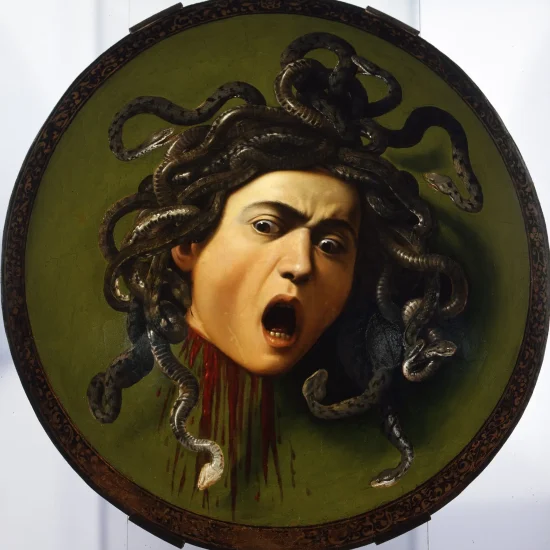
Caravaggio, born Michelangelo Merisi in 1571, was a painter whose work broke away from the idealism of the Renaissance, embracing a raw, realistic approach that changed the way people thought about art. Even today, his name is synonymous with dramatic contrasts between light and shadow, intense emotions, and an unflinching portrayal of human imperfection. Let’s dive into what made Caravaggio such a groundbreaking figure in art and how his turbulent life shaped his unique style.
The Formative Years of Caravaggio
Caravaggio had a tough start. Born in Milan but raised in the small town of Caravaggio, he lost both his father and grandfather to the plague at a young age. This rough beginning may have influenced the darker themes of his later work. At just 13, he began an apprenticeship with Simone Peterzano, a relatively unknown painter who had studied under the famous Venetian artist Titian. While this early training exposed him to the traditional techniques of Renaissance painting, Caravaggio was already developing a style that rebelled against the norms of the time.
Peterzano’s studio gave him the foundation for painting, but Caravaggio wasn’t content with sticking to the rules. He was drawn to depicting reality much more intensely and unpolished. Unlike his peers, who focused on idealized beauty, Caravaggio was more interested in the gritty, everyday aspects of life, a theme that would become central in his later work.
Struggles in Rome
By 1592, Caravaggio found himself in Rome, the bustling hub of the art world. The competition was fierce, and Caravaggio struggled to find steady work. He began by painting for lesser-known artists, mostly working on backgrounds and minor pieces to make ends meet. But Rome was also a city of extremes, filled with both opportunity and violence. It wasn’t long before Caravaggio’s volatile temperament got him into trouble. He frequently got into brawls, and his brushes with the law were notorious.
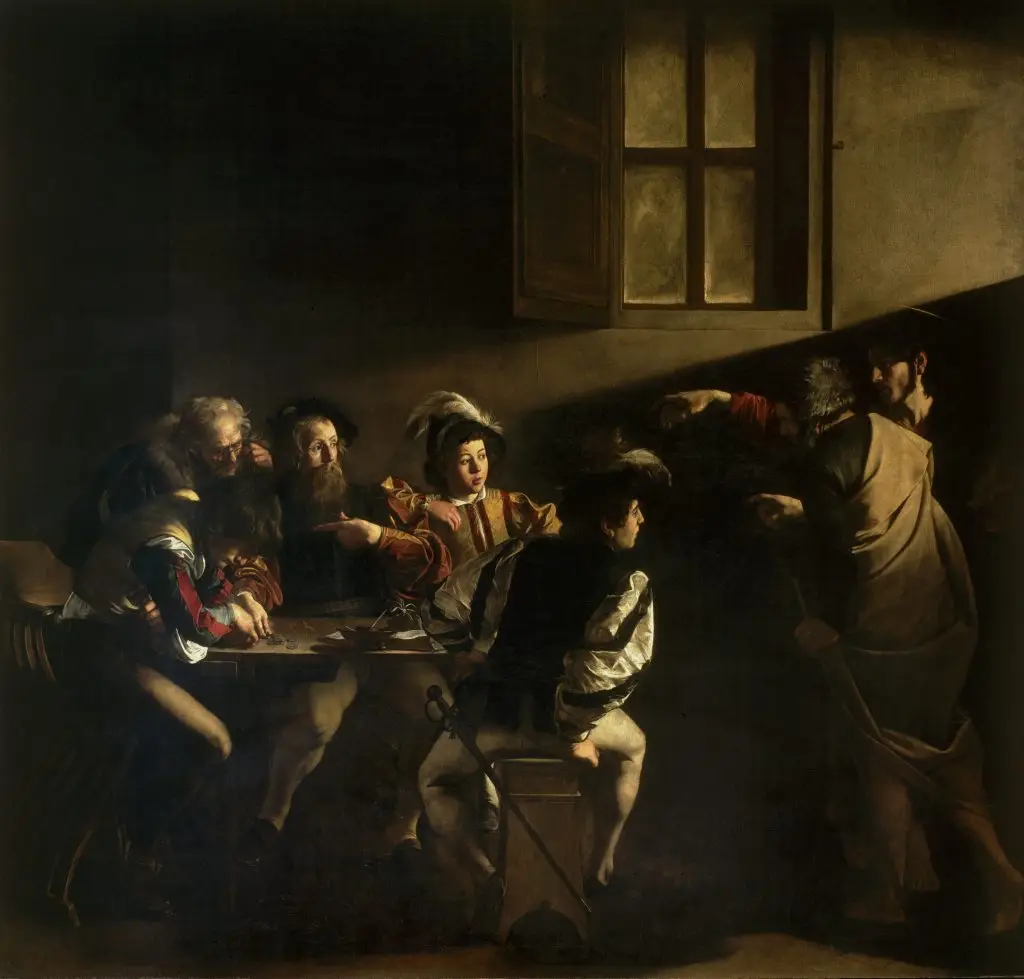
Still, Caravaggio’s talent was undeniable. His work soon caught the attention of influential patrons, and by the late 1590s, he started to gain some recognition for his innovative approach to painting. His big break came when he painted a series of religious works, including The Calling of Saint Matthew and The Martyrdom of Saint Matthew. These works stood out because of their striking use of light and shadow (a technique known as tenebrism) and their realistic portrayal of biblical figures.
A New Kind of Art
What really set Caravaggio apart from other artists of his time was his insistence on portraying subjects in a brutally honest way. Rather than painting saints and holy figures as ethereal beings, he depicted them as ordinary people, often using models from the streets of Rome. His approach was revolutionary because it brought a sense of humanity and relatability to religious scenes, which had traditionally been shown in a much more polished and idealized manner.
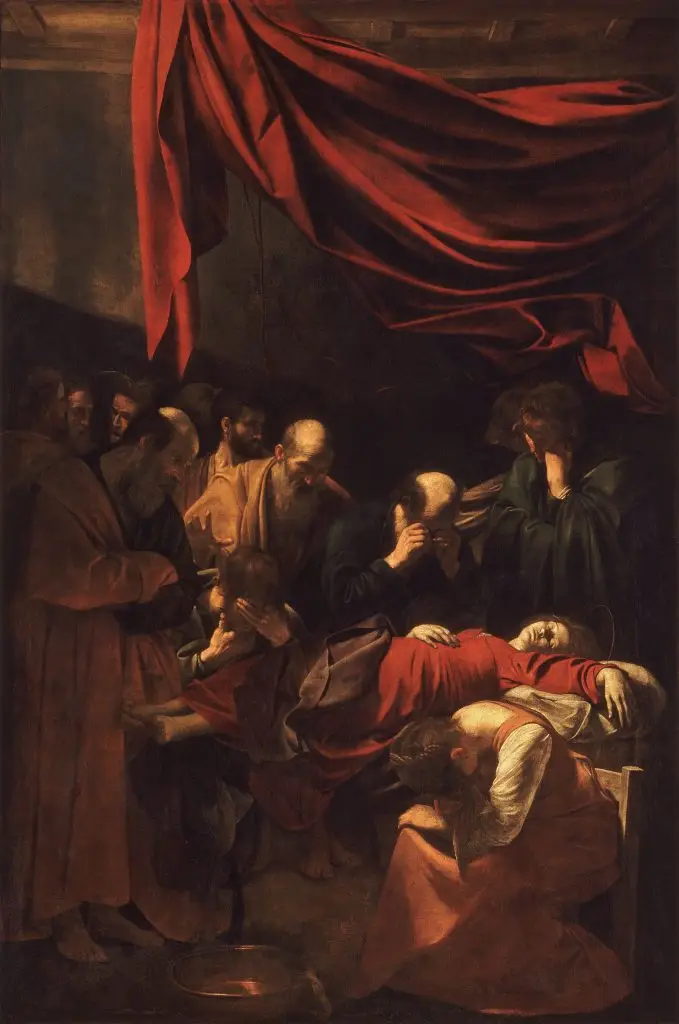
For example, in his painting The Death of the Virgin, Caravaggio caused a scandal by using a local prostitute as the model for the Virgin Mary. His refusal to idealize her appearance—he even depicted her with bare legs—offended many within the Church. Despite the controversy, his work was incredibly influential, and his naturalistic style became a hallmark of the Baroque period.
Controversy and Conflict
Caravaggio’s life was as dramatic as his paintings. His temper often got the better of him, leading to numerous conflicts. One infamous incident involved him attacking a waiter with a plate because he felt insulted. He was also known for his frequent run-ins with the law, often over violent altercations. His most significant legal trouble came in 1606 when he killed a man during a fight. Fleeing from Rome to avoid execution, Caravaggio spent the last few years of his life on the run, moving between Naples, Malta, and Sicily.
Despite his personal turmoil, Caravaggio’s reputation as an artist continued to grow. His work was sought after by patrons across Italy, and he remained a leading figure in the Baroque movement until his untimely death in 1610. Some reports suggest he died from a fever, while others speculate he might have been murdered due to his many enemies.
The Legacy of Caravaggio
Caravaggio’s influence on art cannot be overstated. His use of dramatic lighting and shadow created a sense of realism and emotion that hadn’t been seen before. This approach, often referred to as Caravaggism, inspired countless artists, including Rembrandt and Peter Paul Rubens. His focus on naturalism—capturing his subjects with all their flaws—was a stark departure from the idealized beauty of the Renaissance and marked a shift toward a more grounded, humanistic approach to art.
In many ways, Caravaggio’s art was a reflection of his own life—uncompromising, dramatic, and at times, chaotic. He wasn’t interested in following the rules, either in his life or in his work. And yet, this very defiance of convention is what made him one of the most important painters of his time.
Even though his life was short, Caravaggio left a lasting legacy. His bold, intense style changed the course of art history and continues to influence artists today. Whether you’re drawn to the raw emotion in his work or fascinated by the wild stories of his life, Caravaggio remains a captivating figure—both as an artist and as a man.