
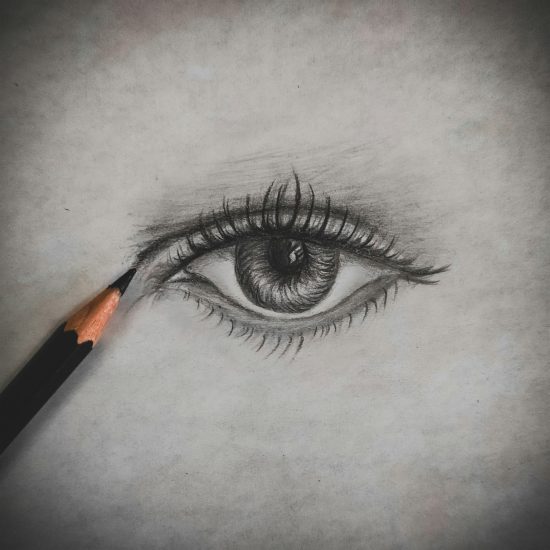
Drawing the human eye, while masterfully capturing emotion, intrigue, and narrative depth, has long been a favorite subject for artists. Drawing eyes isn’t just a technical exercise; it’s an exploration of character and soul. Each eye you illustrate tells a unique story, a vivid expression of life beyond words.
The Evolution of Eye Drawing
Did you know? Eye drawing isn’t a modern whimsy but a historical journey traversing centuries and civilizations. In ancient Egyptian art, the “Eye of Horus” symbolized protection and health. Fast forward to Renaissance masters, who aspired to capture the essence of the soul through their depictions of eyes, elevating portraiture to new heights.
Pro Tip: Study works like Leonardo da Vinci‘s sketches; his portrayal of eyes is a testament to the profound attention to detail and emotion.
Today, whether through surrealism or hyperrealism, artists continue to explore this entrancing feature, pushing boundaries with every stroke. From traditional charcoal to digital brushes, the methods have evolved, but the mystique remains.
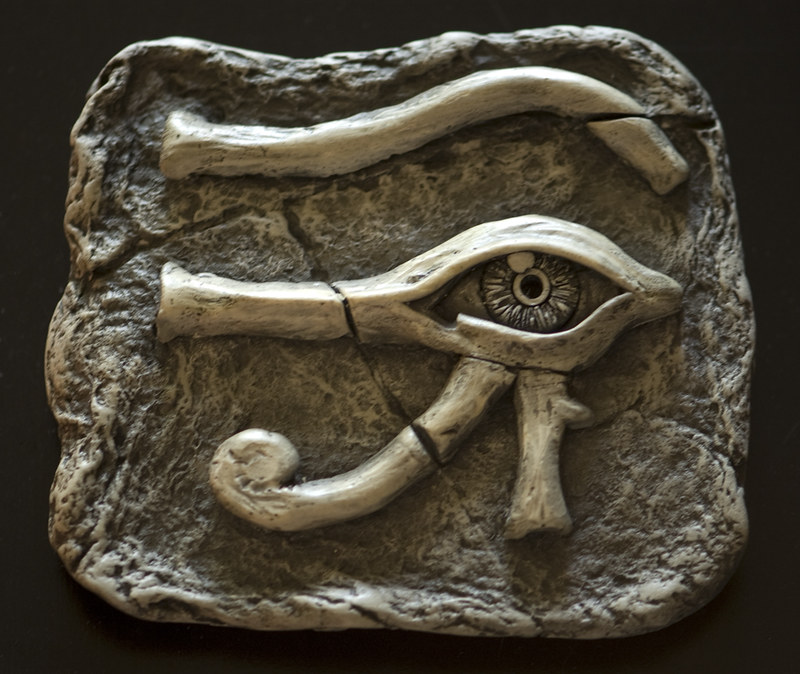
Source: Nerdcoresteve, Attribution-ShareAlike (CC BY-SA 2.0), https://flic.kr/p/7Ag4KF
Mastering Techniques with Precision
Sure, talent plays a role, but even the masters rely on their choice of tools. Pencil grades, brushes, even the texture of paper can make or break your drawing.
Pro Tip: Try experimenting with different mediums. Watercolor can bring unexpected depth and emotion, whereas charcoal allows for a richness of contrast.
For digital artisans, tablets open a world of precision, variation, and infinite color palettes, yet many still resort to the charm of graphite for its tactile quality. The balance between technology and traditional methods offers endless potential for creativity.
Developing Your Style
If you’re just starting, trying to imitate a certain style can be tempting. My first feeble attempts at eyes were nothing short of comedic. I remember sketching in the back of my algebra notebook, yielding lopsided expressions. But here’s the secret: every wobbly line contributes to finding your artistic voice.
Pro Tip: Mirror gazing is not mere vanity. Observing the nuances of your own eyes can offer startling insights into structure and emotion.
Artists like Caravaggio and Van Gogh portrayed eyes with their signature flair—capturing not just physical likeness but an emotional landscape. Your style, though heavily influenced by practice and exposure, should ultimately reflect your personal story.
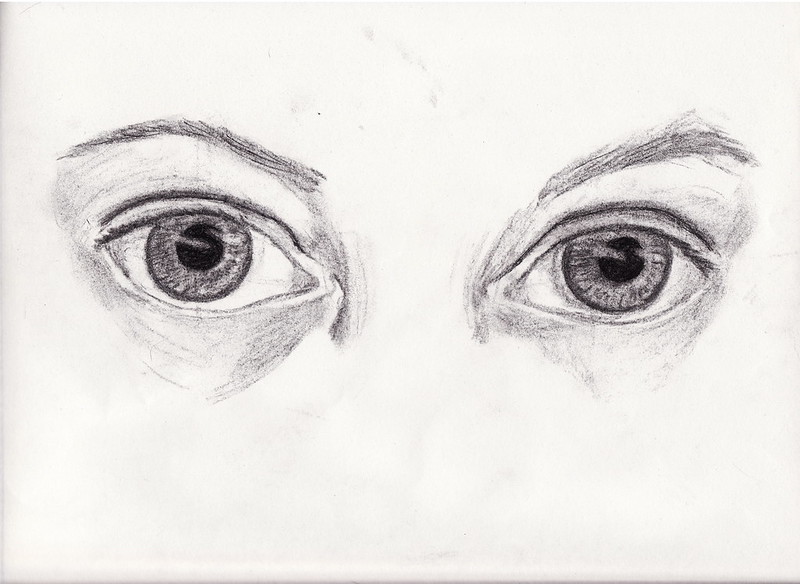
Source: Bri, Attribution-ShareAlike (CC BY-SA 2.0), https://flic.kr/p/3Ahc7Z
The Science and Art of Observing
Knowing anatomy isn’t just for the Da Vincis of the world. Understanding the interplay of eyelids, lashes, and irises is crucial in achieving realism or something hauntingly abstract.
Pro Tip: Incorporate life drawing into your practice. Observing live models trains your eye to capture the subtleties that photographs might miss.
From the reflective sheen of the cornea to the shadowing under an upper lid, painting an eye is an exercise in detailed observation. The dimensions it adds to your artwork are leagues above the simple sphere ensconced by arcs. Masterful observation enhances the conveying of emotion and depth.
Capturing Emotion: Beyond the Surface
Ever notice how a subtle narrowing of eyes can portray suspicion, while slightly widened eyes convey astonishment? Capturing the emotion behind the glance is a dance between the physical and the ephemeral.
Emotions are tricky. They’re fleeting, disobedient to expectation. But imbuing an eye with feeling elevates it from a mere drawing to a narrative. I’ve found that transporting myself into the world of the subject helps—imagining their mood, their story, gives dimension and feeling to that seemingly simple eye.
The Abstract Interpretations of Eye Drawing
An eye isn’t always literal. Modern artists have introduced abstract and symbolic elements in eye drawing. Here, the rules of reality dissolve, creating striking visual narratives that challenge perception.
Pro Tip: Never fear breaking the conventional; abstraction lets you free your soul from the technical shackles and express something profound.
Abstract art allows new dialogue—where the eye becomes a vessel revealing concepts and emotions untethered by the precise laws of anatomy. The lines blur not out of lack of skill but out of a deliberate message.
Eye drawing is a pursuit as timeless as it is peculiar. It invites mystery and story, echoing the complexity of human experience. It is this balance of tradition and innovation, the understated yet profound, that keeps artists coming back to the drawing board, inspired. Whether you’re a seasoned artist or a curious novice, there is always a new layer to explore in the enchanting world of eye drawing.
Featured image: https://unsplash.com/photos/a-pencil-drawing-of-an-eye-2DCdqKYJPzA