Fauvism is one of those art movements that might not have lasted long but left a big mark. In the early 1900s, this style was all about color—bright, bold, and often unexpected. The movement didn’t have a manifesto or strict guidelines, which made it more of a moment in art history than a fully-fledged movement. However, its influence on future art styles, such as expressionism and even abstract art, was huge. Let’s take a closer look at what made Fauvism so unique.
What Is Fauvism?
The term “Fauvism” comes from the French word fauves, which translates to “wild beasts.” It wasn’t exactly a compliment at first. Art critic Louis Vauxcelles coined the term in 1905 after seeing the striking, vivid works of Henri Matisse, André Derain, and Maurice de Vlaminck at the Salon d’Automne in Paris. These artists ditched the soft colors and light brushstrokes of the Impressionists and instead went for strong, expressive colors. They weren’t trying to capture reality—they were more interested in how color could evoke emotion and mood.
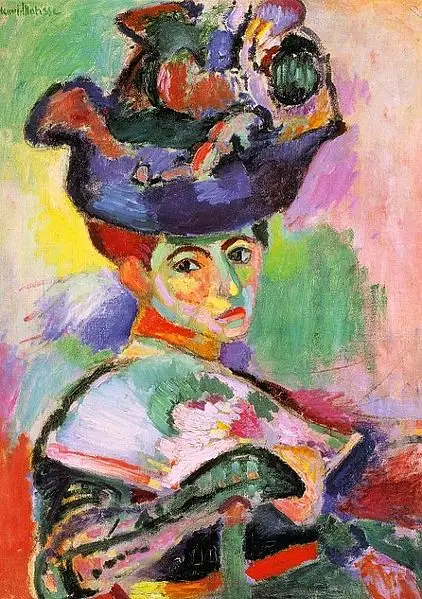
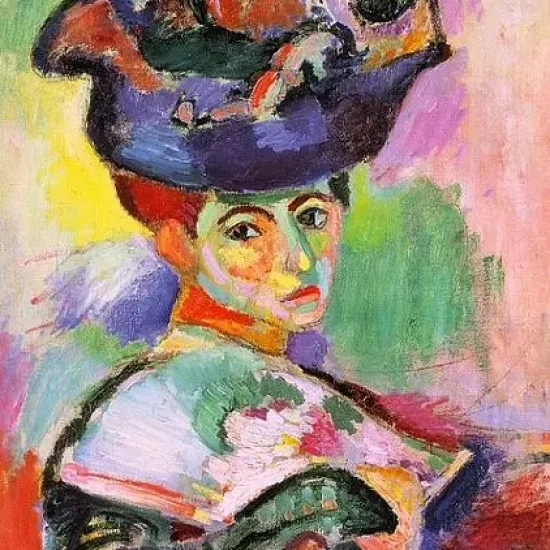
Henri Matisse was at the center of this group, and his work Woman with a Hat shocked critics at the time for its wild use of color. But he wasn’t alone. André Derain and Maurice de Vlaminck, two other big names in Fauvism, embraced this bold style, focusing on bright colors and a kind of raw energy in their paintings.
The Power of Color
What really sets Fauvism apart is its approach to color. The Fauves rejected realistic colors in favor of what they felt best expressed the energy of the scene. For example, a tree in a Fauvist painting might be painted in bold orange or purple, rather than green, just because the artist felt like it. Color wasn’t there to represent the real world—it was there to create a mood. Matisse famously said, “When I put a green, it is not grass. When I put a blue, it is not the sky.”
Fauvist paintings are often filled with contrasting colors—purples paired with yellows, reds with greens. These weren’t random choices, though. Fauvist artists used complementary colors (those on opposite sides of the color wheel) to make their works even more striking. It was a deliberate, but still expressive, use of color that made their works pop off the canvas.
Fauvist Style: Simple but Bold
Apart from the wild use of color, Fauvist paintings are also known for their simplified forms and bold, sometimes rough, brushwork. They didn’t bother with the careful shading or depth that more traditional artists used to create a sense of realism. Instead, they flattened their compositions and focused more on creating visual impact through color and line. In The Joy of Life, one of Matisse’s most famous Fauvist works, you can see this approach in full force. The figures are flattened, the landscape is dreamlike, and the whole thing feels more like a celebration of color than a realistic depiction of a scene.
These artists were breaking away from the careful detail and realistic light effects of Impressionism. They were moving towards something more emotional, and more expressive. While Fauvism didn’t last long, many of its techniques and ideas would go on to influence modern art, particularly abstract art.
The Main Players in Fauvism
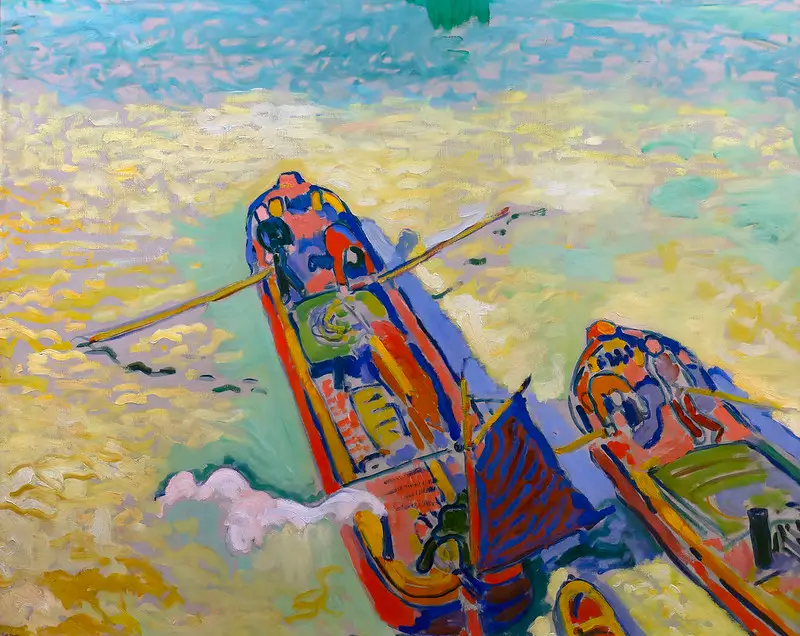
While Matisse is probably the most famous Fauvist, there were several other artists involved in the movement. André Derain, for example, was known for his bold landscapes, especially those painted in Southern France. His use of color was just as fearless as Matisse’s, and his Charing Cross Bridge series shows how he used color to turn an ordinary scene into something extraordinary. Derain was all about letting color carry the emotional weight of his works.
Maurice de Vlaminck was another key figure. Often described as a “natural Fauve,” he used intense, almost violent colors in his works. He wasn’t as methodical as some of the others—his style was more about gut feeling and spontaneity. In fact, his work was so passionate and raw that it almost seemed like an outburst of energy on the canvas.
Raoul Dufy, Georges Braque, and Georges Rouault were also associated with the movement. For many of these artists, Fauvism was a stepping stone. They quickly moved on to other styles—Braque, for instance, would go on to help develop Cubism alongside Pablo Picasso.
Why Did Fauvism Fade?
Despite its revolutionary approach, Fauvism was pretty short-lived. By 1908, many of the key Fauve artists had moved on to other things. Some, like Braque, became interested in the structure and form of Cubism. Others, like Derain, became more conservative in their style. Even Matisse, while continuing to push boundaries in his use of color, moved beyond the wildness of his Fauvist days.
But even though the movement didn’t last long, its impact on modern art was significant. Fauvism helped liberate color from the need to represent reality, which opened the door for more abstract uses of color in art. Movements like German Expressionism and Abstract Expressionism owe a lot to the Fauves and their bold, fearless approach to painting.
Fauvism’s Legacy
In the end, Fauvism is remembered as the moment when artists really let color take the lead. While the movement itself was short-lived, it set the stage for many of the artistic revolutions that would follow. The idea that color could be used for its own sake, to evoke feeling rather than to represent the world, was groundbreaking at the time. And it’s something that we still see in modern and contemporary art today.
In the works of the Fauves, color wasn’t just a tool—it was the main event. Their paintings don’t just show a scene; they immerse you in a world of pure, emotional color. And even though the wild beasts may have been tamed after a few short years, their influence is still felt in art galleries around the world.
Attribution:
Featured Image: ROBERT HUFFSTUTTER – Henri Matisse, Woman with a Hat – Attribution (CC BY 2.0) – https://flic.kr/p/dzi3Hi
Image 2: Ángel M. Felicísimo – De André Derain, Les deux péniches – Attribution (CC BY 2.0) – https://flic.kr/p/2pcb7vU