The Roots of Ikebana
Ikebana is Japan’s art of flower arrangement. Its origins trace back to the 7th century, when it began as part of Buddhist rituals. Offerings of flowers were placed in temples to honor deities, a practice known as kuge. Over time, this simple gesture transformed into an intricate art form. The focus shifted from merely offering flowers to arranging them in ways that evoke natural beauty and harmony.
What sets ikebana apart is its philosophy. It’s not just about flowers but about the relationship between the materials, the environment, and the arranger. Each arrangement tells a story, emphasizing balance, form, and space.
Finding Beauty in Simplicity
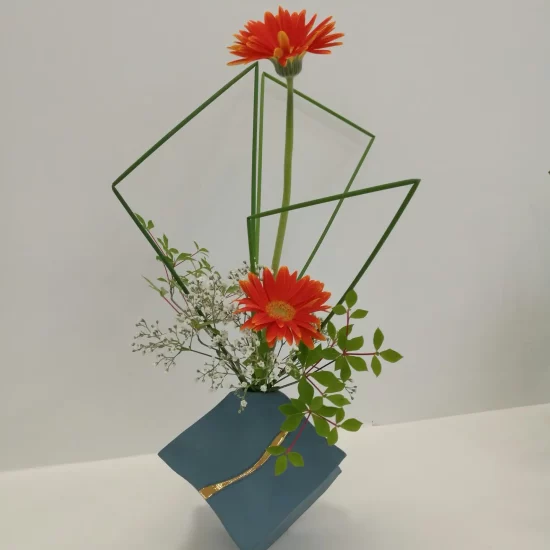
At first glance, ikebana might seem minimalistic compared to the abundant and colorful flower displays common in Western traditions. However, its simplicity is intentional. Each element—whether it’s a single blossom, a branch, or a leaf—has a purpose. The arrangement is carefully designed to highlight these elements while also leaving room for emptiness.

Source: manuel m. v. , Attribution (CC BY 2.0), https://flic.kr/p/2nSEoPw
This use of space, or ma, is a central principle in ikebana. Empty spaces aren’t just gaps; they’re as significant as the flowers themselves. They create a sense of balance and allow the viewer to focus on the subtle beauty of each component.
Ikebana Styles Through the Ages
Ikebana has evolved into several distinct styles, reflecting changes in Japanese culture and aesthetics. One of the oldest forms, rikka, emerged in the 15th century. This highly formal style was often used in Buddhist temples and featured elaborate arrangements meant to symbolize landscapes. A single rikka arrangement could represent mountains, rivers, and trees, all captured through carefully chosen and placed branches and flowers.
As time went on, styles became more relaxed. Nageire, for example, embraced spontaneity. Its arrangements felt natural and free-flowing, as if the flowers had been gathered and casually placed in a container. Another significant style, moribana, introduced in the late 19th century, allowed for more variety in containers and placements, making ikebana more accessible to everyday people.
In modern times, the Sōgetsu school has pushed the boundaries of ikebana. Founded in the 20th century, it encourages creativity and experimentation, allowing for unconventional materials like metal or glass to be incorporated into arrangements.
Ikebana is a Meditative Practice
Ikebana isn’t just an artistic activity; it’s also deeply meditative. The process of creating an arrangement requires focus and intention. As you work, you become attuned to the natural forms of your materials—the curve of a branch, the way light falls on a petal. This attention to detail can be calming, almost like a form of mindfulness.
Arranging flowers in ikebana isn’t about perfection. It’s about understanding and appreciating nature’s beauty, even in its imperfections. A bent branch or a slightly wilted leaf can add character to an arrangement, reminding us that beauty often lies in the unexpected.
Bringing Ikebana Into Everyday Life
While its roots are in tradition, ikebana feels surprisingly modern. Its clean lines and minimalist approach fit well with contemporary aesthetics. Many people are drawn to ikebana because it offers a way to bring a touch of nature into their homes. Even a small arrangement can transform a space, adding a sense of tranquility and connection to the natural world.
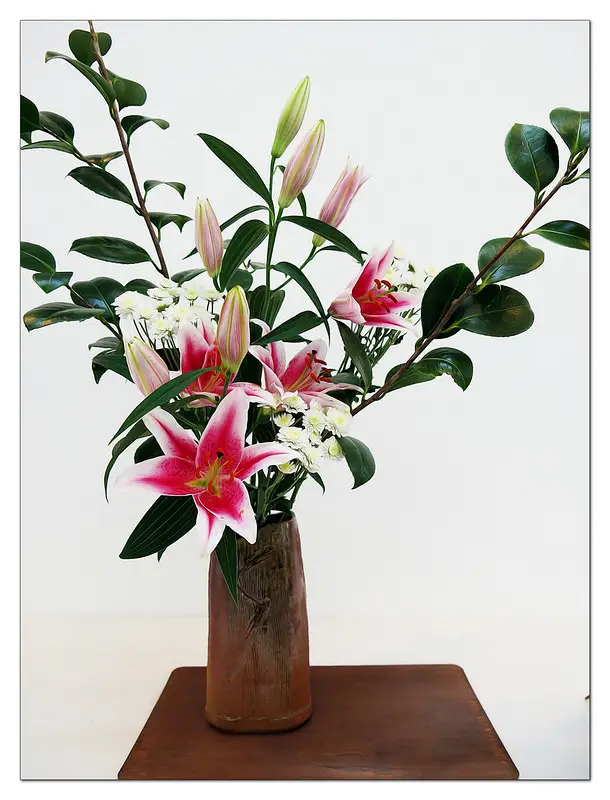
Source: manuel m. v. , Attribution (CC BY 2.0), https://flic.kr/p/2nSEpbD
You don’t need elaborate materials or formal training to get started. A few seasonal flowers, some branches, and a container are enough. The beauty of ikebana lies in its adaptability—it can be as simple or as elaborate as you want.
The Philosophy Behind the Practice
What makes ikebana unique is its underlying philosophy. It’s not just about making something pretty; it’s about creating a dialogue between nature and humanity. The act of arranging flowers becomes a way to express emotions and ideas.
For example, an ikebana arrangement might reflect the changing seasons, with branches representing winter’s barrenness or blossoms heralding spring’s arrival. It might also explore contrasts—delicate flowers paired with sturdy branches or vibrant colors set against muted tones.
This philosophy extends to the arranger’s mindset. Ikebana teaches patience, focus, and an appreciation for the present moment. It encourages us to slow down and see the beauty in everyday materials, from the smallest blade of grass to the most vibrant flower.
A Global Art Form
Though ikebana originated in Japan, it has gained popularity worldwide. Its emphasis on simplicity and mindfulness resonates with people across cultures. Workshops and exhibitions are held globally, introducing new audiences to this ancient art.
Ikebana continues to evolve, blending traditional techniques with modern innovations. It’s a reminder that even in our fast-paced world, there’s value in slowing down and finding beauty in the natural world around us.
Whether you’re creating an elaborate rikka arrangement or a simple display of wildflowers, ikebana offers a way to connect with nature, express creativity, and bring a little more balance into your life.
Featured image: https://unsplash.com/photos/two-red-daisy-flowers-npjSnYgqjuQ