
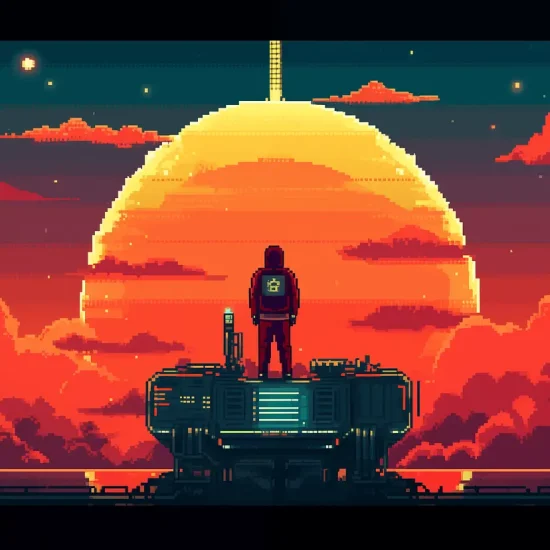
Pixel art is a digital art style that builds images out of small squares, known as pixels. You’ve probably seen it before—maybe in old video games, retro-style posters, or even some indie games today. Though it’s often tied to simpler graphics, this art style has an interesting backstory and a lasting charm. Let’s dive into its origins, journey, and why people still love it.
The Beginnings of Pixel-Based Art
This approach first showed up when computer screens had low resolutions, which meant every image had to be built with a restricted number of pixels. Early video games like Space Invaders and Pac-Man relied heavily on this style to create characters and scenes on limited screens. The artists and developers of that era had to work within strict limitations, crafting recognizable shapes and figures using only a handful of pixels and colors.
One early innovator in pixel-based design was Susan Kare, who worked on Apple’s Macintosh project in the 1980s. She created many of the first computer icons using a 32×32-pixel grid. With software like MacPaint, artists were able to create images pixel by pixel, which laid the foundation for graphic design and gaming. This approach was essential at the time but also allowed for a distinctive form of expression that still resonates today.
How Gaming Has Shaped Pixel Art
Gaming and pixel-based visuals have always been closely connected. During the 8-bit and 16-bit console eras—from the NES to the Sega Genesis—this was the main visual style. Designers used it to bring detailed game worlds to life, even with limited colors and small pixel counts. Each hardware upgrade allowed for more pixels, which artists used to create increasingly detailed worlds. Classic games like Super Mario Bros., The Legend of Zelda, and Sonic the Hedgehog helped popularize this style and pushed it to new heights.

Source: https://pixabay.com/illustrations/diamond-ruby-emerald-crystals-iron-5724650/
As technology advanced, games began shifting to 3D graphics in the mid-90s, causing this form of art to fade a bit. However, it never fully disappeared. Independent game developers began using it to create visuals on smaller budgets, and fans of retro games saw it as a nostalgic art style. Today, pixel-based visuals are a stylistic choice embraced by indie developers for their simplicity, charm, and potential to express ideas in a minimalist way.
A Unique Art Form
This art style’s shift from gaming to mainstream culture has earned it a place as a legitimate art form. It requires both creativity and precision, with each pixel playing an important role. Making a recognizable image with such tiny details is both challenging and rewarding. Many artists are drawn to the challenge of “painting” with pixels, often experimenting with small palettes and limited colors to create their vision.
Recently, pixel-based art has appeared in ads, album covers, and even NFT art. It’s celebrated for its nostalgic link to early tech but also admired for its minimalist storytelling power. Artists appreciate this style for its simplicity and its nostalgic appeal, which recalls the look and feel of the 80s and 90s.
Why It Has Lasted
Despite all the advances in technology, this style hasn’t vanished. If anything, it’s thriving, especially in indie games and online art circles. Part of its charm lies in its unique blend of old and new. Pixel-based art feels retro yet allows endless creativity. Many artists enjoy the restrictions this style imposes, as it forces them to focus on each small detail to complete a piece.

Source: https://pixabay.com/illustrations/store-pixel-art-pixel-retro-7274767/
Modern tools make it easier to create pixel art, enabling artists to go beyond the limits of early tech while retaining that pixel-by-pixel essence. Apps like Aseprite and Piskel help artists experiment with animation, shading, and other techniques that add depth and complexity. Online communities share tips, provide feedback, and keep this style alive and evolving.
Where Pixel Art Is Headed
The future of this art style looks bright. It keeps finding new applications and evolving alongside tech. VR and augmented reality have given pixel-based art even more possibilities, as artists explore layering pixels in 3D or building interactive, pixelated worlds. Even though it was born from limitations, pixel-based art has shown it’s timeless and versatile.
So, why does this style stick around? A mix of nostalgia, creative challenge, and artistic freedom draws people in. Whether in retro-inspired games, indie projects, or as standalone artwork, pixel-based visuals continue to bridge the early days of digital graphics with today’s artistic expression. This style proves that sometimes, working within constraints can lead to something remarkable.
Featured image: https://pixabay.com/illustrations/ai-generated-man-astronaut-8674485/