
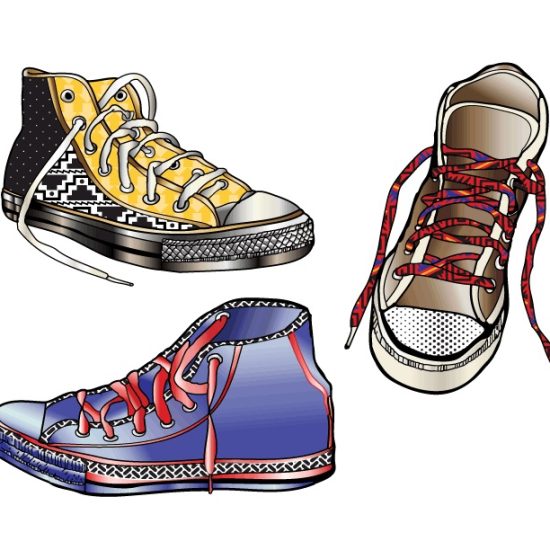
A well-placed sketch can capture the essence of an idea before it becomes reality. When it comes to footwear, the simple act of putting pencil to paper has been the first step in the creation of many of the most iconic designs in history. Let us explore shoe drawing:
The Technical Side of Shoe Drawing
At its core, shoe drawing serves a practical purpose. Designers, manufacturers, and craftspeople rely on sketches. Firstly to design the shoe, and show the designs to others. After that, a technical drawing is made to communicate structure, materials, and dimensions. Without these visual guides, the production process would be chaotic, lacking the precision necessary for a shoe to fit and function properly.
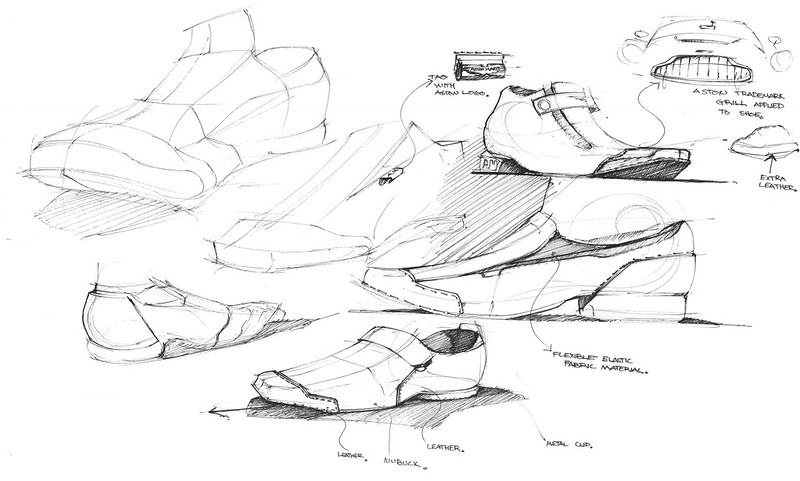
Source: Kirby, Aston Martin Shoe Sketch, Attribution-NoDerivs (CC BY-ND 2.0), https://flic.kr/p/r1B9rX
Several types of technical drawings contribute to this process. Orthographic projections provide multiple views—top, side, and front—ensuring that every angle is accounted for. Exploded views break down the construction, revealing components like the sole, insole, and upper. Cross-sections dissect the shoe, displaying layers that might otherwise go unnoticed. These methods allow manufacturers to translate creative ideas into wearable products with accuracy.
To achieve such precision, designers use an array of tools. Traditional hand-drawn sketches often begin with pencils or fine-tip markers, allowing for quick iterations and subtle details. Digital advancements have introduced CAD software, enabling designers to create precise, scalable renderings. Programs like Adobe Illustrator and CorelDRAW offer a hybrid approach, blending freehand artistry with clean, vector-based lines.
The Artistic and Design Aspects of Shoe Drawing
Beyond the structural elements, shoe drawing offers an opportunity for personal and artistic expression. Some sketches lean towards realism, aiming for lifelike detail that mirrors the final product. Others take a more stylized approach, using exaggerated proportions, bold colors, and imaginative flourishes to emphasize mood and movement.
Fashion illustration often takes this expressive route, highlighting the shoe in dramatic ways that may not be entirely functional but instead convey an aesthetic or mood. Artists specializing in footwear illustration might use watercolor washes to create a sense of fluidity or employ heavy ink lines to add intensity.
The work of renowned shoe illustrators showcases the range of possibilities within this medium. Designers such as Manolo Blahnik have become known not just for their shoes but for their signature sketches, which feel like works of art in their own right. Color plays an integral role in these illustrations, just take a look at his sketches with and without color. You can find them here. Texture is another consideration, with shading techniques simulating materials such as suede, leather, or mesh. Composition choices, from minimalist depictions to intricate background details, further define the impact of a drawing.
The Significance of Shoes
Footwear has always carried meaning beyond its basic function. They’re tied to status, profession, or personal style — shoes make statements, and you can quickly get an idea of someone’s character by looking at their shoes.
Fashion houses depend on shoe drawings for marketing and branding, using them in advertisements, catalogs, and promotional materials. Stylized shoe illustrations appear in everything from animation to album covers. Beyond commercial purposes, artistic interpretations of shoes have been featured in museum exhibits.
Even in literature, representations of shoes can be found, think fairy tales and other popular fiction. Films have also leveraged the power of footwear, for example, think of the Barbie movie.
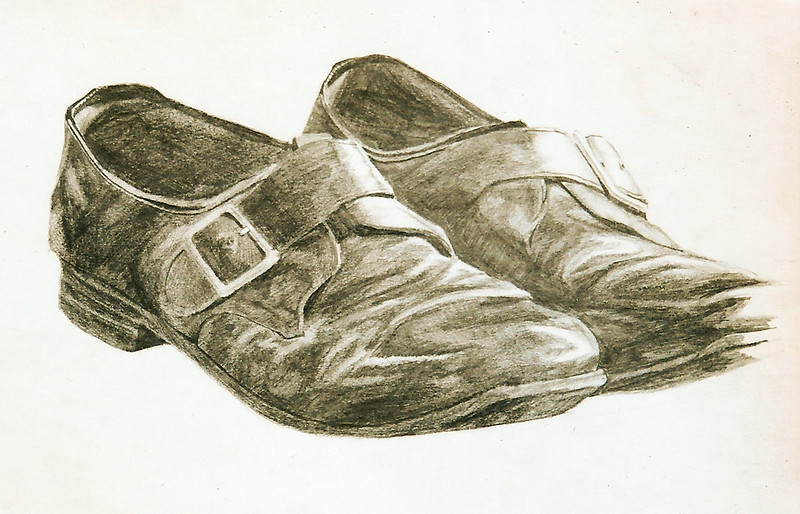
Source: Hillel Eflal, shoes, Attribution (CC BY 2.0), https://flic.kr/p/cExurU
Conclusion
Designers rely on shoe drawings to bring their ideas to life, while artists use them as a medium for creative storytelling. Whether for the purpose of manufacturing, marketing, or pure expression, these drawings remain a crucial part of both the fashion industry and the broader artistic landscape.
From the earliest concept sketches to the final renderings that influenced culture and commerce, the act of drawing a shoe is a craft in itself, reflecting both imagination and expertise. Design evolves and creative boundaries continue to expand, ensuring that every great shoe starts with a simple but intentional stroke of a pen.
Featured image: Donna Sutton, Live Trace/Live Paint: Recolor_Sneakers, Attribution-NoDerivs (CC BY-ND 2.0), https://flic.kr/p/7RWFCm