
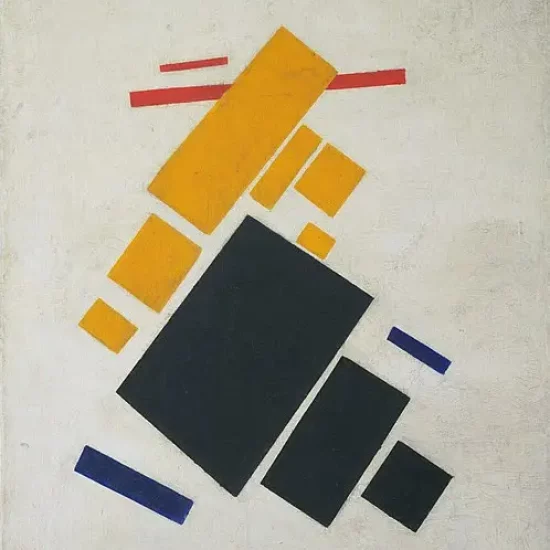
The Origins of Suprematism
Suprematism didn’t emerge quietly—it crashed into the art world like a declaration of independence. In 1915, Kazimir Malevich introduced this movement, completely rejecting the notion that art had to imitate the visible world. It was bold, it was strange, and, to some, it was utterly baffling. But for Malevich, it was a necessary step toward what he called the “zero of form.”
At the now-famous 0.10 Exhibition in Petrograd, Malevich unveiled Black Square. Imagine it: a stark black square, painted on a white canvas, hung in the sacred corner usually reserved for religious icons. Malevich wasn’t just showing a painting; he was making a statement. This wasn’t about landscapes or portraits anymore—it was about raw feeling. And that’s what Suprematism is all about: peeling away the layers of representation to reveal the essence of art itself.
What Makes Suprematist Art So Striking?
Let’s be honest—Suprematist art can feel intimidating. It’s easy to dismiss Black Square as just a square or White on White as a blank canvas. But once you dig into it, you realize these aren’t just shapes—they’re ideas.
Take Black Square. On the surface, it’s minimalist. But Malevich saw it as the foundation for a new kind of art. It’s bold, unapologetic, and demands attention. Now, look at White on White. This one’s even subtler: a white square floating on a slightly different white background. It’s like staring into infinity, forcing you to think not about what you’re seeing but what it makes you feel.
This art doesn’t hand you meaning on a silver platter. Instead, it asks you to slow down, look closer, and, maybe, feel a little uncomfortable.
Pro Tip: Don’t rush through a Suprematist piece. The longer you sit with it, the more it reveals. These works aren’t about instant gratification—they’re about creating a space for reflection.
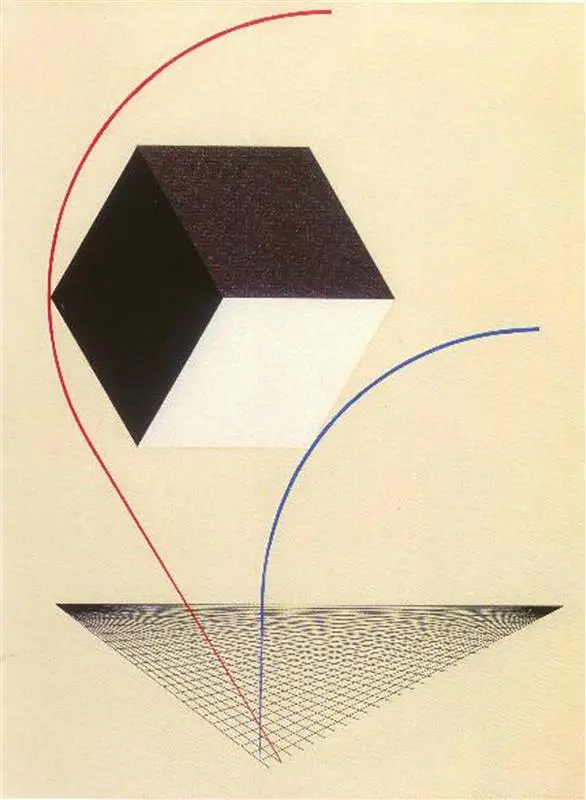
Source: https://www.wikiart.org/en/el-lissitzky/proun
Suprematism’s Philosophical Roots
Suprematism isn’t just about art; it’s about perspective. Malevich believed the material world was a distraction. By focusing on pure abstraction, he aimed to tap into something universal and spiritual.
Consider Suprematist Composition: Airplane Flying. It’s not a literal depiction of an airplane. Instead, it’s an idea—a sensation of flight, freedom, and movement. Malevich wasn’t interested in painting things; he wanted to paint emotions and concepts.
It’s radical when you think about it. Malevich wasn’t just painting pictures; he was challenging how we experience the world.
Suprematism and Its Expanding Universe
Suprematism wasn’t a solo mission. Malevich’s ideas inspired a wave of artists who expanded the movement in unexpected ways.
Take El Lissitzky, for example. His Proun series took Suprematism off the canvas and into three-dimensional space, blending architecture, design, and painting into something futuristic. These works feel less like paintings and more like blueprints for a utopian world.
Then there’s Olga Rozanova. Her Non-Objective Composition brings a dynamic energy to the movement, with geometric forms that feel alive and in motion. Her approach reminds us that Suprematism didn’t have to be rigid—it could be playful and spontaneous, too.
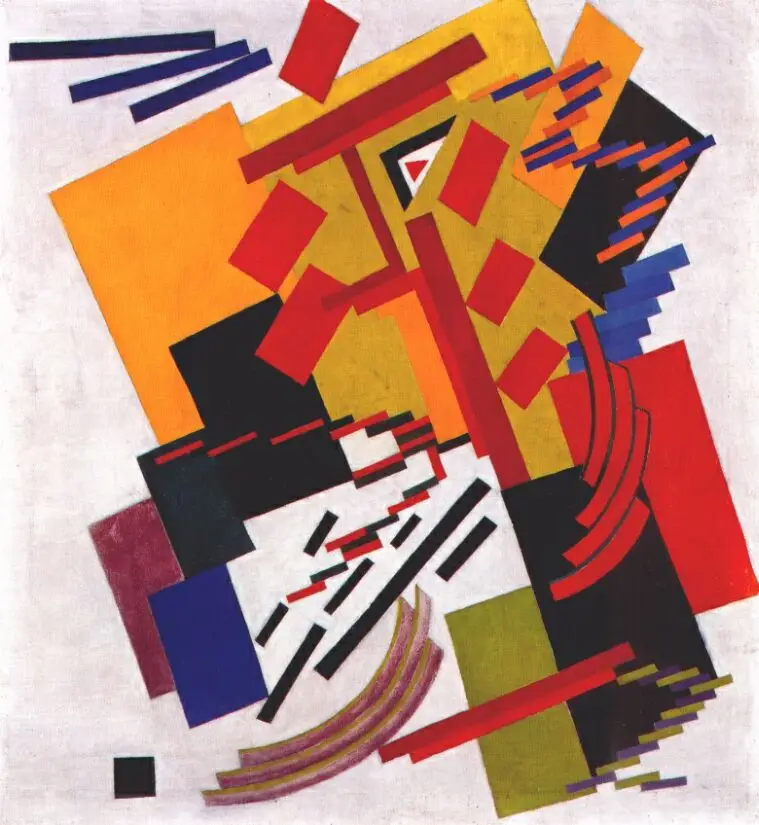
Source: https://www.wikiart.org/en/olga-rozanova/non-objective-composition-suprematism-1
Pro Tip: Compare different artists’ interpretations of Suprematism. Malevich, Lissitzky, and Rozanova each bring their own twist, showing the versatility of this abstract language.
The Ripple Effect: Suprematism’s Influence
Suprematism wasn’t just a moment in art history—it was a seismic shift. Its influence can be seen in movements like Constructivism and the Bauhaus, which took its emphasis on abstraction and turned it into practical design principles.
The Bauhaus school, in particular, applied Suprematist ideas to everything from architecture to furniture, creating clean, functional designs that still feel modern today. And it doesn’t stop there. Minimalist aesthetics in graphic design, tech interfaces, and even branding owe a debt to Suprematism.
Just look around—those sleek, balanced compositions in your favorite apps or the clean lines of modern architecture? That’s Suprematism’s legacy in action.
Pro Tip: If you’re into design, take a closer look at the connections between Suprematism and modern minimalism. You might be surprised how much they overlap.
Why Suprematism Still Feels Fresh
In today’s world, where everything is vying for our attention, Suprematism’s simplicity is a breath of fresh air. It invites us to pause, strip away the noise, and focus on what’s essential.
Malevich’s work feels timeless because it’s not tied to a specific place or subject. It’s about emotion, energy, and possibility. Whether you’re an artist, a designer, or just someone who appreciates creativity, there’s something deeply inspiring about Suprematism’s purity and courage.
Pro Tip: Try applying Suprematist principles to your own life. Whether it’s decluttering your workspace or simplifying your creative projects, focusing on the essentials can be surprisingly transformative.
Featured image: https://commons.wikimedia.org/wiki/File:Suprematist_Composition_-_Airplane_Flying_(Malevich,_1915).jpg