The Ceiling of the Sistine Chapel was painted by Michelangelo between 1508 and 1512 and it’s one of the most iconic works of Renaissance art. But behind its grandeur lies a fascinating story of artistic brilliance, immense challenge, and innovation. Michelangelo, primarily known as a sculptor then, wasn’t the Vatican’s first choice to paint the ceiling. Yet, his creation turned out to be a masterpiece that redefined fresco painting and Renaissance art.
How Michelangelo Created the Ceiling of the Sistine Chapel
Despite popular myths, Michelangelo didn’t paint the ceiling lying down. He worked standing up, on a scaffold, with his neck craned backward. This method was both physically grueling and emotionally exhausting. Initially hesitant because fresco painting wasn’t his primary skill, Michelangelo took on the task after Pope Julius II insisted.
Painting a fresco requires the artist to work on wet plaster, meaning each section had to be completed before the plaster dried. Michelangelo and his team used his preparatory sketches, to outline the images on the freshly applied plaster. This method helped guide the painting process but didn’t make the work easier. Michelangelo’s perfectionism slowed things down, leading him to fire his assistants at one point and continue much of the work alone.
Another challenge Michelangelo faced was the sheer scale of the ceiling. At over 5,000 square feet, he had to balance his vision for the space with the practicalities of painting at such a height. The project, originally planned as a simple design with a few apostles, evolved into something much more ambitious—telling the story of the Creation, the Fall of Man, and humanity’s salvation.
What’s Painted on the Ceiling of the Sistine Chapel?
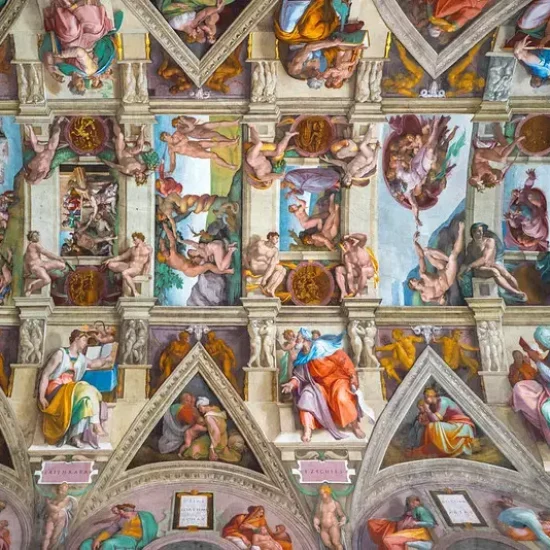
Michelangelo’s Sistine Chapel ceiling is a visual retelling of key biblical stories, divided into various panels and sections. Each part plays a unique role in conveying complex theological themes.
The Central Panels: Stories of Genesis
At the heart of the ceiling are nine central panels, which depict scenes from the Book of Genesis. The most famous of these is The Creation of Adam, where God reaches out to touch Adam’s hand, bringing him to life. The composition of this scene, with God surrounded by a swirling group of angels, captures both the divine act of creation and the intimate relationship between God and man.
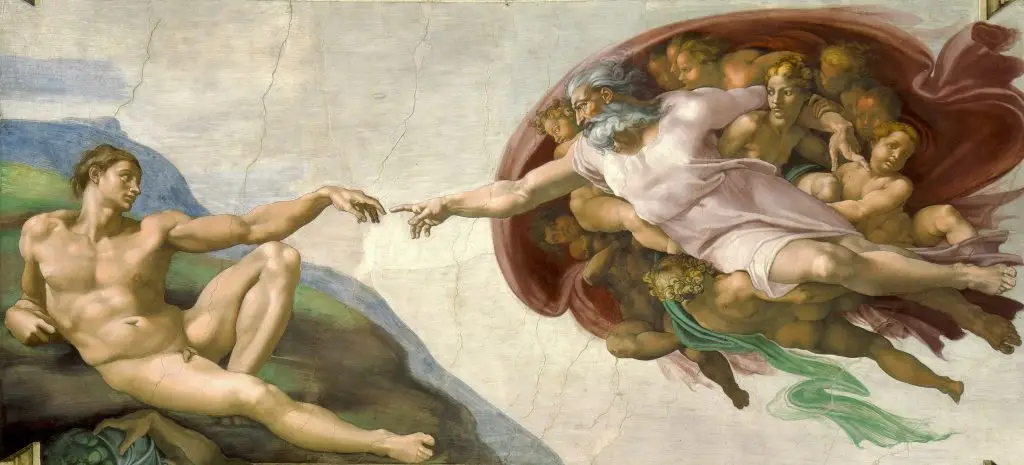
Other notable scenes include The Separation of Light from Darkness, The Creation of Eve, and The Temptation and Expulsion from the Garden of Eden. Michelangelo’s interpretation of these stories doesn’t just illustrate the events; it also conveys the emotional weight and drama of human existence. The figures are full of muscular energy, expressing both the power and frailty of humanity.
The Prophets and Sibyls
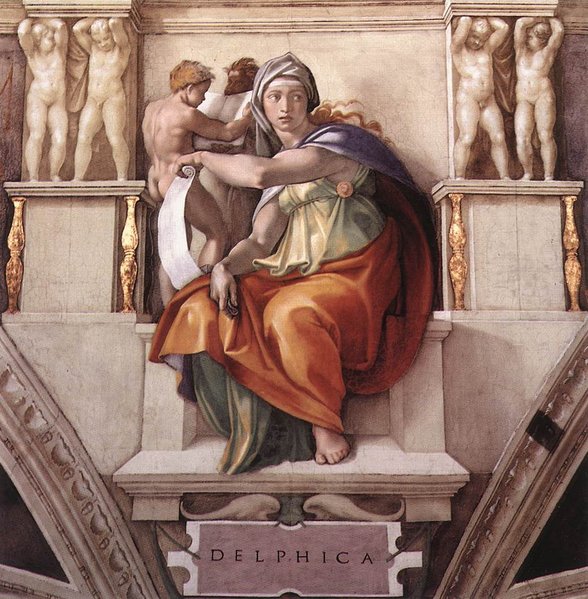
Flanking the central panels are larger-than-life figures of prophets and sibyls. These characters, seated on thrones, were believed to have foretold the coming of Christ. Among them are the prophet Isaiah, who looks contemplative, and the sibyls, who are depicted with an almost mystical aura. One of the most striking is the Delphic Sibyl, whose dynamic pose and intense expression hint at her prophetic abilities.
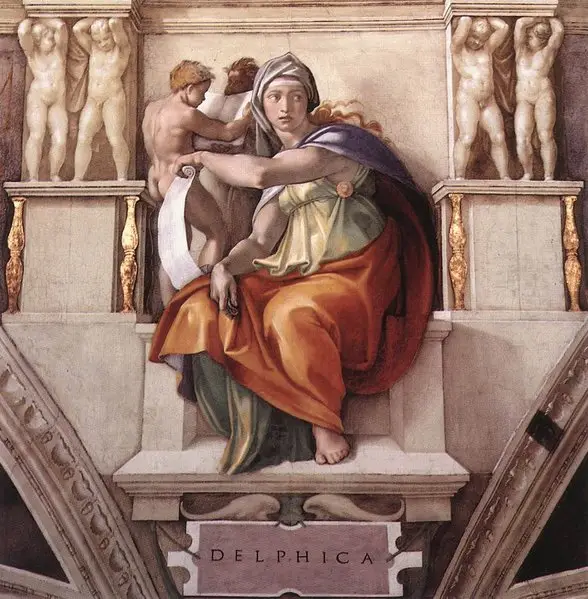
Michelangelo’s depiction of these figures shows his mastery of human anatomy. Each character, male or female, is muscular and full of movement. Even when seated, they exude a sense of tension, as if they are caught in a moment of profound insight or revelation.
The Ancestors of Christ
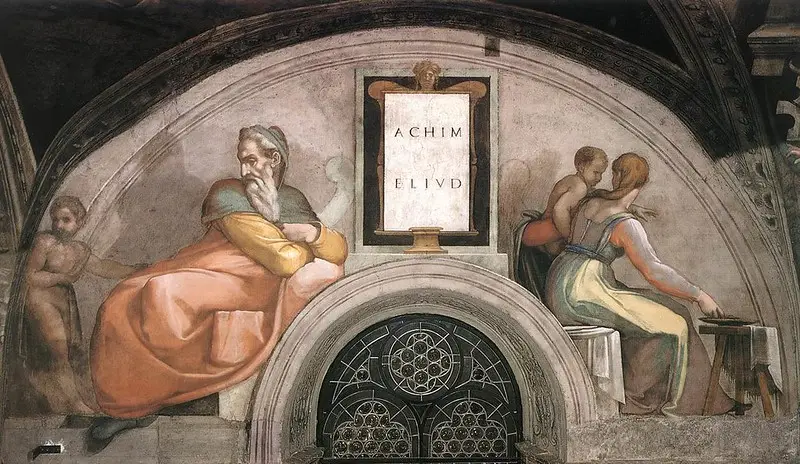
In addition to the prophets and sibyls, Michelangelo included a series of smaller panels known as the Ancestors of Christ. These figures are placed above the windows of the chapel and represent the generations leading up to Jesus. They’re shown in more relaxed, everyday poses, often engaged in domestic activities. The contrast between these humble, human scenes and the divine drama of the central panels adds depth to the overall narrative of the ceiling.
Ignudi: Decorative Figures
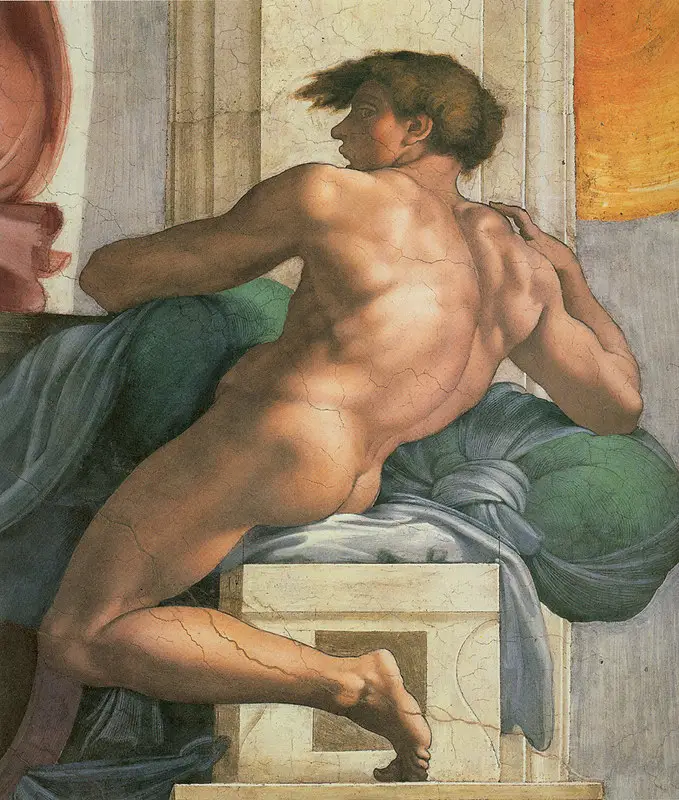
Another element that stands out in Michelangelo’s design is the ignudi—twenty nude male figures that frame many of the scenes. These figures don’t serve a direct narrative purpose but add to the overall dynamism of the composition. Michelangelo’s fascination with the human body is evident here, as the ignudi are depicted with extraordinary anatomical precision, their bodies twisting and contorting in ways that emphasize the tension between physical strength and vulnerability.
The Impact and Legacy of the Ceiling
When Michelangelo unveiled the completed ceiling in 1512, it was met with awe and admiration. Not only did it cement his reputation as one of the greatest artists of his time, but it also had a profound influence on the future of art. The Sistine Chapel ceiling became a reference point for artists like Raphael and later Baroque painters, who were inspired by Michelangelo’s bold use of anatomy and composition.
The ceiling also represented a turning point in Renaissance art, showcasing a shift from the more restrained, harmonious styles of earlier painters to a focus on drama, movement, and emotion. Michelangelo’s figures, especially in the central panels, are imbued with an intensity that reflects the human condition in all its complexity—something that resonated deeply with viewers at the time and continues to inspire today.
Conclusion: Ceiling of the Sistine Chapel
The Ceiling of the Sistine Chapel stands as a testament to Michelangelo’s artistic genius and his ability to tackle seemingly insurmountable challenges. From the innovative techniques he employed to the profound narratives he conveyed, every inch of the ceiling speaks to the power of art to transcend time and place. Whether you’re admiring the famous Creation of Adam or marveling at the intricate details of the prophets and ignudi, it’s impossible not to be moved by the sheer scope and ambition of Michelangelo’s vision. His work on the ceiling didn’t just redefine fresco painting—it redefined art itself.
Attribution:
Featured image: Nan Palmero – Sistine Chapel – Attribution (CC BY 2.0) – https://flic.kr/p/2mg1uQH
Creation of Adam: https://upload.wikimedia.org/wikipedia/commons/5/5b/Michelangelo_-Creation_of_Adam%28cropped%29.jpg
Sibyls: https://upload.wikimedia.org/wikipedia/commons/1/19/DelphicSibylByMichelangelo.jpg
Ancestors of Christ: https://flic.kr/p/zLviMA
Ignudi: https://flic.kr/p/z7dnCi