Venetian art stands as a remarkable chapter in the story of Western painting. Emerging during the Renaissance and carrying its influence well beyond, this unique style is closely tied to Venice’s geography, culture, and spirit. The city’s vibrant canals, ever-changing light, and maritime dominance created the perfect backdrop for an art style that was both innovative and emotive. Let’s explore what makes Venetian art so special and why its legacy endures.
A Unique Artistic Environment
Venice’s rise as a powerful trade and cultural hub during the late Middle Ages and Renaissance set the stage for its distinctive art. The city was unlike any other in Italy. Built on a network of islands surrounded by shimmering water, it had a dreamlike quality that inspired its artists. Venetian painters embraced this atmosphere, developing techniques to capture the interplay of light and reflections that defined their surroundings.
This connection to the environment shaped their approach to color and composition. Unlike artists in Florence, who focused on anatomy and strict perspective, Venetians leaned into mood and naturalism. They prioritized capturing the essence of a moment, whether it was a serene Madonna or a dramatic mythological scene.
The Venetian Approach to Painting
What set Venetian art apart was its innovative use of oil paint. Venetian painters perfected layering techniques that allowed for rich, glowing colors. This method, known as glazing, involved building up translucent layers of paint to achieve depth and luminosity. The result? Paintings that seemed to shimmer with life, mimicking the effect of light playing on water.
Venetians also had a distinct palette. They favored deep reds, brilliant blues, and golden hues, often accented with softer pastels. These colors weren’t just beautiful; they helped create a sense of atmosphere and emotion that defined Venetian art. Combined with a focus on loose, fluid brushwork, these elements gave their paintings a softness and immediacy that set them apart from the more structured works of their Florentine counterparts.
Key Figures in Venetian Art
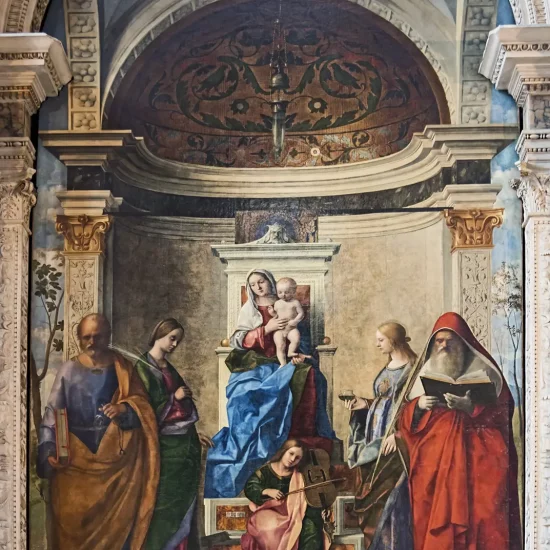
Venetian art owes much of its legacy to the talent and vision of its painters. Giovanni Bellini is often credited as the founder of the Venetian style. His tender religious works, such as The San Zaccaria Altarpiece, showcased his mastery of light and color. Bellini also helped bridge the gap between the Gothic style and the Renaissance, setting the stage for the flourishing of Venetian art.
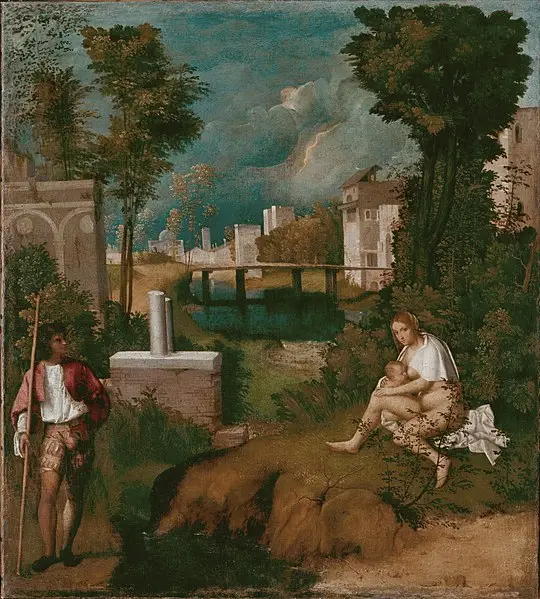
Source: https://commons.wikimedia.org/wiki/File:Giorgione_019.jpg
Giorgione, one of Bellini’s students, brought a poetic sensibility to Venetian painting. His The Tempest is a perfect example of how Venetian art could evoke mystery and emotion, with its moody landscape and enigmatic figures. Though Giorgione died young, his influence on Venetian art was profound.
Then came Titian, arguably the most famous Venetian artist. Renowned for his versatility, Titian painted everything from grand mythological scenes to intimate portraits. His Assumption of the Virgin and Venus of Urbino are celebrated masterpieces, known for their vibrant color and dynamic composition. Titian’s ability to blend grandeur with subtlety made him one of the greatest painters of his time.
Tintoretto and Veronese carried the Venetian tradition forward during the late Renaissance. Tintoretto’s dramatic use of perspective and chiaroscuro gave his works an almost theatrical quality, as seen in The Last Supper. Veronese, on the other hand, was known for his elaborate, colorful scenes filled with intricate details, such as The Feast in the House of Levi. Together, these artists cemented Venice’s reputation as a center of artistic innovation.
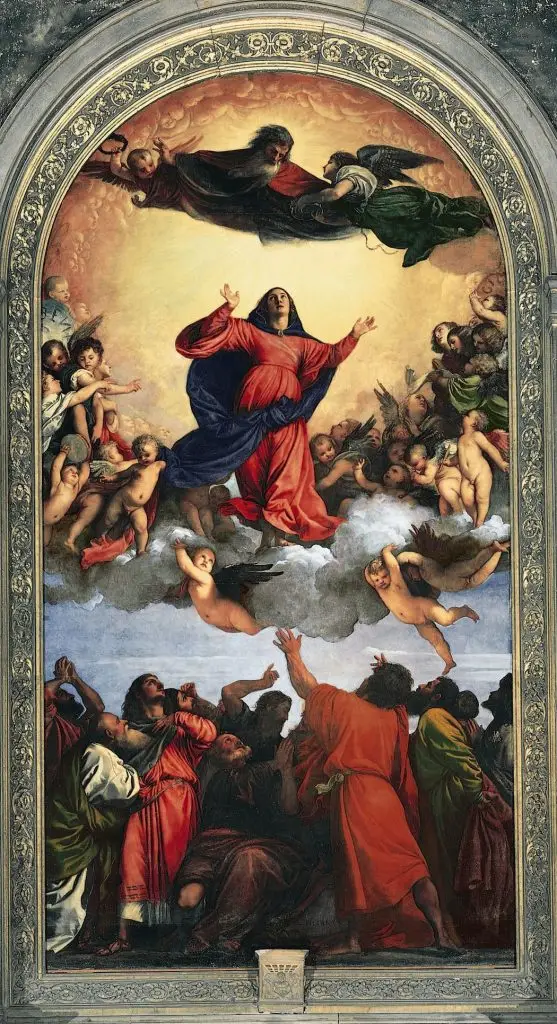
Source: https://commons.wikimedia.org/wiki/File:Tizian_041.jpg
The Role of Venice Itself
The city of Venice wasn’t just an inspiration; it was an active participant in its art. The unique quality of light in Venice, filtered through the lagoon and reflected off its waterways, shaped how artists viewed their subjects. Many paintings included elements of the Venetian landscape, subtly anchoring them in the city’s world. Canals, gondolas, and the distinctive architecture of Venice often appeared in the backgrounds, creating a strong connection between the art and its origins.
Venice’s cultural and political environment also played a role. As a wealthy trade center, the city attracted patrons who sought art that reflected their status and taste. This demand allowed artists to experiment and push boundaries, knowing their work would find an appreciative audience.
Beyond the Renaissance: The Legacy of Venetian Art
Venetian art didn’t fade with the end of the Renaissance. Its influence carried into the Baroque period and beyond. Artists like Peter Paul Rubens and Antoine Watteau drew inspiration from Venetian color and composition. Even Impressionists like Claude Monet and Pierre-Auguste Renoir admired Venetian techniques, incorporating its love of light and texture into their own work.
In modern times, Venetian art remains a subject of admiration and study. Its masterpieces can be found in museums around the world, from the Gallerie dell’Accademia in Venice to the Louvre in Paris. Visitors to Venice itself can still experience the city’s artistic heritage firsthand, walking through the same streets and seeing the same light that inspired its painters centuries ago.
A Timeless Appeal
What makes Venetian art so enduring is its ability to evoke emotion. Whether through the radiant colors of Titian or the moody landscapes of Giorgione, these works connect with viewers on a deeply human level. They celebrate beauty, nature, and the complexity of life in a way that feels timeless.
In many ways, Venetian art reflects the spirit of Venice itself: vibrant, mysterious, and endlessly captivating. It’s a reminder that art, like the city, has the power to transcend time, leaving a legacy that continues to inspire.
Featured image: Giovanni Bellini – The San Zaccaria Altarpiece, https://commons.wikimedia.org/wiki/File:Pala_di_San_Zaccaria_(Venezia).jpg, Photo licence: Attribution-Share Alike 4.0 International (CC-SA BY 4.0)